Bone Conduction · The rankings
Best bone conduction headphones for hearing loss: what they do and what they do not
Bone conduction gets sold as a workaround for a damaged ear. The peer-reviewed picture is narrower than the marketing, and it changes which model is worth your money.
By Mike M.Updated Spec-checked, not worn by us
#adReader-supported: we may earn a commission if you buy through our links, at no extra cost to you. It never decides a ranking. How we rank · Disclosure
Quick picks
The rankings at a glance
| # | Product | Best for | Score | Price |
|---|---|---|---|---|
| 1 |  Shokz OpenRun Pro 2 The bone conduction pick for most people: the neckband stays put through anything, 12 hours of battery, and Shokz's DualPitch driver adds an air-conduction unit for bass the older models can't make. | Best overall: the fullest soundBone conduction (neckband) | 8.5 /10 | Check price · Amazon |
| 2 | Shokz OpenComm2 UC (2025 Upgrade) A bone conduction neckband with a boom mic and 16 hours of talk time. It's a work headset that happens to be IP55 and sweatproof, which makes it the call-quality pick. | Best for conversation and callsBone conduction (neckband) | 8.0 /10 | Check price · Amazon |
| 3 | Shokz OpenRun Air 2 Lighter and better sealed than the Pro 2 (26.4 g, IP67) with 10 hours of battery and Bluetooth 6.0; you trade the Pro 2's bass driver for a frame you can rinse off. | Lightest all-day wearBone conduction (neckband) | 8.7 /10 | Check price · Amazon |
| 4 | Creative Outlier Free Pro IPX8, 10 hours, 8 GB of onboard MP3 storage and Bluetooth 5.3 multipoint for well under $100. The budget bone conduction set that can also swim. | Best budget pickBone conduction (neckband) | 8.3 /10 | Check price · Amazon |
| 5 | Shokz OpenMove The cheapest way into Shokz: IP55, 29 g, 6 hours, USB-C. You give up quick charge and two generations of driver, but the neckband fit is the same idea. | Cheapest way to test the ideaBone conduction (neckband) | 7.4 /10 | Check price · Amazon |
#ad · Prices are set by Amazon and change often, so we don't print them. Scores are ours, built from published specs and cited independent reviews, not our own wear tests. Photos are illustrative stock. Tap a row for the full write-up.
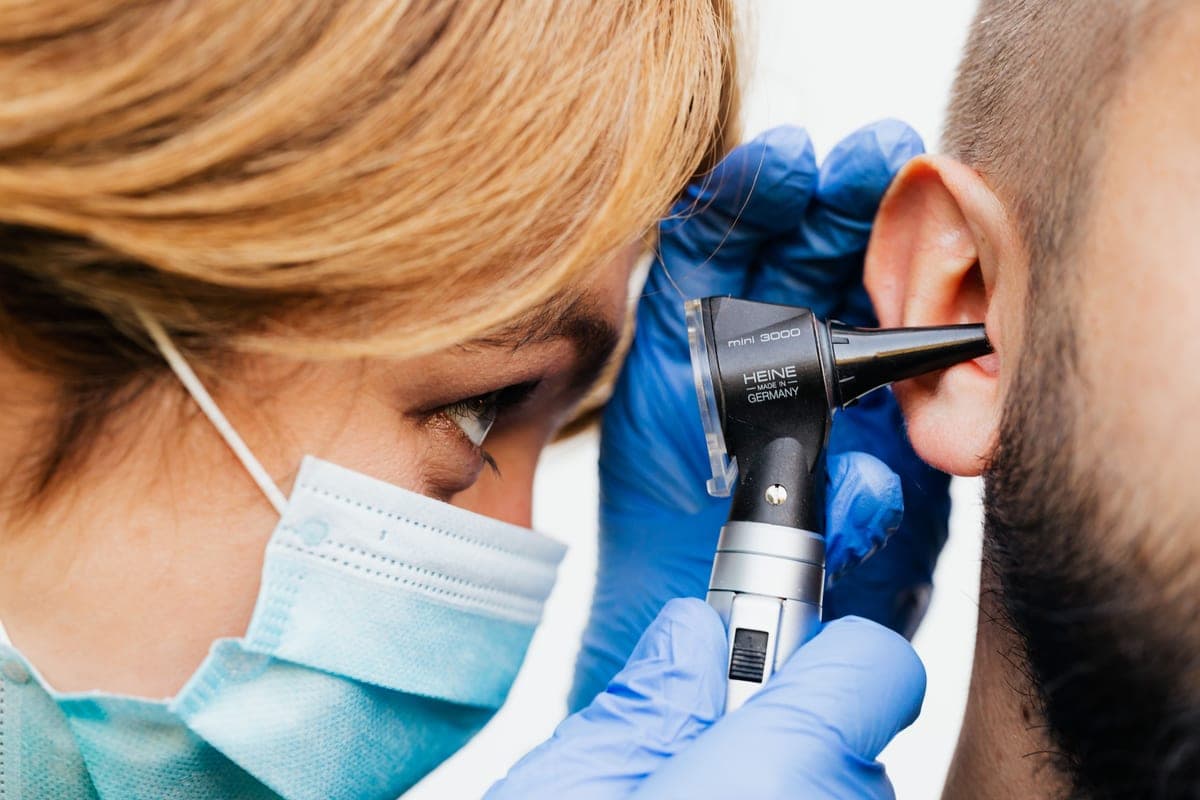
These are not hearing aids
Nothing on this page is a medical device. A bone-anchored hearing device is fitted and tuned by a clinician, amplifies selectively across the frequencies your particular hearing has lost, and is regulated as a hearing aid. A $130 sports headphone plays whatever your phone sends it, at whatever volume you choose, equally across the band. Those are different products that happen to share a transmission route.
What the research actually found
The common claim is that bone conduction skips your outer and middle ear and vibrates the cochlea directly, so a blockage or a damaged middle ear stops mattering. That is a fair description of bone conduction as a clinical technique with the transducer on the mastoid, the bone behind your ear.
It is not a fair description of the headphones you can buy. Surendran, Prodanovic and Stenfelt, writing in Trends in Hearing in 2023, looked specifically at the frontal placement that consumer headsets use, transducers resting just in front of the ear canal, and found that in that position the sound reaching you travels largely as ear canal sound pressure rather than as skull vibration. Their conclusion is blunt: that position “is not appropriate for clinical use since conductive hearing loss affects BC and air conduction thresholds by similar amounts.”
Read plainly: if your hearing loss is conductive, a consumer bone conduction headset worn where Shokz and everyone else puts it is affected by that loss in much the same way an ordinary headphone is. The same paper found the frontal position gives 15 to 35 dB better sensitivity than the mastoid position for people with healthy hearing, which is why the headphones sound good and why the makers place them there. It is a design optimized for hearing people, not for a damaged middle ear.
We are publishing that because the alternative is selling you something on a claim that the literature does not support. There are still good reasons to buy a pair.
Who they genuinely suit
People who cannot put anything in their ears. Chronic ear infections, a perforated eardrum, surgery, eczema, grommets, or simply ears that react to silicone. A headphone that touches only your cheekbones is the entire answer here, and it is a good one.
People who wear hearing aids. Earbuds and hearing aids compete for the same space, and whistling feedback is the usual result. A bone conduction band leaves both ears completely free, so your aids stay in and keep doing their job while you listen to something else. This is the use case we hear about most often and the one nobody markets to.
People with one much weaker ear. Every set here plays stereo to two transducers; some people with single-sided loss find the vibration on the strong side carries enough of both channels to be useful. This varies enormously between individuals, so buy from somewhere with a returns policy.
People who need to hear the room. If your hearing is fine but you rely on lip reading, cues from the room or a colleague's voice, an open canal is worth more than any feature on the box. That is the whole argument of this site, and it is covered at open-ear headphones and hearing safety.
The table
| Evidence | Shokz OpenRun Pro 2 | Shokz OpenComm2 UC (2025 Upgrade) | Shokz OpenRun Air 2 |
|---|---|---|---|
| Driver / tech | 10th-gen bone conduction (DualPitch: bone + air conduction unit) | 7th-gen bone conduction (PremiumPitch 2.0) | 8.5-gen bone conduction (PremiumPitch 3.0) |
| Microphones | Dual AI noise-canceling, wind-resistant to 25 km/h | Dual noise-canceling boom microphones | Dual AI noise-canceling, wind-resistant |
| Battery | 12 hours listening | 8 hours listening / 16 hours talk | 10 hours listening |
| Weight | 30.3 g standard / 30 g mini | 35 g | 26.4 g standard / 25.9 g mini |
| Water & sweat rating | IP55 (dust, sweat and water resistant) | IP55 | IP67 (dust-tight, temporary immersion); Shokz: not for swimming |
| Score | 8.5/10 | 8.0/10 | 8.7/10 |
| Evidence | Creative Outlier Free Pro | Shokz OpenMove |
|---|---|---|
| Driver / tech | — | 7th-gen bone conduction (PremiumPitch 2.0) |
| Battery | Up to 10 hours per charge | 6 hours listening |
| Weight | 31.5 g / 1.11 oz | 29 g |
| Water & sweat rating | IPX8 (Creative: run, cycle and even swim) | IP55 |
| Storage | 8 GB built-in memory | — |
| Score | 8.3/10 | 7.4/10 |
What to look for if this is you
Driver generation, because it sets how much detail survives. Speech intelligibility is where bone conduction is weakest: the high frequencies that carry consonants are the first thing a vibrating transducer loses. The OpenRun Pro 2's tenth-generation DualPitch adds an air-conduction unit alongside the bone transducers, and it is the clearest set here for that reason. The seventh-generation driver in the OpenMove and OpenComm2 UC is the thinnest.
A boom microphone, if conversation is the problem. The OpenComm2 UC puts a mic in front of your mouth and has 16 hours of talk time, and it is the only pick here with a dedicated mute button. For video calls where you are straining to follow, being heard clearly yourself removes half the friction.
Weight, because you will wear it for hours. The OpenRun Air 2 at 26.4 g is the lightest full neckband here. The OpenComm2 UC is 35 g and you feel it by the afternoon.
Not volume. It is tempting to buy the loudest thing available. Louder is how hearing gets worse, and the mechanism is the same whether the sound arrives through air or bone. Both the WHO and the NIDCD put the risk in terms of level and duration together, not level alone.
In detail
The picks, in full
Rank 1
Stock photoBest overall: the fullest sound
Shokz OpenRun Pro 2
The bone conduction pick for most people: the neckband stays put through anything, 12 hours of battery, and Shokz's DualPitch driver adds an air-conduction unit for bass the older models can't make.
Spec sheetSpec-checked · not worn by us
| Fit system | Bone conduction (neckband). Ear canal stays open: you hear the room and traffic. |
|---|---|
| Water & sweat rating | IP55 (dust, sweat and water resistant) |
| Weight | 30.3 g standard / 30 g mini |
| Battery | 12 hours listening |
| Quick charge | 5 min = 2.5 hours |
| Charging | USB-C, 1 hour to full |
| Bluetooth | 5.3, 33 ft range |
| Multipoint | Yes |
| Microphones | Dual AI noise-canceling, wind-resistant to 25 km/h |
| Controls | Physical buttons |
| Driver / tech | 10th-gen bone conduction (DualPitch: bone + air conduction unit) |
| Sizes | Standard (over 9.25 in head circumference) and Mini |
| Launched | August 2024 |
How the 8.5 score breaks down
- Fit security (25%)
- 10
- Sweat & water resistance (20%)
- 8
- Awareness (open canal) (15%)
- 10
- Sound & leakage (15%)
- 6
- Calls & wind (10%)
- 8
- Battery & charging (10%)
- 9
- Value (5%)
- 6
What the spec sheet supports
- Titanium neckband plus ear hooks: nothing to fall out of an ear canal
- 12 hours per charge and a real quick charge, on USB-C instead of a proprietary cable
- DualPitch adds an air-conduction driver, so bass exists where older bone conduction sets had none
- Wind-resistant dual mics rated to 25 km/h for calls on the move
Where it falls short
- IP55, not IP67 like the cheaper OpenRun and OpenRun Air 2: fine for sweat, not for rinsing under a tap
- Bone conduction still leaks at high volume in a quiet room
- The most expensive of the three OpenRun models
Skip this if…
…you want to rinse the headphones under a tap after a soaked run (get the IP67 OpenRun Air 2) or you train mostly indoors where a sealed earbud's bass would matter more than an open ear.
#ad · Price set by Amazon · Disclosure for the link to Shokz OpenRun Pro 2
Rank 2
Stock photoBest for conversation and calls
Shokz OpenComm2 UC (2025 Upgrade)
A bone conduction neckband with a boom mic and 16 hours of talk time. It's a work headset that happens to be IP55 and sweatproof, which makes it the call-quality pick.
Spec sheetSpec-checked · not worn by us
| Fit system | Bone conduction (neckband). Ear canal stays open: you hear the room and traffic. |
|---|---|
| Water & sweat rating | IP55 |
| Weight | 35 g |
| Battery | 8 hours listening / 16 hours talk |
| Quick charge | 5 min = 2 hours talk time |
| Charging | USB-C, 1 hour to full |
| Bluetooth | 5.1, 98 ft range; USB adapter included (UC) |
| Multipoint | Yes |
| Microphones | Dual noise-canceling boom microphones |
| Controls | Physical buttons; mute button |
| Driver / tech | 7th-gen bone conduction (PremiumPitch 2.0) |
| Launched | January 2025 |
How the 8.0 score breaks down
- Fit security (25%)
- 9
- Sweat & water resistance (20%)
- 8
- Awareness (open canal) (15%)
- 10
- Sound & leakage (15%)
- 4
- Calls & wind (10%)
- 10
- Battery & charging (10%)
- 8
- Value (5%)
- 5
What the spec sheet supports
- Boom mic: the only pick here with a microphone in front of your mouth
- 16 hours of talk time and a 98 ft Bluetooth range
- IP55, so a walking meeting in the rain is fine
Where it falls short
- Heaviest Shokz neckband at 35 g, and the boom arm is visible
- Older 7th-gen driver for music
- You're paying for the UC dongle whether you use it or not
Skip this if…
…calls are a side use; the OpenRun Pro 2's wind-resistant dual mics are good enough for most and it sounds far better for music.
#ad · Price set by Amazon · Disclosure for the link to Shokz OpenComm2 UC (2025 Upgrade)
Rank 3
Stock photoLightest all-day wear
Shokz OpenRun Air 2
Lighter and better sealed than the Pro 2 (26.4 g, IP67) with 10 hours of battery and Bluetooth 6.0; you trade the Pro 2's bass driver for a frame you can rinse off.
Spec sheetSpec-checked · not worn by us
| Fit system | Bone conduction (neckband). Ear canal stays open: you hear the room and traffic. |
|---|---|
| Water & sweat rating | IP67 (dust-tight, temporary immersion); Shokz: not for swimming |
| Weight | 26.4 g standard / 25.9 g mini |
| Battery | 10 hours listening |
| Quick charge | 5 min = 2 hours |
| Charging | USB-C, 1 hour to full |
| Bluetooth | 6.0 |
| Multipoint | Yes |
| Microphones | Dual AI noise-canceling, wind-resistant |
| Controls | Physical buttons |
| Driver / tech | 8.5-gen bone conduction (PremiumPitch 3.0) |
| Launched | August 2026 |
How the 8.7 score breaks down
- Fit security (25%)
- 10
- Sweat & water resistance (20%)
- 10
- Awareness (open canal) (15%)
- 10
- Sound & leakage (15%)
- 5
- Calls & wind (10%)
- 8
- Battery & charging (10%)
- 8
- Value (5%)
- 7
What the spec sheet supports
- IP67 means sweat, rain and a rinse under the tap are all inside the rating
- Lightest current Shokz neckband; Shokz says the frame is 9% smaller than the OpenRun's
- USB-C charging and a 5-minute quick charge
- Bluetooth 6.0 with multipoint
Where it falls short
- No DualPitch air-conduction unit, so bass is thinner than the Pro 2
- Two hours less battery than the Pro 2
- Bone conduction leakage and cheekbone buzz at high volume, like every neckband here
Skip this if…
…sound quality is the reason you'd spend more (the Pro 2's DualPitch is audibly fuller) or you need the Pro 2's 12-hour battery for ultra-distance days.
#ad · Price set by Amazon · Disclosure for the link to Shokz OpenRun Air 2
Rank 4
Stock photoBest budget pick
Creative Outlier Free Pro
IPX8, 10 hours, 8 GB of onboard MP3 storage and Bluetooth 5.3 multipoint for well under $100. The budget bone conduction set that can also swim.
Spec sheetSpec-checked · not worn by us
| Fit system | Bone conduction (neckband). Ear canal stays open: you hear the room and traffic. |
|---|---|
| Water & sweat rating | IPX8 (Creative: run, cycle and even swim) |
| Weight | 31.5 g / 1.11 oz |
| Battery | Up to 10 hours per charge |
| Charging | Magnetic charging cable |
| Bluetooth | 5.3 |
| Multipoint | Yes |
| Storage | 8 GB built-in memory |
| Extras | Silicone and titanium memory alloy frame; plug-in microphone for underwater use |
How the 8.3 score breaks down
- Fit security (25%)
- 9
- Sweat & water resistance (20%)
- 10
- Awareness (open canal) (15%)
- 10
- Sound & leakage (15%)
- 4
- Calls & wind (10%)
- 6
- Battery & charging (10%)
- 8
- Value (5%)
- 10
What the spec sheet supports
- IPX8 at a budget price: the cheapest set here you can take in the pool
- 10 hours beats the Shokz OpenMove by four
- 8 GB MP3 player for swimming or phone-free runs
Where it falls short
- Heavier than the Shokz OpenRun models at 31.5 g
- No dust rating (the X in IPX8 means dust wasn't tested)
- Magnetic charging cable rather than USB-C
Skip this if…
…you want the best sound at this price; bone conduction bass is thin across the board and the sealed JLab Go Sport+ sounds fuller for less.
#ad · Price set by Amazon · Disclosure for the link to Creative Outlier Free Pro
Rank 5
Stock photoCheapest way to test the idea
Shokz OpenMove
The cheapest way into Shokz: IP55, 29 g, 6 hours, USB-C. You give up quick charge and two generations of driver, but the neckband fit is the same idea.
Spec sheetSpec-checked · not worn by us
| Fit system | Bone conduction (neckband). Ear canal stays open: you hear the room and traffic. |
|---|---|
| Water & sweat rating | IP55 |
| Weight | 29 g |
| Battery | 6 hours listening |
| Quick charge | None |
| Charging | USB-C, 2 hours to full |
| Bluetooth | 5.1 |
| Multipoint | Yes |
| Microphones | Dual noise-canceling |
| Controls | Physical buttons |
| Driver / tech | 7th-gen bone conduction (PremiumPitch 2.0) |
| Launched | September 2020 |
How the 7.4 score breaks down
- Fit security (25%)
- 9
- Sweat & water resistance (20%)
- 8
- Awareness (open canal) (15%)
- 10
- Sound & leakage (15%)
- 4
- Calls & wind (10%)
- 6
- Battery & charging (10%)
- 4
- Value (5%)
- 8
What the spec sheet supports
- Under $100 at Shokz's own list price, so the cheapest entry to the brand
- IP55 covers sweat and rain
- USB-C charging, no proprietary cable
Where it falls short
- 6 hours of battery and no quick charge
- Older 7th-gen driver: the thinnest sound of the Shokz neckbands
- Heavier than the OpenRun models despite the lower price
Skip this if…
…you run long or forget to charge: six hours with no quick charge is the deal-breaker. The Creative Outlier Free Pro costs less and lasts longer.
#ad · Price set by Amazon · Disclosure for the link to Shokz OpenMove
Buyer's guide: sensible expectations
Buy where you can return them
Individual results here vary more than in any other category on this site, because individual hearing does. Buy from a retailer with a real returns window and use it.
Test with speech, not music
Put on a podcast rather than a song. Music masks the missing consonants; a spoken voice exposes them immediately, and that is the content most people in this situation actually want.
Contact is everything
Transducers belong on the cheekbone just in front of the ear. If they have drifted, output drops sharply and you will reach for the volume. Sizing is covered at bone conduction for big heads.
If sound quality disappoints, that is the technology, not the unit
Bone conduction is thin in the bass and soft in the treble by nature. We wrote the honest version at do bone conduction headphones sound good?
How we scored this
Pairs we claim to have worn: none we haven't
Plenty of sites say they ran a hundred miles in every pair on the list. We don't say that, and we say so on every page. What we do instead: classify the retention system (hook, clip, wing, neckband), record the maker's published IP rating, weight, battery, charging, mic and control type from its own product page, cross-reference at least one independent published review where one exists, and score every pick on a public rubric. Every figure links to where it came from.
Scores are editorial judgments from that documented research, not lab results. Commissions never set a score or decide a pick. The rubric and its weights are published.
Corrections & updates
- First edition.
Questions
Frequently asked
Do bone conduction headphones help with hearing loss?
Are bone conduction headphones hearing aids?
Can I wear bone conduction headphones with hearing aids?
Are they safer for your hearing than earbuds?
Keep reading
Related on Openear Club
- Open-ear headphones and hearing safetyVolume, duration and what actually causes damage.
- Are bone conduction headphones safe?The safety question answered from the sources.
- Do bone conduction headphones sound good?What the technology can and cannot reproduce.
- Best bone conduction headphonesThe main ranking.
- Best bone conduction headphones with a micIf conversation is the priority.
Receipts
Sources
- Surendran, Prodanovic & Stenfelt, Hearing Through Bone Conduction Headsets, Trends in Hearing 27 (2023), NIH PMC (checked 2026-09-26)
- Shokz — bone conduction technology page (checked 2026-09-21)
- Shokz — official product comparison table (checked 2026-09-21)
- Shokz — OpenComm2 UC 2025 Upgrade product page (checked 2026-09-21)
- Creative — Outlier Free Pro product page, specifications (checked 2026-09-21)
- Apple — AirPods Pro 3 technical specifications (checked 2026-09-26)
- WHO — Deafness and hearing loss fact sheet (checked 2026-09-21)
- NIDCD (NIH) — Noise-Induced Hearing Loss (checked 2026-09-21)
We haven't worn every pair on this site and we don't pretend to. Specs come from the maker's own product pages (linked on every product), independent findings are attributed to whoever published them, and Amazon prices change often, so we don't print them. Where a figure isn't published, we say so. Read the full method.