Bone Conduction · The rankings
Best bone conduction headphones for motorcycle helmets: thin frames, free ears
A helmet liner presses on whatever is under it. Bone conduction puts nothing in your ear canal and nothing in the ear pocket, which is why riders keep asking about it. Here is what fits, and what the law in your state says.
By Mike M.Updated Spec-checked, not worn by us
#adReader-supported: we may earn a commission if you buy through our links, at no extra cost to you. It never decides a ranking. How we rank · Disclosure
Quick picks
The rankings at a glance
| # | Product | Best for | Score | Price |
|---|---|---|---|---|
| 1 |  Shokz OpenRun Air 2 Lighter and better sealed than the Pro 2 (26.4 g, IP67) with 10 hours of battery and Bluetooth 6.0; you trade the Pro 2's bass driver for a frame you can rinse off. | Best overall: smallest frame, IP67Bone conduction (neckband) | 8.7 /10 | Check price · Amazon |
| 2 | Shokz OpenRun The long-running standard: IP67, 26.4 g, 8 hours, Bluetooth 5.1. Older tech than the Air 2 at the same list price, but still the pair most runners you know are wearing. | Same IP67, Mini size availableBone conduction (neckband) | 8.1 /10 | Check price · Amazon |
| 3 | Shokz OpenMove The cheapest way into Shokz: IP55, 29 g, 6 hours, USB-C. You give up quick charge and two generations of driver, but the neckband fit is the same idea. | Cheapest way to try itBone conduction (neckband) | 7.4 /10 | Check price · Amazon |
| 4 | Creative Outlier Free Pro IPX8, 10 hours, 8 GB of onboard MP3 storage and Bluetooth 5.3 multipoint for well under $100. The budget bone conduction set that can also swim. | Best budget, IPX8Bone conduction (neckband) | 8.3 /10 | Check price · Amazon |
| 5 | Mojawa Run Plus IP68, 29.6 g, 32 GB of storage and a 5-minute quick charge in the under-$100 band. A swim-capable neckband that undercuts Shokz on paper. | Toughest: IP68 titaniumBone conduction (neckband) | 8.2 /10 | Check price · Amazon |
#ad · Prices are set by Amazon and change often, so we don't print them. Scores are ours, built from published specs and cited independent reviews, not our own wear tests. Photos are illustrative stock. Tap a row for the full write-up.
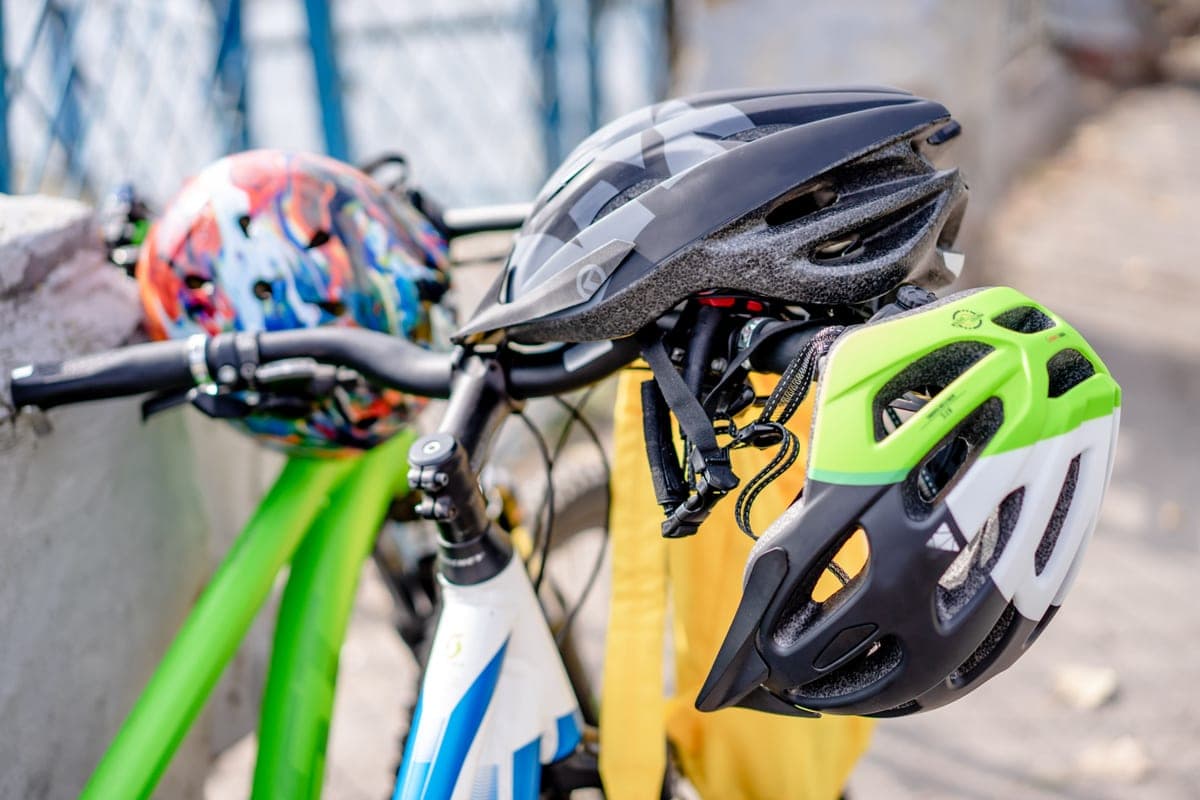
Why riders ask about bone conduction
A full-face helmet has two shallow ear pockets and a liner that presses everywhere else. Put an earbud in and you have a hard object between your skull and the foam, which is uncomfortable within ten minutes and moves every time you pull the helmet on. Wired headsets add a cable to snag. Helmet speakers solve the pressure problem and commit you to one helmet.
Bone conduction sidesteps most of it: the transducers rest on your cheekbones in front of your ears, where the ear pocket is hollow anyway, and nothing at all goes into the canal. The band wraps low behind your head, under the helmet's rear rim on most shapes. Your ears stay completely open, which for a rider is the point rather than a side effect.
The law before the product
This varies enormously by state and it is the first thing to check. There is no federal rule. According to the Motorcycle Legal Foundation's state-by-state guide, a group of states including California, Colorado, Georgia, Illinois, Louisiana, Maryland, Massachusetts, Minnesota, New York, Ohio, Pennsylvania, Rhode Island and Virginia prohibit wearing devices in or over both ears while riding. Several of those, including Colorado, Maryland, Ohio and Rhode Island, permit a single-ear device. A long list of other states, including Texas, Arizona, Florida's neighbors in the south east and most of the mountain west, has no restriction at all.
Getting one under a lid
Three things decide whether a set works under your helmet.
Transducer thickness. The pads sit between your cheekbone and the helmet's cheek pad. A thick pad on a snug helmet is a pressure point on a long ride. The slimmest frames here are the Shokz OpenRun family, which is why they lead.
Band path. Put the headphones on first, then the helmet, sliding the band down so it sits below the helmet's rear rim rather than inside it. On a helmet with a low-cut rear shell you may have to angle the band; on an open-face or three-quarter helmet it is trivial.
Size. Shokz offers Standard and Mini on the OpenRun models, split at 9.25 in measured behind the ears. Riders with a tight helmet sometimes prefer the Mini for a lower, closer band even when their measurement says Standard, and riders with a larger head should not: the guidance is at bone conduction for big heads.
The table
| Evidence | Shokz OpenRun Air 2 | Shokz OpenRun | Shokz OpenMove |
|---|---|---|---|
| Water & sweat rating | IP67 (dust-tight, temporary immersion); Shokz: not for swimming | IP67 (dust-tight, temporary immersion); not for swimming | IP55 |
| Weight | 26.4 g standard / 25.9 g mini | 26.4 g standard / 26 g mini | 29 g |
| Battery | 10 hours listening | 8 hours listening | 6 hours listening |
| Sizes | — | — | — |
| Controls | Physical buttons | Physical buttons | Physical buttons |
| Score | 8.7/10 | 8.1/10 | 7.4/10 |
| Evidence | Creative Outlier Free Pro | Mojawa Run Plus |
|---|---|---|
| Water & sweat rating | IPX8 (Creative: run, cycle and even swim) | IP68 (fully submersible) |
| Weight | 31.5 g / 1.11 oz | 29.6 g |
| Battery | Up to 10 hours per charge | 8 hours; standby up to 10 days |
| Storage | 8 GB built-in memory | 32 GB built-in |
| Extras | Silicone and titanium memory alloy frame; plug-in microphone for underwater use | Full titanium construction |
| Score | 8.3/10 | 8.2/10 |
Wind noise is the real limit
Be realistic about what you are buying. At 70 mph the inside of a helmet is a loud place, and bone conduction has no isolation to offer: it adds sound rather than removing any. Music stays audible because the transducer is coupled to your skull rather than fighting the air, but detail goes and you will run the volume high, which is its own problem over a long day.
The microphones have the same difficulty in reverse. Shokz rates the OpenRun Pro 2's mics as wind-resistant to 25 km/h, which is about 15 mph, and that is the best published figure in the family. Taking calls at road speed will not go well on any of these. If intercom-quality communication with a pillion or a group is what you actually need, a helmet-mounted system is the right product and this page is not it.
Battery matters more here than in the gym: the OpenRun Air 2's 10 hours and the Mojawa's 8 comfortably cover a day's riding, while the OpenMove's 6 hours with no quick charge does not.
In detail
The picks, in full
Rank 1
Stock photoBest overall: smallest frame, IP67
Shokz OpenRun Air 2
Lighter and better sealed than the Pro 2 (26.4 g, IP67) with 10 hours of battery and Bluetooth 6.0; you trade the Pro 2's bass driver for a frame you can rinse off.
Spec sheetSpec-checked · not worn by us
| Fit system | Bone conduction (neckband). Ear canal stays open: you hear the room and traffic. |
|---|---|
| Water & sweat rating | IP67 (dust-tight, temporary immersion); Shokz: not for swimming |
| Weight | 26.4 g standard / 25.9 g mini |
| Battery | 10 hours listening |
| Quick charge | 5 min = 2 hours |
| Charging | USB-C, 1 hour to full |
| Bluetooth | 6.0 |
| Multipoint | Yes |
| Microphones | Dual AI noise-canceling, wind-resistant |
| Controls | Physical buttons |
| Driver / tech | 8.5-gen bone conduction (PremiumPitch 3.0) |
| Launched | August 2026 |
How the 8.7 score breaks down
- Fit security (25%)
- 10
- Sweat & water resistance (20%)
- 10
- Awareness (open canal) (15%)
- 10
- Sound & leakage (15%)
- 5
- Calls & wind (10%)
- 8
- Battery & charging (10%)
- 8
- Value (5%)
- 7
What the spec sheet supports
- IP67 means sweat, rain and a rinse under the tap are all inside the rating
- Lightest current Shokz neckband; Shokz says the frame is 9% smaller than the OpenRun's
- USB-C charging and a 5-minute quick charge
- Bluetooth 6.0 with multipoint
Where it falls short
- No DualPitch air-conduction unit, so bass is thinner than the Pro 2
- Two hours less battery than the Pro 2
- Bone conduction leakage and cheekbone buzz at high volume, like every neckband here
Skip this if…
…sound quality is the reason you'd spend more (the Pro 2's DualPitch is audibly fuller) or you need the Pro 2's 12-hour battery for ultra-distance days.
#ad · Price set by Amazon · Disclosure for the link to Shokz OpenRun Air 2
Rank 2
Stock photoSame IP67, Mini size available
Shokz OpenRun
The long-running standard: IP67, 26.4 g, 8 hours, Bluetooth 5.1. Older tech than the Air 2 at the same list price, but still the pair most runners you know are wearing.
Spec sheetSpec-checked · not worn by us
| Fit system | Bone conduction (neckband). Ear canal stays open: you hear the room and traffic. |
|---|---|
| Water & sweat rating | IP67 (dust-tight, temporary immersion); not for swimming |
| Weight | 26.4 g standard / 26 g mini |
| Battery | 8 hours listening |
| Quick charge | 10 min = 1.5 hours |
| Charging | Magnetic induction cable (USB-C on blue and black only), 1.5 hours to full |
| Bluetooth | 5.1 |
| Multipoint | Yes |
| Microphones | Dual noise-canceling |
| Controls | Physical buttons |
| Driver / tech | 8th-gen bone conduction (PremiumPitch 2.0+) |
| Extras | Moisture detector; Shokz says it is fully washable under the tap |
| Launched | July 2019 |
How the 8.1 score breaks down
- Fit security (25%)
- 10
- Sweat & water resistance (20%)
- 10
- Awareness (open canal) (15%)
- 10
- Sound & leakage (15%)
- 4
- Calls & wind (10%)
- 6
- Battery & charging (10%)
- 6
- Value (5%)
- 6
What the spec sheet supports
- IP67 and a moisture detector: Shokz's own comparison calls it fully washable under the tap
- Same 26.4 g weight as the Air 2
- Proven neckband fit, mini size available
Where it falls short
- 8 hours is the shortest battery of the three OpenRun models
- Proprietary magnetic charging cable on most colors
- 2019 hardware at the same list price as the newer Air 2
Skip this if…
…you're buying new at full price; the OpenRun Air 2 is the same money with USB-C, Bluetooth 6.0 and two more hours. Buy this one on a deal.
#ad · Price set by Amazon · Disclosure for the link to Shokz OpenRun
Rank 3
Stock photoCheapest way to try it
Shokz OpenMove
The cheapest way into Shokz: IP55, 29 g, 6 hours, USB-C. You give up quick charge and two generations of driver, but the neckband fit is the same idea.
Spec sheetSpec-checked · not worn by us
| Fit system | Bone conduction (neckband). Ear canal stays open: you hear the room and traffic. |
|---|---|
| Water & sweat rating | IP55 |
| Weight | 29 g |
| Battery | 6 hours listening |
| Quick charge | None |
| Charging | USB-C, 2 hours to full |
| Bluetooth | 5.1 |
| Multipoint | Yes |
| Microphones | Dual noise-canceling |
| Controls | Physical buttons |
| Driver / tech | 7th-gen bone conduction (PremiumPitch 2.0) |
| Launched | September 2020 |
How the 7.4 score breaks down
- Fit security (25%)
- 9
- Sweat & water resistance (20%)
- 8
- Awareness (open canal) (15%)
- 10
- Sound & leakage (15%)
- 4
- Calls & wind (10%)
- 6
- Battery & charging (10%)
- 4
- Value (5%)
- 8
What the spec sheet supports
- Under $100 at Shokz's own list price, so the cheapest entry to the brand
- IP55 covers sweat and rain
- USB-C charging, no proprietary cable
Where it falls short
- 6 hours of battery and no quick charge
- Older 7th-gen driver: the thinnest sound of the Shokz neckbands
- Heavier than the OpenRun models despite the lower price
Skip this if…
…you run long or forget to charge: six hours with no quick charge is the deal-breaker. The Creative Outlier Free Pro costs less and lasts longer.
#ad · Price set by Amazon · Disclosure for the link to Shokz OpenMove
Rank 4
Stock photoBest budget, IPX8
Creative Outlier Free Pro
IPX8, 10 hours, 8 GB of onboard MP3 storage and Bluetooth 5.3 multipoint for well under $100. The budget bone conduction set that can also swim.
Spec sheetSpec-checked · not worn by us
| Fit system | Bone conduction (neckband). Ear canal stays open: you hear the room and traffic. |
|---|---|
| Water & sweat rating | IPX8 (Creative: run, cycle and even swim) |
| Weight | 31.5 g / 1.11 oz |
| Battery | Up to 10 hours per charge |
| Charging | Magnetic charging cable |
| Bluetooth | 5.3 |
| Multipoint | Yes |
| Storage | 8 GB built-in memory |
| Extras | Silicone and titanium memory alloy frame; plug-in microphone for underwater use |
How the 8.3 score breaks down
- Fit security (25%)
- 9
- Sweat & water resistance (20%)
- 10
- Awareness (open canal) (15%)
- 10
- Sound & leakage (15%)
- 4
- Calls & wind (10%)
- 6
- Battery & charging (10%)
- 8
- Value (5%)
- 10
What the spec sheet supports
- IPX8 at a budget price: the cheapest set here you can take in the pool
- 10 hours beats the Shokz OpenMove by four
- 8 GB MP3 player for swimming or phone-free runs
Where it falls short
- Heavier than the Shokz OpenRun models at 31.5 g
- No dust rating (the X in IPX8 means dust wasn't tested)
- Magnetic charging cable rather than USB-C
Skip this if…
…you want the best sound at this price; bone conduction bass is thin across the board and the sealed JLab Go Sport+ sounds fuller for less.
#ad · Price set by Amazon · Disclosure for the link to Creative Outlier Free Pro
Rank 5
Stock photoToughest: IP68 titanium
Mojawa Run Plus
IP68, 29.6 g, 32 GB of storage and a 5-minute quick charge in the under-$100 band. A swim-capable neckband that undercuts Shokz on paper.
Spec sheetSpec-checked · not worn by us
| Fit system | Bone conduction (neckband). Ear canal stays open: you hear the room and traffic. |
|---|---|
| Water & sweat rating | IP68 (fully submersible) |
| Weight | 29.6 g |
| Battery | 8 hours; standby up to 10 days |
| Quick charge | 5 min = 90 min |
| Charging | Magnetic induction, 1 hour to full |
| Bluetooth | 5.2 |
| Multipoint | Yes |
| Storage | 32 GB built-in |
| Extras | Full titanium construction |
How the 8.2 score breaks down
- Fit security (25%)
- 9
- Sweat & water resistance (20%)
- 10
- Awareness (open canal) (15%)
- 10
- Sound & leakage (15%)
- 4
- Calls & wind (10%)
- 6
- Battery & charging (10%)
- 8
- Value (5%)
- 9
What the spec sheet supports
- IP68 and 32 GB at a price the Shokz OpenSwim Pro doesn't approach
- Lighter than the Creative and close to the Shokz OpenRun
- Quick charge, which the Shokz OpenMove lacks
Where it falls short
- 8 hours is two short of the Creative Outlier Free Pro
- Magnetic charging cable
- Fewer independent reviews than Shokz; we cite only Mojawa's own specs
Skip this if…
…you want the brand with the deepest review record and the widest accessory support; Shokz has both.
#ad · Price set by Amazon · Disclosure for the link to Mojawa Run Plus
Buyer's guide: riding with them
Helmet on second, always
Headphones, then helmet. Doing it the other way drags the band up and leaves the transducers on your temples, where they sound thin and press in the wrong place.
Buy IP67 or better
Rain on a bike is not a splash, and you will get caught out. The OpenRun and OpenRun Air 2 are IP67, the Creative is IPX8 and the Mojawa is IP68; the OpenMove is IP55 and is the weakest here on that count. See earbud IP ratings explained.
Physical buttons only
Every pick here uses buttons rather than a touch panel, which is the right answer with gloves on. Learn where they are before you ride, because you will be finding them by feel through a helmet.
Consider onboard storage if you ride without a phone
The Creative Outlier Free Pro holds 8 GB and the Mojawa Run Plus 32 GB, so the music continues when your phone is in a jacket pocket out of Bluetooth range or the signal drops in the hills.
How we scored this
Pairs we claim to have worn: none we haven't
Plenty of sites say they ran a hundred miles in every pair on the list. We don't say that, and we say so on every page. What we do instead: classify the retention system (hook, clip, wing, neckband), record the maker's published IP rating, weight, battery, charging, mic and control type from its own product page, cross-reference at least one independent published review where one exists, and score every pick on a public rubric. Every figure links to where it came from.
Scores are editorial judgments from that documented research, not lab results. Commissions never set a score or decide a pick. The rubric and its weights are published.
Corrections & updates
- First edition.
Questions
Frequently asked
Can you wear bone conduction headphones under a motorcycle helmet?
Is it legal to ride with bone conduction headphones?
Are they better than helmet speakers?
Can you hear music over the wind at highway speed?
Keep reading
Related on Openear Club
- Bone conduction for big headsStandard vs Mini, measured properly.
- Best bone conduction headphones for cyclingThe same awareness argument on two wheels.
- Wind noise with open-ear earbudsWhy speed wrecks microphones.
- Best bone conduction headphonesThe main ranking.
- Earbud IP ratings explainedWhat IP67 covers when it rains.
Receipts
Sources
- Motorcycle Legal Foundation — Is it illegal to wear headphones on motorcycles? A state-by-state guide, updated January 2, 2024 (checked 2026-09-26)
- Shokz — official product comparison table (checked 2026-09-21)
- Shokz — OpenRun Air 2 vs OpenRun Pro 2 vs OpenRun (checked 2026-09-21)
- Shokz — OpenRun vs. OpenRun Mini: find your perfect fit (checked 2026-09-26)
- Creative — Outlier Free Pro product page, specifications (checked 2026-09-21)
- Mojawa — Run Plus product page, specifications (checked 2026-09-21)
We haven't worn every pair on this site and we don't pretend to. Specs come from the maker's own product pages (linked on every product), independent findings are attributed to whoever published them, and Amazon prices change often, so we don't print them. Where a figure isn't published, we say so. Read the full method.