Bone Conduction · Head to head
Shokz OpenRun Air 2 vs OpenRun Pro 2: the rinse-it pair against the one with bass
These are the two Shokz neckbands anyone is actually choosing between in 2026, and the decision comes down to one swap: the Air 2 gives you an IP67 frame and four grams less, the Pro 2 gives you an extra driver and two more hours.
By Mike M.Updated Researched · every spec sourced
#adReader-supported: we may earn a commission if you buy through our links, at no extra cost to you. It never decides a ranking. How we rank · Disclosure
The contenders
Side by side
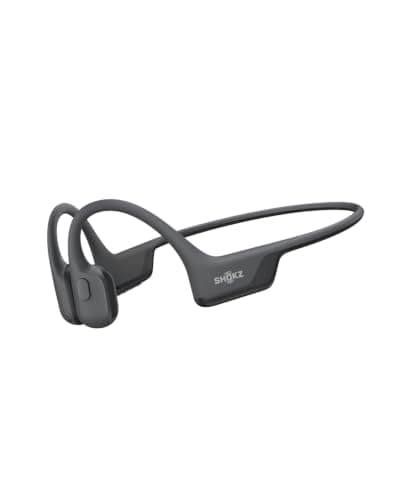
Buy this if you sweat hard
Shokz OpenRun Air 2
Bone conduction (neckband)8.7 /10Lighter and better sealed than the Pro 2 (26.4 g, IP67) with 10 hours of battery and Bluetooth 6.0; you trade the Pro 2's bass driver for a frame you can rinse off.
$129.95Amazon#ad · Price as of October 11, 2026 · Disclosure for the link to Shokz OpenRun Air 2
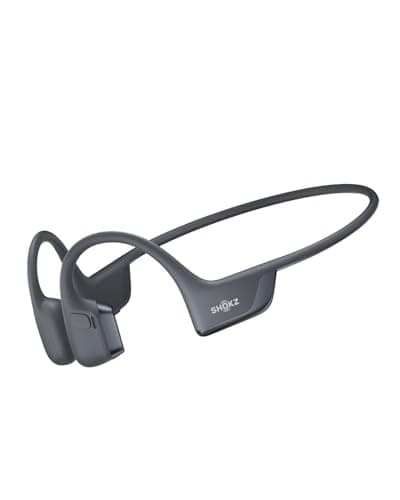
Buy this if you want bass and battery
Shokz OpenRun Pro 2
Bone conduction (neckband)8.5 /10The bone conduction pick for most people: the neckband stays put through anything, 12 hours of battery, and Shokz's DualPitch driver adds an air-conduction unit for bass the older models can't make.
$179.95Amazon#ad · Price as of October 11, 2026 · Disclosure for the link to Shokz OpenRun Pro 2
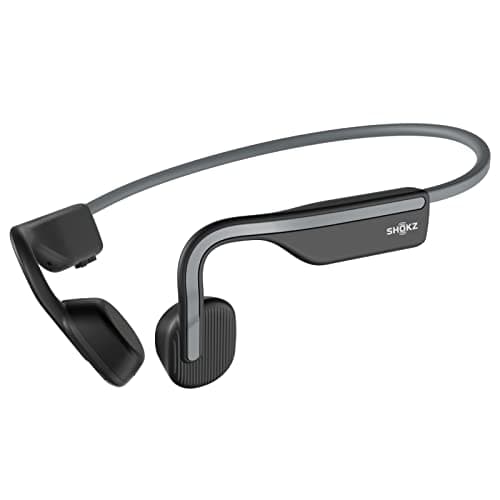
Buy this if neither price works
Shokz OpenMove
Bone conduction (neckband)7.4 /10The cheapest way into Shokz: IP55, 29 g, 6 hours, USB-C. You give up quick charge and two generations of driver, but the neckband fit is the same idea.
$79.95Amazon#ad · Price as of October 11, 2026 · Disclosure for the link to Shokz OpenMove
The verdict
Every published number
Both of these are Shokz's own figures from its official comparison table, which is the useful thing about comparing two models from one maker: the numbers are measured the same way, so the gaps are real rather than marketing artefacts.
| Evidence | Shokz OpenRun Air 2 | Shokz OpenRun Pro 2 |
|---|---|---|
| Water & sweat rating | IP67 (dust-tight, temporary immersion); Shokz: not for swimming | IP55 (dust, sweat and water resistant) |
| Weight | 26.4 g standard / 25.9 g mini | 30.3 g standard / 30 g mini |
| Battery | 10 hours listening | 12 hours listening |
| Quick charge | 5 min = 2 hours | 5 min = 2.5 hours |
| Charging | USB-C, 1 hour to full | USB-C, 1 hour to full |
| Bluetooth | 6.0 | 5.3, 33 ft range |
| Multipoint | Yes | Yes |
| Microphones | Dual AI noise-canceling, wind-resistant | Dual AI noise-canceling, wind-resistant to 25 km/h |
| Controls | Physical buttons | Physical buttons |
| Driver / tech | 8.5-gen bone conduction (PremiumPitch 3.0) | 10th-gen bone conduction (DualPitch: bone + air conduction unit) |
| Launched | August 2026 | August 2024 |
| Score | 8.7/10 | 8.5/10 |
1. IP67 vs IP55: the real gap
This is the only difference on the sheet that can end a pair of headphones, so take it first. IP67 and IP55 are both two-digit codes under IEC 60529, and both digits move.
- Dust: 6 means dust-tight — no ingress at all. 5 means dust-protected — some dust gets in, but not enough to interfere. On a headphone that lives in a gym bag with chalk in it, that is not nothing.
- Water: 7 means immersion, tested for 30 minutes under a metre of water. 5 means a 6.3 mm jet from any direction. The step from 5 to 7 is the step from “survives being sprayed” to “survives being submerged.”
In practice that means you can take the Air 2 to the tap and rinse the dried salt off the transducer pads, which is the single most useful maintenance habit for anyone who sweats heavily. On the Pro 2, Shokz's own comparison post describes care for the Pro models as gentle cleaning with a damp cloth. Neither is rated for swimming — Shokz prints “not for swimming” beside the Air 2's IP67 — and for laps you want the IP68 OpenSwim Pro instead. The full breakdown of what each digit is tested with is in IPX4 vs IPX5 vs IPX7.
2. DualPitch vs PremiumPitch 3.0
The Pro 2 runs Shokz's 10th-generation DualPitch system, which pairs the bone transducer with a small air-conduction unit aimed at the ear. The Air 2 runs 8.5-generation PremiumPitch 3.0, which is bone-only. That is the whole sound story and it is a bigger difference than a generation number suggests.
Bone conduction is physically bad at low frequencies: making real bass through the skull would mean vibrating it hard enough that you feel a buzz on your cheekbone rather than hear a bass line, and SoundGuys describes sub-bass and bass across the category as virtually inaudible. Adding an air driver sidesteps that limit for the low end only, which is why the Pro 2 is the best-sounding neckband we rank and still sits behind a decent open-ear ear-hook. On our rubric that is a 6 for the Pro 2 against a 5 for the Air 2 — a real gap inside a category that loses to everything else on sound. The honest version of that argument is at do bone conduction headphones sound good?
Practical read: if you listen to podcasts, audiobooks and radio while you train, this difference will not register and you should buy on the water rating. If you listen to music with a bass line and it currently annoys you that your neckband makes none, the Pro 2 is the reason to spend more.
3. Four grams and a smaller frame
26.4 g against 30.3 g for the standard size, 25.9 g against 30 g for the Mini. Shokz also says the Air 2's frame is 9% smaller than the OpenRun's, which is the closest thing to a published dimension either model gets.
Four grams sounds like nothing and is nothing over a 5K. Over a four-hour long run or a day at a desk with glasses on, it is the difference between a band you forget and a band you notice behind your ears. If your head circumference is over 9.25 inches, Shokz steers you to Standard; below that, the Mini is the version that stops the band bouncing. That sizing question is worth getting right before anything else, and it is covered in bone conduction headphones for big heads.
4. Battery, quick charge and radio
12 hours on the Pro 2 against 10 on the Air 2; a 5-minute charge is worth 2.5 hours against 2. Both charge over USB-C in an hour, which is the quiet upgrade both models have over the older OpenRun and its magnetic cable.
The radio runs the other way: the Air 2 is Bluetooth 6.0, the Pro 2 is 5.3. Both do multipoint, so a phone and a laptop at once works on either, and in day-to-day use you will not feel the version gap. It matters only as a hint about which one Shokz shipped more recently: the Air 2 launched in August 2026, the Pro 2 in August 2024.
Microphones are a near-tie. Both have dual AI noise-cancelling arrays; the Pro 2 publishes wind resistance to 25 km/h, the Air 2 says wind-resistant without a figure. If calls on a bike are the point, the figure-publishing model is the safer buy, and the wider problem is in wind noise on open-ear earbuds.
What is identical on both
Worth stating plainly, because it is most of the product. Both are titanium neckbands with the transducers resting on the cheekbone in front of the ear canal, both come in Standard and Mini, both use physical buttons rather than touch panels, both support multipoint, and both leave the ear canal completely open so traffic, a bike bell or a coach's instruction arrives unprocessed. On our rubric they both score 10 for fit security and 10 for awareness. Nothing on either pair goes into an ear canal, which is why neither can work loose the way a sealed tip does.
If both are too expensive
The honest third option is the Shokz OpenMove: the same neckband idea at under $100 list, IP55, 29 g, 6 hours, USB-C, 7th-generation driver. You give up quick charge entirely and four hours of battery, and the sound is the thinnest in the Shokz line. It is still a Shokz neckband that will not fall out. If the budget is the binding constraint, compare it against the non-Shokz options in best bone conduction headphones under $100 before you decide — the Creative Outlier Free Pro is IPX8 with 10 hours for less.
In detail
The contenders, in full
Buy this if you sweat hard
Shokz OpenRun Air 2
Lighter and better sealed than the Pro 2 (26.4 g, IP67) with 10 hours of battery and Bluetooth 6.0; you trade the Pro 2's bass driver for a frame you can rinse off.
Spec sheetResearched · sources linked
| Fit system | Bone conduction (neckband). Ear canal stays open: you hear the room and traffic. |
|---|---|
| Water & sweat rating | IP67 (dust-tight, temporary immersion); Shokz: not for swimming |
| Weight | 26.4 g standard / 25.9 g mini |
| Battery | 10 hours listening |
| Quick charge | 5 min = 2 hours |
| Charging | USB-C, 1 hour to full |
| Bluetooth | 6.0 |
| Multipoint | Yes |
| Microphones | Dual AI noise-canceling, wind-resistant |
| Controls | Physical buttons |
| Driver / tech | 8.5-gen bone conduction (PremiumPitch 3.0) |
| Launched | August 2026 |
How the 8.7 score breaks down
- Fit security (25%)
- 10
- Sweat & water resistance (20%)
- 10
- Awareness (open canal) (15%)
- 10
- Sound & leakage (15%)
- 5
- Calls & wind (10%)
- 8
- Battery & charging (10%)
- 8
- Value (5%)
- 7
What the spec sheet supports
- IP67 means sweat, rain and a rinse under the tap are all inside the rating
- Lightest current Shokz neckband; Shokz says the frame is 9% smaller than the OpenRun's
- USB-C charging and a 5-minute quick charge
- Bluetooth 6.0 with multipoint
Where it falls short
- No DualPitch air-conduction unit, so bass is thinner than the Pro 2
- Two hours less battery than the Pro 2
- Bone conduction leakage and cheekbone buzz at high volume, like every neckband here
Skip this if…
…sound quality is the reason you'd spend more (the Pro 2's DualPitch is audibly fuller) or you need the Pro 2's 12-hour battery for ultra-distance days.
#ad · Price as of October 11, 2026 · Disclosure for the link to Shokz OpenRun Air 2
Buy this if you want bass and battery
Shokz OpenRun Pro 2
The bone conduction pick for most people: the neckband stays put through anything, 12 hours of battery, and Shokz's DualPitch driver adds an air-conduction unit for bass the older models can't make.
Spec sheetResearched · sources linked
| Fit system | Bone conduction (neckband). Ear canal stays open: you hear the room and traffic. |
|---|---|
| Water & sweat rating | IP55 (dust, sweat and water resistant) |
| Weight | 30.3 g standard / 30 g mini |
| Battery | 12 hours listening |
| Quick charge | 5 min = 2.5 hours |
| Charging | USB-C, 1 hour to full |
| Bluetooth | 5.3, 33 ft range |
| Multipoint | Yes |
| Microphones | Dual AI noise-canceling, wind-resistant to 25 km/h |
| Controls | Physical buttons |
| Driver / tech | 10th-gen bone conduction (DualPitch: bone + air conduction unit) |
| Sizes | Standard (over 9.25 in head circumference) and Mini |
| Launched | August 2024 |
How the 8.5 score breaks down
- Fit security (25%)
- 10
- Sweat & water resistance (20%)
- 8
- Awareness (open canal) (15%)
- 10
- Sound & leakage (15%)
- 6
- Calls & wind (10%)
- 8
- Battery & charging (10%)
- 9
- Value (5%)
- 6
What the spec sheet supports
- Titanium neckband plus ear hooks: nothing to fall out of an ear canal
- 12 hours per charge and a real quick charge, on USB-C instead of a proprietary cable
- DualPitch adds an air-conduction driver, so bass exists where older bone conduction sets had none
- Wind-resistant dual mics rated to 25 km/h for calls on the move
Where it falls short
- IP55, not IP67 like the cheaper OpenRun and OpenRun Air 2: fine for sweat, not for rinsing under a tap
- Bone conduction still leaks at high volume in a quiet room
- The most expensive of the three OpenRun models
Skip this if…
…you want to rinse the headphones under a tap after a soaked run (get the IP67 OpenRun Air 2) or you train mostly indoors where a sealed earbud's bass would matter more than an open ear.
#ad · Price as of October 11, 2026 · Disclosure for the link to Shokz OpenRun Pro 2
Buy this if neither price works
Shokz OpenMove
The cheapest way into Shokz: IP55, 29 g, 6 hours, USB-C. You give up quick charge and two generations of driver, but the neckband fit is the same idea.
Spec sheetResearched · sources linked
| Fit system | Bone conduction (neckband). Ear canal stays open: you hear the room and traffic. |
|---|---|
| Water & sweat rating | IP55 |
| Weight | 29 g |
| Battery | 6 hours listening |
| Quick charge | None |
| Charging | USB-C, 2 hours to full |
| Bluetooth | 5.1 |
| Multipoint | Yes |
| Microphones | Dual noise-canceling |
| Controls | Physical buttons |
| Driver / tech | 7th-gen bone conduction (PremiumPitch 2.0) |
| Launched | September 2020 |
How the 7.4 score breaks down
- Fit security (25%)
- 9
- Sweat & water resistance (20%)
- 8
- Awareness (open canal) (15%)
- 10
- Sound & leakage (15%)
- 4
- Calls & wind (10%)
- 6
- Battery & charging (10%)
- 4
- Value (5%)
- 8
What the spec sheet supports
- Under $100 at Shokz's own list price, so the cheapest entry to the brand
- IP55 covers sweat and rain
- USB-C charging, no proprietary cable
Where it falls short
- 6 hours of battery and no quick charge
- Older 7th-gen driver: the thinnest sound of the Shokz neckbands
- Heavier than the OpenRun models despite the lower price
Skip this if…
…you run long or forget to charge: six hours with no quick charge is the deal-breaker. The Creative Outlier Free Pro costs less and lasts longer.
#ad · Price as of October 11, 2026 · Disclosure for the link to Shokz OpenMove
How we scored this
The research behind every pick
Each pair on this page is researched and compared the same way: we classify the retention system that holds it on (hook, clip, wing, neckband), read the maker's published IP rating, weight, battery, charging, mic and control type straight off its own product page and manual, check the sweat and water rating against the IEC 60529 standard, cross-reference independent published reviews, and score every pick on a public rubric. Every figure links to the document it came from, so you can check any number in one click.
Prices come live from Amazon, so what you see is what you pay today. Commissions never set a score or decide a pick. The rubric and its weights are published.
Questions
Frequently asked
Is the OpenRun Air 2 better than the OpenRun Pro 2?
Can you rinse the OpenRun Pro 2 under a tap?
Does the OpenRun Air 2 have bass?
Which is better for a marathon?
Is either one waterproof for swimming?
Keep reading
Related on Openear Club
- OpenRun Pro 2 vs OpenRun vs Air 2The three-way, if the original OpenRun is still on your list.
- Best Shokz headphonesEvery current Shokz, ranked.
- Shokz OpenRun Pro 2 reviewThe flagship on its own terms.
- Best bone conduction headphonesBoth of these against the rest of the category.
- IPX4 vs IPX5 vs IPX7What the IP67/IP55 gap is actually tested with.
Receipts
Sources
- Shokz — official product comparison table (checked 2026-09-21)
- Shokz — OpenRun Air 2 vs OpenRun Pro 2 vs OpenRun (checked 2026-09-21)
- Shokz — OpenRun Pro 2 product page (checked 2026-09-21)
- Shokz — bone conduction technology page (checked 2026-09-21)
- SoundGuys — Best bone conduction headphones, Chase Bernath, updated Jan 23, 2026 (checked 2026-09-21)
- IEC 60529 (IP Code) — degree-of-protection definitions, Keystone Compliance summary (checked 2026-09-21)
Every spec here is traceable: figures come from the maker's own product pages and are linked on each product, independent findings are attributed to whoever published them, and prices come live from Amazon so the number you see is the number you pay today. Read the full method.