Running & Cycling · The rankings
Best earbuds for trail running: hear the trail, survive the weather, outlast the route
Trail running breaks earbuds differently from road running. You are out longer, often without signal, usually in worse weather, and you genuinely need to hear what is around you. These five are ranked on those four facts and nothing else.
By Mike M.Updated Researched · every spec sourced
#adReader-supported: we may earn a commission if you buy through our links, at no extra cost to you. It never decides a ranking. How we rank · Disclosure
Quick picks
The rankings at a glance
| # | Product | Best for | Score | Price |
|---|---|---|---|---|
| 1 | 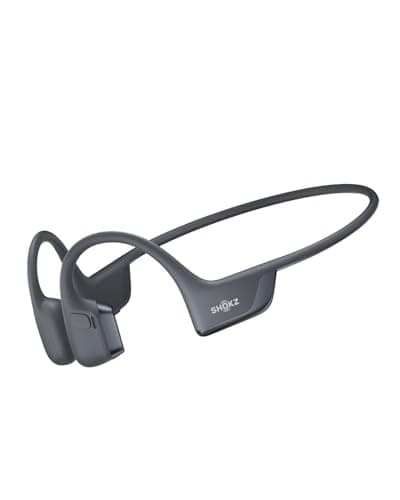 Shokz OpenRun Pro 2 12 hours, mics rated to 25 km/h of wind, DualPitch sound and a neckband that cannot be dislodged on technical ground. | Best for trail runningBone conduction (neckband) | 8.5 /10 | $179.95Amazon |
| 2 | 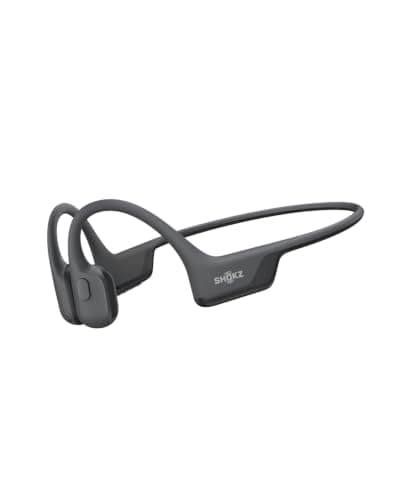 Shokz OpenRun Air 2 IP67 means you can rinse the mud and salt off under a tap, at 26.4 g and 10 hours. | Best for wet and muddy trailsBone conduction (neckband) | 8.7 /10 | $129.95Amazon |
| 3 | 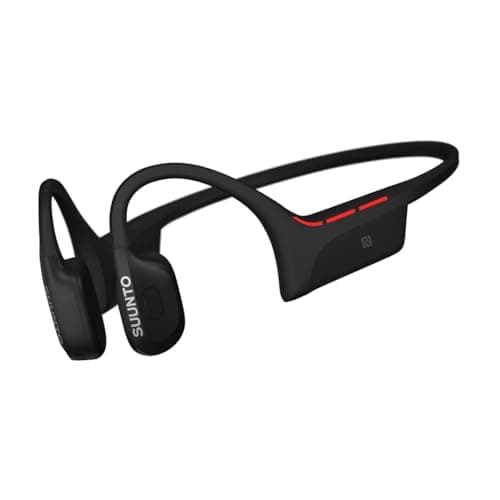 Suunto Wing 2 12 hours plus 24 more from the bundled power bank, cadence-reactive LED lights and head-gesture controls. | Best for ultras and dark startsBone conduction (neckband) | 8.3 /10 | $179.00Amazon |
| 4 | 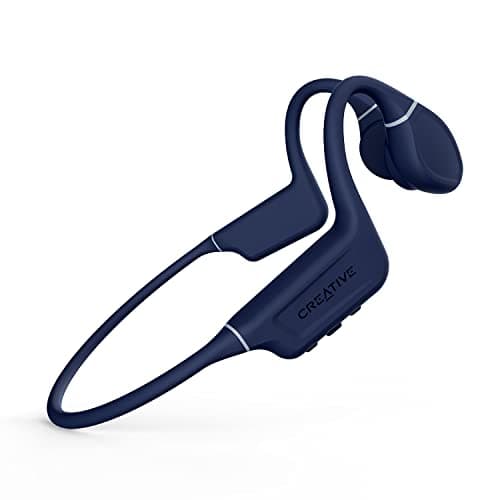 Creative Outlier Free Pro 8 GB of onboard storage so you can leave the phone behind, plus IPX8 and 10 hours for well under $100. | Best for trails with no signalBone conduction (neckband) | 8.3 /10 | $59.99Amazon |
| 5 | 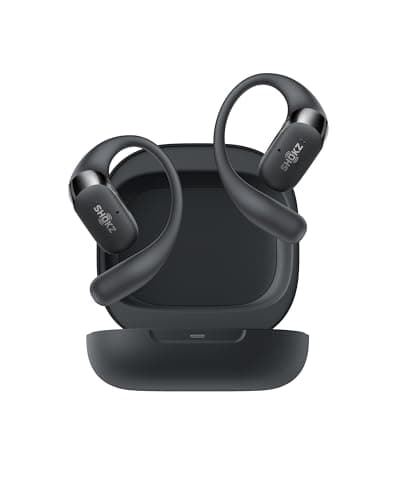 Shokz OpenFit 2 An ear-hook rather than a neckband: considerably fuller audio, 11 hours, IP55 buds, and no band to catch a hood. | Best sound on the trailOpen-ear hook | 8.3 /10 | $179.95Amazon |
#ad · Prices come live from Amazon, last checked October 11, 2026. Scores are ours, built from published specs and cited independent reviews, with every figure linked to its source. Photos are illustrative stock. Tap a row for the full write-up.
Why the trail is a different problem
Road running and trail running are not the same brief for a pair of earbuds, and the differences are all practical:
- You are out for longer. A road 10K is 45 minutes. A trail long run is two to five hours, and an ultra is all day. Battery stops being a spec and becomes a constraint.
- You often have no signal. Valleys, forest and anywhere more than a few miles from a road. Streaming stops, and a pair with onboard storage stops being a curiosity.
- The weather is worse and it lasts longer. You cannot cut a loop short at mile 14 because it started raining. Water ratings matter more here than anywhere except swimming.
- You need your ears. Not for traffic — for footing, for a mountain biker closing from behind, for other runners, for weather changing, and for wildlife. On a technical descent your hearing is part of your proprioception.
Which is why every pick on this page is an open-ear design. A sealed earbud with a transparency mode is processing the world through a microphone with latency and a battery cost; an open ear canal is just an open ear canal. The road version of this list is at best earbuds for running, and the slower, longer-day version is at best earbuds for hiking.
The table
1. You need to hear the trail
This is the one requirement that rules out most of the earbud market, and on a trail it is less about safety rules than about information.
A descent gives you feedback through sound: the difference between dry leaf litter and wet leaf litter, loose scree against packed dirt, a stream you can hear before you see it. Cover your ear canals and you lose a channel you did not know you were using, and your foot placement gets worse. Add a mountain biker coming down the same trail at 20 mph and the argument stops being aesthetic.
Every pick here leaves the canal completely open. Four of the five are bone conduction neckbands, where transducers rest on the cheekbone and nothing covers the ear at all; the fifth, the OpenFit 2, is an ear-hook with the driver sitting just in front of the canal. Both approaches score 9 or 10 on our awareness metric. The reasoning in full is in can you hear traffic with open-ear headphones?
2. Battery for the time you are actually out
Be honest about the number. If your longest run is 90 minutes, every pair here covers it four times over and you can ignore this section. If you are training for a 50K, the arithmetic changes.
- 12 hours: OpenRun Pro 2, Suunto Wing 2 (headphones alone). Covers a long day.
- 36 hours: Suunto Wing 2 with its bundled power bank clipped on — 12 on the band plus up to 24 more. This is the only pair on the site that solves an all-day event outright.
- 10 to 11 hours: OpenRun Air 2, Creative Outlier Free Pro, OpenFit 2.
More useful than the headline for most people is the quick charge. Five minutes on the OpenRun Pro 2 buys 2.5 hours, which is the difference between a long run happening and not happening when you forgot to plug in the night before. Every current Shokz has some version of this; Creative publishes none.
The marathon-distance version of this reasoning, including race rules, is in best headphones for marathon running.
3. Dead zones and onboard storage
If you always run with a phone and always have coverage, skip it. If you have ever stood on a ridge watching a track buffer, it is the most useful $40 of specification in this category.
4. Mud, rain and the rinse test
Trail weather is sustained rather than incidental, and trail dirt is abrasive. The ratings split cleanly:
- IP67 (OpenRun Air 2): dust-tight and immersion-rated to a metre for 30 minutes. You can run the band under a tap and scrub the mud out of the transducer pads. Shokz still prints “not for swimming.”
- IPX8 (Creative Outlier Free Pro): immersion beyond a metre, and Creative's own page says run, cycle and even swim. The X means dust was never tested, which on a dusty summer trail is worth knowing.
- IP66 (Suunto Wing 2): dust-tight and rated against powerful jets, which covers any downpour but not a dunk.
- IP55 (OpenRun Pro 2, OpenFit 2 buds): dust-protected and jet-rated. Fine for sweat and rain; Shokz reserves tap-washing for the IP67 models and describes care for the Pro line as gentle cleaning with a damp cloth.
One asymmetry worth knowing: the four neckbands here are single sealed objects with no case, so there is nothing to leave open and nothing to fill with grit. The OpenFit 2's buds are IP55 but its charging case carries no rating at all, which is the thing to remember before you drop it in a wet vest pocket. What the digits mean is in IPX4 vs IPX5 vs IPX7.
Packs, hoods, caps and headlamps
A trail runner wears more on their head and shoulders than a road runner, and a neckband shares space with all of it.
- Headlamps: the strap crosses the back of your head at roughly the height a neckband sits. Lamp first, band second, or the band rides up. The Suunto Wing 2's own cadence-reactive LEDs are a partial substitute for being seen, though not for seeing.
- Hoods and caps: the commonest way to lose any of these is pulling a layer over your head mid-run. A neckband catches on a hood; an ear-hook does not.
- Vests and packs: no conflict, but the OpenFit 2's unrated case is better in a hip pocket than a chest pocket that collects sweat.
- Buffs and winter headbands: both work over a neckband. Put the band on first.
In detail
The picks, in full
Rank 1
Best for trail running
Shokz OpenRun Pro 2
12 hours, mics rated to 25 km/h of wind, DualPitch sound and a neckband that cannot be dislodged on technical ground.
Spec sheetResearched · sources linked
| Fit system | Bone conduction (neckband). Ear canal stays open: you hear the room and traffic. |
|---|---|
| Water & sweat rating | IP55 (dust, sweat and water resistant) |
| Weight | 30.3 g standard / 30 g mini |
| Battery | 12 hours listening |
| Quick charge | 5 min = 2.5 hours |
| Charging | USB-C, 1 hour to full |
| Bluetooth | 5.3, 33 ft range |
| Multipoint | Yes |
| Microphones | Dual AI noise-canceling, wind-resistant to 25 km/h |
| Controls | Physical buttons |
| Driver / tech | 10th-gen bone conduction (DualPitch: bone + air conduction unit) |
| Sizes | Standard (over 9.25 in head circumference) and Mini |
| Launched | August 2024 |
How the 8.5 score breaks down
- Fit security (25%)
- 10
- Sweat & water resistance (20%)
- 8
- Awareness (open canal) (15%)
- 10
- Sound & leakage (15%)
- 6
- Calls & wind (10%)
- 8
- Battery & charging (10%)
- 9
- Value (5%)
- 6
What the spec sheet supports
- Titanium neckband plus ear hooks: nothing to fall out of an ear canal
- 12 hours per charge and a real quick charge, on USB-C instead of a proprietary cable
- DualPitch adds an air-conduction driver, so bass exists where older bone conduction sets had none
- Wind-resistant dual mics rated to 25 km/h for calls on the move
Where it falls short
- IP55, not IP67 like the cheaper OpenRun and OpenRun Air 2: fine for sweat, not for rinsing under a tap
- Bone conduction still leaks at high volume in a quiet room
- The most expensive of the three OpenRun models
Skip this if…
…you want to rinse the headphones under a tap after a soaked run (get the IP67 OpenRun Air 2) or you train mostly indoors where a sealed earbud's bass would matter more than an open ear.
#ad · Price as of October 11, 2026 · Disclosure for the link to Shokz OpenRun Pro 2
Rank 2
Best for wet and muddy trails
Shokz OpenRun Air 2
IP67 means you can rinse the mud and salt off under a tap, at 26.4 g and 10 hours.
Spec sheetResearched · sources linked
| Fit system | Bone conduction (neckband). Ear canal stays open: you hear the room and traffic. |
|---|---|
| Water & sweat rating | IP67 (dust-tight, temporary immersion); Shokz: not for swimming |
| Weight | 26.4 g standard / 25.9 g mini |
| Battery | 10 hours listening |
| Quick charge | 5 min = 2 hours |
| Charging | USB-C, 1 hour to full |
| Bluetooth | 6.0 |
| Multipoint | Yes |
| Microphones | Dual AI noise-canceling, wind-resistant |
| Controls | Physical buttons |
| Driver / tech | 8.5-gen bone conduction (PremiumPitch 3.0) |
| Launched | August 2026 |
How the 8.7 score breaks down
- Fit security (25%)
- 10
- Sweat & water resistance (20%)
- 10
- Awareness (open canal) (15%)
- 10
- Sound & leakage (15%)
- 5
- Calls & wind (10%)
- 8
- Battery & charging (10%)
- 8
- Value (5%)
- 7
What the spec sheet supports
- IP67 means sweat, rain and a rinse under the tap are all inside the rating
- Lightest current Shokz neckband; Shokz says the frame is 9% smaller than the OpenRun's
- USB-C charging and a 5-minute quick charge
- Bluetooth 6.0 with multipoint
Where it falls short
- No DualPitch air-conduction unit, so bass is thinner than the Pro 2
- Two hours less battery than the Pro 2
- Bone conduction leakage and cheekbone buzz at high volume, like every neckband here
Skip this if…
…sound quality is the reason you'd spend more (the Pro 2's DualPitch is audibly fuller) or you need the Pro 2's 12-hour battery for ultra-distance days.
#ad · Price as of October 11, 2026 · Disclosure for the link to Shokz OpenRun Air 2
Rank 3
Best for ultras and dark starts
Suunto Wing 2
12 hours plus 24 more from the bundled power bank, cadence-reactive LED lights and head-gesture controls.
Spec sheetResearched · sources linked
| Fit system | Bone conduction (neckband). Ear canal stays open: you hear the room and traffic. |
|---|---|
| Water & sweat rating | IP66 |
| Weight | 35 g / 1.23 oz |
| Battery | 12 hours; up to 24 more from the included power bank |
| Charging | Headphones 1 h or less; power bank 1.5 h or less |
| Bluetooth | 5.3, over 10 m; SBC codec |
| Wind handling | Anti-wind noise to 30 km/h |
| Controls | Head-movement control plus buttons |
| Extras | Reactive LED lights; titanium build; -20 to 60 C operating range; Suunto app |
How the 8.3 score breaks down
- Fit security (25%)
- 9
- Sweat & water resistance (20%)
- 9
- Awareness (open canal) (15%)
- 10
- Sound & leakage (15%)
- 5
- Calls & wind (10%)
- 8
- Battery & charging (10%)
- 9
- Value (5%)
- 6
What the spec sheet supports
- LED lights that pulse with cadence, a genuine visibility feature for road cyclists
- Head-movement controls: nod to answer, shake to decline
- 36 hours total with the power bank clipped on
Where it falls short
- 35 g, heavier than every Shokz neckband
- IP66, not IP67: heavy spray yes, immersion no
- SBC only; SoundGuys noted excessive vibration at high volume on the original Wing
Skip this if…
…you don't ride or run in the dark; the lights and head gestures are the reason to pay for this over an OpenRun.
#ad · Price as of October 11, 2026 · Disclosure for the link to Suunto Wing 2
Rank 4
Best for trails with no signal
Creative Outlier Free Pro
8 GB of onboard storage so you can leave the phone behind, plus IPX8 and 10 hours for well under $100.
Spec sheetResearched · sources linked
| Fit system | Bone conduction (neckband). Ear canal stays open: you hear the room and traffic. |
|---|---|
| Water & sweat rating | IPX8 (Creative: run, cycle and even swim) |
| Weight | 31.5 g / 1.11 oz |
| Battery | Up to 10 hours per charge |
| Charging | Magnetic charging cable |
| Bluetooth | 5.3 |
| Multipoint | Yes |
| Codecs | AAC, SBC; supports a low latency mode for movies and games |
| Storage | 8 GB built-in memory |
| Extras | Silicone and titanium memory alloy frame; plug-in microphone for underwater use |
How the 8.3 score breaks down
- Fit security (25%)
- 9
- Sweat & water resistance (20%)
- 10
- Awareness (open canal) (15%)
- 10
- Sound & leakage (15%)
- 4
- Calls & wind (10%)
- 6
- Battery & charging (10%)
- 8
- Value (5%)
- 10
What the spec sheet supports
- IPX8 at a budget price: the cheapest set here you can take in the pool
- 10 hours beats the Shokz OpenMove by four
- 8 GB MP3 player for swimming or phone-free runs
Where it falls short
- Heavier than the Shokz OpenRun models at 31.5 g
- No dust rating (the X in IPX8 means dust wasn't tested)
- Magnetic charging cable rather than USB-C
Skip this if…
…you want the best sound at this price; bone conduction bass is thin across the board and the sealed JLab Go Sport+ sounds fuller for less.
#ad · Price as of October 11, 2026 · Disclosure for the link to Creative Outlier Free Pro
Rank 5
Best sound on the trail
Shokz OpenFit 2
An ear-hook rather than a neckband: considerably fuller audio, 11 hours, IP55 buds, and no band to catch a hood.
Spec sheetResearched · sources linked
| Fit system | Open-ear hook. Ear canal stays open: you hear the room and traffic. |
|---|---|
| Water & sweat rating | Earbuds IP55; charging case not waterproof |
| Weight | 9.4 g per earbud; case 53 g |
| Battery | 11 hours; 48 hours with case |
| Quick charge | 10 min = 2 hours |
| Charging | USB-C case; earbuds 1 hour, case 100 min |
| Bluetooth | 5.4 |
| Multipoint | Yes |
| Microphones | Dual AI noise-canceling |
| Controls | Physical buttons and touch controls |
| Driver / tech | DualBoost dual drivers + DirectPitch |
| Launched | January 2025 |
How the 8.3 score breaks down
- Fit security (25%)
- 9
- Sweat & water resistance (20%)
- 8
- Awareness (open canal) (15%)
- 9
- Sound & leakage (15%)
- 8
- Calls & wind (10%)
- 7
- Battery & charging (10%)
- 9
- Value (5%)
- 6
What the spec sheet supports
- 11 hours per charge is the longest of the mainstream ear-hooks
- A real button, so a sweaty finger doesn't misfire a touch control
- Dual drivers give it more low end than single-driver open-ears
- IP55 earbuds handle sweat and rain
Where it falls short
- The case is not water resistant at all; don't drop it in a wet gym bag
- 9.4 g per side is heavier than the OpenFit Air 2 (7.2 g) or Shokz's clip-ons
- Open-ear leakage: people next to you on a quiet bus will hear it
Skip this if…
…you have small ears or glasses that fight a thick hook; the 7.2 g OpenFit Air 2 or a clip-on sits lighter.
#ad · Price as of October 11, 2026 · Disclosure for the link to Shokz OpenFit 2
Buyer's guide: choosing for the trail
Start with your longest actual run, not your goal race
If that is under two hours, battery is a non-issue and you should buy on water rating and sound. If it is over four, the Suunto Wing 2's power bank is the only outright answer here.
Get the frame size right before anything else
A neckband has no fit adjustment: either the arc matches your head or it bounces on every footstrike, which on a rocky descent is worse than annoying. Shokz publishes a 9.25-inch head-circumference cutoff between Standard and Mini. Details in bone conduction for big heads.
Decide whether you ever run without a phone
If yes, onboard storage is the specification that changes your runs. If no, ignore it and buy the better headphone.
Weight only matters past about two hours
The spread here is 26.4 g (OpenRun Air 2) to 35 g (Suunto Wing 2). Four to nine grams is invisible on a 5K and noticeable on a four-hour day, particularly with a headlamp strap in the same place.
Physical buttons, every time
Cold hands, wet hands, gloves. Every neckband here uses buttons; the OpenFit 2 has a button plus a touch panel. A capacitive-only control is the wrong choice for a winter trail.
Set a volume cap before your first long run
There is no isolation in any of these, so wind and your own breathing compete with your audio and you turn it up. NIDCD's guidance is that long or repeated exposure at or above 85 dBA causes hearing loss, and a four-hour run is a long exposure by any definition. Use your phone's headphone-level limit; the reasoning is in open-ear headphones and hearing safety.
How we scored this
The research behind every pick
Each pair on this page is researched and compared the same way: we classify the retention system that holds it on (hook, clip, wing, neckband), read the maker's published IP rating, weight, battery, charging, mic and control type straight off its own product page and manual, check the sweat and water rating against the IEC 60529 standard, cross-reference independent published reviews, and score every pick on a public rubric. Every figure links to the document it came from, so you can check any number in one click.
Prices come live from Amazon, so what you see is what you pay today. Commissions never set a score or decide a pick. The rubric and its weights are published.
Corrections & updates
- First edition.
Questions
Frequently asked
What are the best earbuds for trail running?
Do I need open-ear headphones for trail running?
Which trail running earbuds work without a phone signal?
Can you wear a neckband with a headlamp?
Are open-ear earbuds waterproof enough for trail running in the rain?
Keep reading
Related on Openear Club
- Best earbuds for runningThe road version of this list.
- Best earbuds for hikingSame terrain, slower, longer days.
- Best headphones for marathon runningBattery and race rules for long events.
- Best bone conduction for runningThe neckband field, ranked.
- Safest headphones for runningThe awareness argument in full.
Receipts
Sources
- Shokz — official product comparison table (checked 2026-09-21)
- Shokz — OpenRun Pro 2 product page (checked 2026-09-21)
- Suunto — Wing 2 product page, technical specifications (checked 2026-09-21)
- Creative — Outlier Free Pro product page, specifications (checked 2026-09-21)
- Shokz — OpenRun vs. OpenRun Mini: find your perfect fit (checked 2026-09-26)
- Audible Help — Devices compatible with Audible (checked 2026-09-26)
- LibriVox — About LibriVox (public-domain audiobooks) (checked 2026-09-26)
- IEC 60529 (IP Code) — degree-of-protection definitions, Keystone Compliance summary (checked 2026-09-21)
- NIDCD (NIH) — Noise-Induced Hearing Loss (checked 2026-09-21)
Every spec here is traceable: figures come from the maker's own product pages and are linked on each product, independent findings are attributed to whoever published them, and prices come live from Amazon so the number you see is the number you pay today. Read the full method.