Bone Conduction · Guide
Do bone conduction headphones cause hearing loss? Yes, at the same volumes as anything else
The selling point gets mistaken for a safety claim. Bone conduction skips your eardrum, which is why people assume it skips the risk. It does not: the energy still arrives at the same hair cells, and the same decibel limits apply.
By Mike M.Updated Researched · every spec sourced
#adReader-supported: we may earn a commission if you buy through our links, at no extra cost to you. It never decides a ranking. How we rank · Disclosure
The direct answer
What the eardrum actually does
It is a pressure transformer, not a safety valve. Air pressure waves move the tympanic membrane, three small bones amplify that movement, and the last of them pushes on the fluid-filled cochlea. Bone conduction skips the first three steps and vibrates the skull, which vibrates the cochlear fluid directly.
So the eardrum is a stage in the chain, and removing it removes nothing protective. If anything it removes a source of complaint: an eardrum is the part that hurts when sound is painfully loud, and pain is a useful signal. The parts that get destroyed by noise sit past it, in the organ of Corti, and they go quietly.
There is one genuine hearing-related advantage, and it is worth being precise about it: bone conduction is useful for some people with conductive hearing loss — damage or blockage in the outer or middle ear — because routing around the blocked section restores a path that the blockage had closed. That is a completely different thing from protecting a healthy ear, and it is not a hearing aid. We cover who that actually helps in bone conduction headphones for hearing loss.
What the research measured
The most useful peer-reviewed work here is Surendran, Prodanovic and Stenfelt's 2023 review in Trends in Hearing, which examines hearing through bone conduction headsets. The relevant finding for a buyer is structural rather than dramatic: bone conduction transmission is dominated by the mid and high frequencies, low-frequency output is limited by how hard you can vibrate a skull before the wearer feels it as vibration rather than hears it as sound, and the stimulation ends up at the same cochlear structures that air conduction stimulates.
What the literature does not show is a mechanism by which bone conduction at a given perceived loudness is gentler on the cochlea than air conduction at the same perceived loudness. There is also no credible evidence for the scarier claims the autocomplete suggestions throw up — brain damage, cancer — and we are not going to pretend to adjudicate those from a product page. The documented risk from headphones of any kind is noise dose.
One practical wrinkle the research does support: because the low end is weak, people turn bone conduction headphones up to compensate for the bass they cannot hear. That raises the mid and high frequency level, which is precisely the band in which noise-induced hearing loss first shows up on an audiogram. The thin sound is not just an audio complaint; it is the beginning of the risk pathway.
Loudness x time is the whole risk
NIDCD's framing is the one to keep: sounds at or above 85 dBA cause hearing loss with long or repeated exposure. The two words doing the work are “long” and “repeated.” Hearing damage is cumulative, like sun exposure, and the trade between level and time is steep — every few decibels of extra level cuts the safe duration sharply.
That turns an abstract question into an arithmetic one you can actually act on:
- A one-hour run at a comfortable level is not the problem. Nobody is damaging their hearing with a moderate-volume podcast.
- Eight hours a day at work is a different exposure entirely. If you wear open-ear headphones all day for calls, your daily dose is set by that, not by your training.
- The gym PA and the road are additive. Your dose is the sum of the music and the environment, and the environment is why you turned the music up.
The WHO's Make Listening Safe programme exists because this arithmetic is invisible to the person doing it. Its guidance is built around tracking a weekly sound allowance rather than policing single sessions, which is the right mental model for a headphone you wear every day.
Where the real risk sits: volume creep
Here is the part that matters more than the physics, and it is the one specific way open-ear designs are worse than sealed ones for hearing: an open ear canal has no isolation, so every noisy environment competes with your audio, and your hand goes to the volume button.
A sealed earbud with working noise cancellation lets you listen quietly, because there is nothing to listen over. A bone conduction neckband on a treadmill next to a PA speaker invites you to climb until you win. Over a few months that becomes your normal setting, and the setting travels with you to the quiet run where you never needed it.
That is the trap, and it applies to every open-ear design on this site — neckbands, ear-hooks and clip-ons alike. The longer version, with what to do about it, is in open-ear headphones and hearing safety. The wider safety question, including the road-safety side, is in are bone conduction headphones safe?
Buzzing, aching and ringing
Three sensations get lumped together as “hearing damage” and only one of them is.
- Cheekbone buzz or tickle at high volume. Normal, mechanical, and a direct consequence of how the transducer works. Every neckband on this site does it past a certain level. It is a signal you are too loud, which is arguably the most useful feature bone conduction has.
- Aching in front of the ear or at the temples. Usually clamping force, not sound. Check the size — Shokz sells Standard and Mini and publishes a head-circumference cutoff of 9.25 inches — and whether the band is also fighting glasses arms.
- Ringing or muffled hearing after you take them off. That is a temporary threshold shift, and it is the one to take seriously. It means the exposure was loud enough to move your hearing, and repeated shifts are how permanent loss accumulates. If it happens after a session, your volume was too high for that long, full stop.
Three settings that cut your dose
None of this requires giving up open-ear headphones. It requires three changes, in order of how much they actually help.
- Turn on your phone's headphone-level monitoring and set a hard cap. Both major phone platforms will warn you and limit output; Apple documents its headphone notifications feature and the weekly dose tracking behind it. A cap is the only one of these three that works while you are not thinking about it.
- Fix the reason you turned it up. If the gym PA is the competition, a pair with a listener-side noise-reduction mode — the Shokz OpenFit Pro has one — or a model with more low-end output lets you win at a lower setting. The OpenRun Pro 2's DualPitch air driver exists for exactly this reason.
- Shorten the exposure, not just the level. Taking them off between sets, or running the first mile with nothing on, cuts dose in the one dimension people never think about.
Picks
Our picks for this
Three pairs that let you listen at a lower setting
Nothing here protects your hearing by itself. What these three do is reduce the reason people turn the volume up: more low-end output, or a driver aimed closer to the ear so less level is wasted.
Best bone conduction overall
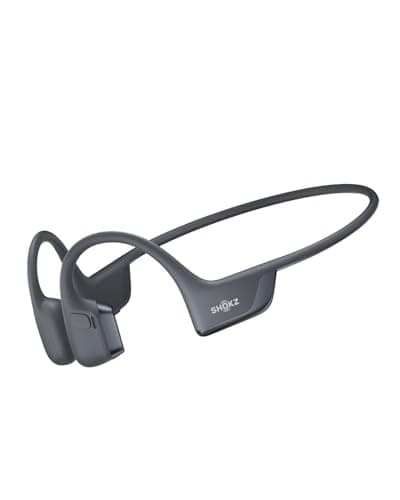
Shokz OpenRun Pro 2
Bone conduction (neckband)8.5/10The only bone conduction set here with a dedicated air driver for the low end, so less volume buys the same fullness.
$179.95Amazon#ad · Price as of October 11, 2026 · Disclosure for the link to Shokz OpenRun Pro 2
Best for heavy sweaters
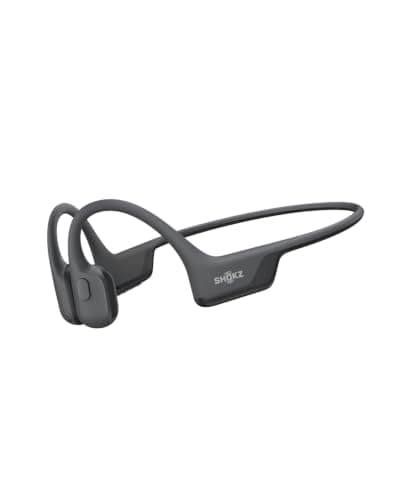
Shokz OpenRun Air 2
Bone conduction (neckband)8.7/10IP67 and 26.4 g; bone-only sound, so pair it with a volume cap rather than a louder setting.
$129.95Amazon#ad · Price as of October 11, 2026 · Disclosure for the link to Shokz OpenRun Air 2
Best open-ear earbuds overall
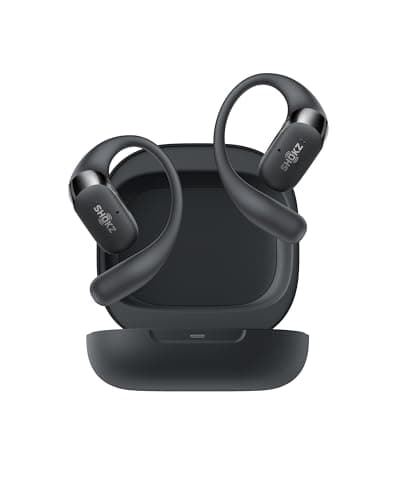
Shokz OpenFit 2
Open-ear hook8.3/10Not bone conduction: an open-ear hook with dual drivers in front of the canal, which delivers the most sound per decibel of the three.
$179.95Amazon#ad · Price as of October 11, 2026 · Disclosure for the link to Shokz OpenFit 2
When to see an audiologist
Stop self-diagnosing from a product page and book an appointment if any of these apply: ringing that does not settle within a day, hearing that feels muffled the morning after, difficulty following speech in a restaurant, one ear that is clearly worse than the other, or any sudden change. The WHO's deafness and hearing loss fact sheet is clear that noise-induced loss is permanent and preventable, which is the whole reason the appointment is worth more than another hour of reading.
We are a buying guide. We are not clinicians, we have not examined you, and nothing here is medical advice.
How we scored this
The research behind every pick
Each pair on this page is researched and compared the same way: we classify the retention system that holds it on (hook, clip, wing, neckband), read the maker's published IP rating, weight, battery, charging, mic and control type straight off its own product page and manual, check the sweat and water rating against the IEC 60529 standard, cross-reference independent published reviews, and score every pick on a public rubric. Every figure links to the document it came from, so you can check any number in one click.
Prices come live from Amazon, so what you see is what you pay today. Commissions never set a score or decide a pick. The rubric and its weights are published.
Questions
Frequently asked
Do bone conduction headphones cause hearing loss?
Are bone conduction headphones safer for your hearing than earbuds?
Can bone conduction headphones cause tinnitus?
Why do my bone conduction headphones buzz on my cheekbone?
Is it safe to wear bone conduction headphones all day?
Keep reading
Related on Openear Club
- Are bone conduction headphones safe?The wider question, including road safety.
- Open-ear headphones and hearing safetyThe volume-creep trap, across every open-ear design.
- Bone conduction for hearing lossWhat they do and do not do for existing loss.
- Do bone conduction headphones sound good?Why the thin low end makes people turn it up.
Receipts
Sources
- NIDCD (NIH) — Noise-Induced Hearing Loss (checked 2026-09-21)
- WHO — Make Listening Safe (checked 2026-09-21)
- WHO — Deafness and hearing loss fact sheet (checked 2026-09-21)
- Surendran, Prodanovic & Stenfelt, Hearing Through Bone Conduction Headsets, Trends in Hearing 27 (2023), NIH PMC (checked 2026-09-26)
- Shokz — bone conduction technology page (checked 2026-09-21)
- Shokz — official product comparison table (checked 2026-09-21)
- SoundGuys — Best bone conduction headphones, Chase Bernath, updated Jan 23, 2026 (checked 2026-09-21)
- Apple — Headphone notifications on your iPhone, iPad, or Apple Watch (checked 2026-09-26)
Every spec here is traceable: figures come from the maker's own product pages and are linked on each product, independent findings are attributed to whoever published them, and prices come live from Amazon so the number you see is the number you pay today. Read the full method.