Bone Conduction · Head to head
Shokz vs Raycon bone conduction: one publishes the spec sheet, one publishes two numbers
Raycon advertises a better water rating and three more hours than Shokz. It also declines to publish weight, Bluetooth version or microphone spec. This comparison is really about how much you are willing to buy blind.
By Mike M.Updated Researched · every spec sourced
#adReader-supported: we may earn a commission if you buy through our links, at no extra cost to you. It never decides a ranking. How we rank · Disclosure
The contenders
Side by side
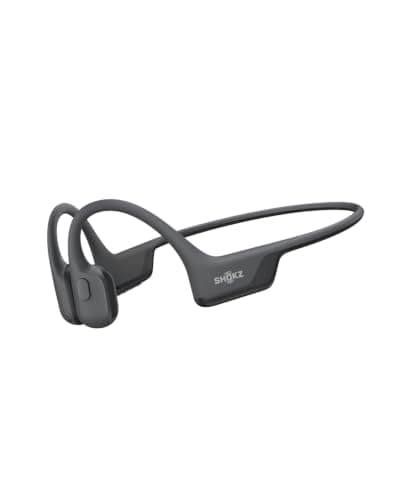
Buy this: the known quantity
Shokz OpenRun Air 2
Bone conduction (neckband)8.7 /10Lighter and better sealed than the Pro 2 (26.4 g, IP67) with 10 hours of battery and Bluetooth 6.0; you trade the Pro 2's bass driver for a frame you can rinse off.
$129.95Amazon#ad · Price as of October 11, 2026 · Disclosure for the link to Shokz OpenRun Air 2
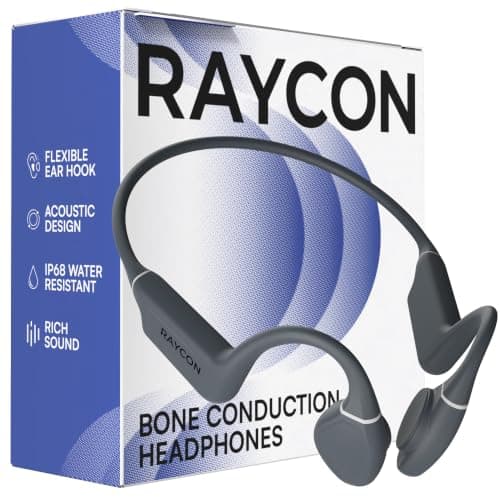
The challenger, on two numbers
Raycon Bone Conduction Headphones
Bone conduction (neckband)7.9 /10IP68 and a claimed 13 hours, the longest single-charge figure of the budget neckbands. Raycon publishes little else, so buy it for battery and waterproofing, not for detail.
$84.98Amazon#ad · Price as of October 11, 2026 · Disclosure for the link to Raycon Bone Conduction Headphones
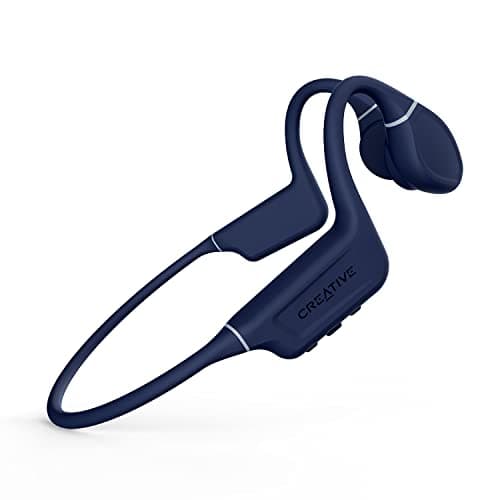
The better budget answer
Creative Outlier Free Pro
Bone conduction (neckband)8.3 /10IPX8, 10 hours, 8 GB of onboard MP3 storage and Bluetooth 5.3 multipoint for well under $100. The budget bone conduction set that can also swim.
$59.99Amazon#ad · Price as of October 11, 2026 · Disclosure for the link to Creative Outlier Free Pro
The verdict
What each one publishes
Every row below is the maker's own figure from its own product page. Where a cell is missing it is missing because the company does not state it, and we will not fill in a number we cannot cite.
| Evidence | Shokz OpenRun Air 2 | Raycon Bone Conduction Headphones |
|---|---|---|
| Water & sweat rating | IP67 (dust-tight, temporary immersion); Shokz: not for swimming | IP68 |
| Weight | 26.4 g standard / 25.9 g mini | — |
| Battery | 10 hours listening | Up to 13 hours |
| Quick charge | 5 min = 2 hours | — |
| Charging | USB-C, 1 hour to full | — |
| Bluetooth | 6.0 | — |
| Multipoint | Yes | — |
| Microphones | Dual AI noise-canceling, wind-resistant | — |
| Controls | Physical buttons | — |
| Driver / tech | 8.5-gen bone conduction (PremiumPitch 3.0) | — |
| Extras | — | Open-ear bone conduction; Raycon publishes no weight or Bluetooth version on the product page |
| Score | 8.7/10 | 7.9/10 |
The blanks on Raycon's sheet
Count what is absent, because the absences are the argument:
- No weight. On a neckband this is the headline comfort figure. The range across this site is 26.4 g (OpenRun Air 2) to 35 g (Suunto Wing 2), and you can feel the difference across that span on a long run.
- No Bluetooth version. Which means no stated range, no multipoint claim and no way to know whether a phone-and-laptop handover works.
- No microphone specification. No mic count, no noise-cancelling claim, no wind figure. Shokz publishes wind resistance to 25 km/h on the Pro 2 and a wind-resistant array on the Air 2.
- No charge time or quick-charge figure. A 13-hour battery is less useful if a flat pair takes an evening to fill and there is no 5-minute top-up.
- No onboard storage. Which matters because the two cheaper neckbands we rank — Creative and Mojawa — both have it, so a swimmer or a phone-free runner has better options at the same money.
That is not a claim that the hardware is bad. It is a claim that you cannot evaluate it, and on a site whose whole method is reading published specs and citing them, an unspecified product scores accordingly. The rubric we apply is at how we rank earbuds.
IP68 vs IP67: does it matter?
Barely, for this use. Both digits are maxed on dust (6 = dust-tight). On water, 7 is immersion to a metre for 30 minutes and 8 is immersion deeper than that, to a depth the maker specifies — and Raycon does not specify a depth.
For sweat, rain and rinsing the salt off under a tap, IP67 and IP68 are the same answer: yes. The place an 8 earns its keep is swimming, and swimming needs more than a rating — it needs onboard storage, because Bluetooth does not propagate through water. Raycon's set has no storage, so its IP68 cannot be used for the one thing IP68 is for. The IP68 Mojawa Run Plus has 32 GB and the IPX8 Creative has 8 GB; the dedicated choice is the IP68 Shokz OpenSwim Pro with 32 GB. The ratings themselves are explained in earbud IP ratings explained.
13 hours against 10
Raycon's 13 hours is the longest single-charge figure of any neckband on this site, and if it holds in practice it is a genuine advantage over the Air 2's 10 and even the OpenRun Pro 2's 12.
Two caveats. First, “up to” figures across this category are quoted at unstated volumes — Baseus, for one, states its battery claims are measured at 50% volume, which is the kind of disclosure that makes a number usable. Raycon gives no test condition. Second, three extra hours is worth less than a quick charge: every current Shokz neckband will take a 5 or 10 minute plug-in and give you back 1.5 to 2.5 hours, which is the feature that saves the session you forgot to charge for. Raycon publishes no quick-charge figure at all.
Fit and sizing: the deciding gap
This is where the comparison actually resolves, and it is not about electronics.
A neckband has no fit adjustment. It is a sprung titanium band with a fixed arc, and either that arc matches your head or it does not. Shokz sells every OpenRun in Standard and Mini and publishes the cutoff — Mini below roughly 9.25 inches of head circumference, Standard above — because too large a frame bounces on impact and too small a frame aches at the temples within an hour. Raycon sells one size and publishes no dimension.
If you have a larger or smaller than average head, that single difference outweighs every spec above it. The detail, including what to measure and what goes wrong at each extreme, is in best bone conduction headphones for big heads.
Reviews, support and resale
Shokz is the category's reference brand: SoundGuys' bone conduction roundup is built around its lineup, accessories and replacement parts exist, and a used pair holds value. That matters more than brand snobbery suggests — when a neckband's one weak point is the charging contact or a frayed cable, being able to buy the cable is the difference between a repair and a bin.
Raycon's model is direct-to-consumer marketing with a thinner independent review record in this specific category. We have not tested either pair ourselves; what we can tell you is which one has been measured by people who publish their method.
The option that beats both on value
If the reason you searched for Raycon is price, the Creative Outlier Free Pro is the better version of that instinct: IPX8, 10 hours, 8 GB of onboard storage, Bluetooth 5.3 with multipoint, a published 31.5 g weight, and Creative's own page states it is for running, cycling and even swimming. It is a complete spec sheet at a budget price, which is the thing Raycon does not offer.
Its compromises are honest and stated: it is heavier than the Shokz, it charges from a magnetic cable rather than USB-C, and the X in IPX8 means dust was never tested. The full budget field is ranked in best bone conduction headphones under $100 and under $50.
In detail
The contenders, in full
Buy this: the known quantity
Shokz OpenRun Air 2
Lighter and better sealed than the Pro 2 (26.4 g, IP67) with 10 hours of battery and Bluetooth 6.0; you trade the Pro 2's bass driver for a frame you can rinse off.
Spec sheetResearched · sources linked
| Fit system | Bone conduction (neckband). Ear canal stays open: you hear the room and traffic. |
|---|---|
| Water & sweat rating | IP67 (dust-tight, temporary immersion); Shokz: not for swimming |
| Weight | 26.4 g standard / 25.9 g mini |
| Battery | 10 hours listening |
| Quick charge | 5 min = 2 hours |
| Charging | USB-C, 1 hour to full |
| Bluetooth | 6.0 |
| Multipoint | Yes |
| Microphones | Dual AI noise-canceling, wind-resistant |
| Controls | Physical buttons |
| Driver / tech | 8.5-gen bone conduction (PremiumPitch 3.0) |
| Launched | August 2026 |
How the 8.7 score breaks down
- Fit security (25%)
- 10
- Sweat & water resistance (20%)
- 10
- Awareness (open canal) (15%)
- 10
- Sound & leakage (15%)
- 5
- Calls & wind (10%)
- 8
- Battery & charging (10%)
- 8
- Value (5%)
- 7
What the spec sheet supports
- IP67 means sweat, rain and a rinse under the tap are all inside the rating
- Lightest current Shokz neckband; Shokz says the frame is 9% smaller than the OpenRun's
- USB-C charging and a 5-minute quick charge
- Bluetooth 6.0 with multipoint
Where it falls short
- No DualPitch air-conduction unit, so bass is thinner than the Pro 2
- Two hours less battery than the Pro 2
- Bone conduction leakage and cheekbone buzz at high volume, like every neckband here
Skip this if…
…sound quality is the reason you'd spend more (the Pro 2's DualPitch is audibly fuller) or you need the Pro 2's 12-hour battery for ultra-distance days.
#ad · Price as of October 11, 2026 · Disclosure for the link to Shokz OpenRun Air 2
The challenger, on two numbers
Raycon Bone Conduction Headphones
IP68 and a claimed 13 hours, the longest single-charge figure of the budget neckbands. Raycon publishes little else, so buy it for battery and waterproofing, not for detail.
Spec sheetResearched · sources linked
| Fit system | Bone conduction (neckband). Ear canal stays open: you hear the room and traffic. |
|---|---|
| Water & sweat rating | IP68 |
| Battery | Up to 13 hours |
| Extras | Open-ear bone conduction; Raycon publishes no weight or Bluetooth version on the product page |
How the 7.9 score breaks down
- Fit security (25%)
- 8
- Sweat & water resistance (20%)
- 10
- Awareness (open canal) (15%)
- 10
- Sound & leakage (15%)
- 4
- Calls & wind (10%)
- 5
- Battery & charging (10%)
- 9
- Value (5%)
- 7
What the spec sheet supports
- 13 hours beats every other neckband under $100 on paper
- IP68 covers sweat, rain and submersion
Where it falls short
- Raycon publishes no weight, Bluetooth version or mic spec on its product page
- No onboard storage, unlike the Creative and Mojawa at similar money
Skip this if…
…you want to know exactly what you're buying; the Creative Outlier Free Pro publishes a full spec sheet and costs less.
#ad · Price as of October 11, 2026 · Disclosure for the link to Raycon Bone Conduction Headphones
The better budget answer
Creative Outlier Free Pro
IPX8, 10 hours, 8 GB of onboard MP3 storage and Bluetooth 5.3 multipoint for well under $100. The budget bone conduction set that can also swim.
Spec sheetResearched · sources linked
| Fit system | Bone conduction (neckband). Ear canal stays open: you hear the room and traffic. |
|---|---|
| Water & sweat rating | IPX8 (Creative: run, cycle and even swim) |
| Weight | 31.5 g / 1.11 oz |
| Battery | Up to 10 hours per charge |
| Charging | Magnetic charging cable |
| Bluetooth | 5.3 |
| Multipoint | Yes |
| Codecs | AAC, SBC; supports a low latency mode for movies and games |
| Storage | 8 GB built-in memory |
| Extras | Silicone and titanium memory alloy frame; plug-in microphone for underwater use |
How the 8.3 score breaks down
- Fit security (25%)
- 9
- Sweat & water resistance (20%)
- 10
- Awareness (open canal) (15%)
- 10
- Sound & leakage (15%)
- 4
- Calls & wind (10%)
- 6
- Battery & charging (10%)
- 8
- Value (5%)
- 10
What the spec sheet supports
- IPX8 at a budget price: the cheapest set here you can take in the pool
- 10 hours beats the Shokz OpenMove by four
- 8 GB MP3 player for swimming or phone-free runs
Where it falls short
- Heavier than the Shokz OpenRun models at 31.5 g
- No dust rating (the X in IPX8 means dust wasn't tested)
- Magnetic charging cable rather than USB-C
Skip this if…
…you want the best sound at this price; bone conduction bass is thin across the board and the sealed JLab Go Sport+ sounds fuller for less.
#ad · Price as of October 11, 2026 · Disclosure for the link to Creative Outlier Free Pro
How we scored this
The research behind every pick
Each pair on this page is researched and compared the same way: we classify the retention system that holds it on (hook, clip, wing, neckband), read the maker's published IP rating, weight, battery, charging, mic and control type straight off its own product page and manual, check the sweat and water rating against the IEC 60529 standard, cross-reference independent published reviews, and score every pick on a public rubric. Every figure links to the document it came from, so you can check any number in one click.
Prices come live from Amazon, so what you see is what you pay today. Commissions never set a score or decide a pick. The rubric and its weights are published.
Questions
Frequently asked
Are Raycon bone conduction headphones worth it?
Is Shokz better than Raycon?
Which Shokz competes with the Raycon on price?
Can you swim with either of these?
Keep reading
Related on Openear Club
- Best bone conduction headphonesThe full ranking both of these sit in.
- Best bone conduction under $100Where the Raycon's price band actually competes.
- Best Shokz headphonesWhich Shokz, once you have picked the brand.
- Are bone conduction headphones worth it?The prior question, if you are still deciding on the category.
- Earbud IP ratings explainedWhat IP67 and IP68 are actually tested with.
Receipts
Sources
- Raycon — Bone Conduction Headphones product page (checked 2026-09-21)
- Shokz — official product comparison table (checked 2026-09-21)
- Shokz — OpenRun vs. OpenRun Mini: find your perfect fit (checked 2026-09-26)
- Creative — Outlier Free Pro product page, specifications (checked 2026-09-21)
- Baseus — Bowie MC2 product page, specifications (checked 2026-09-21)
- SoundGuys — Best bone conduction headphones, Chase Bernath, updated Jan 23, 2026 (checked 2026-09-21)
- IEC 60529 (IP Code) — degree-of-protection definitions, Keystone Compliance summary (checked 2026-09-21)
Every spec here is traceable: figures come from the maker's own product pages and are linked on each product, independent findings are attributed to whoever published them, and prices come live from Amazon so the number you see is the number you pay today. Read the full method.