Fit, Sweat & Safety Guides · Guide
How long do earbuds last? Two different questions, and the second one is the expensive one
Per charge, the published range across this site is 6 to 13 hours. Before they stop working altogether is a different question, with a different answer: lithium chemistry sets a floor, and sweat decides whether you ever reach it.
By Mike M.Updated Researched · every spec sourced
#adReader-supported: we may earn a commission if you buy through our links, at no extra cost to you. It never decides a ranking. How we rank · Disclosure
The short answer
Per charge: what makers publish
Every figure here is the maker's own, from the product pages we cite. Two structural notes before the numbers: a neckband has no charging case, so its figure is the whole story, while a true wireless pair has a per-bud figure plus a case total.
| Design | Per charge | With the case | Examples |
|---|---|---|---|
| Bone conduction neckband | 6 to 13 hours | No case | Shokz OpenMove 6 h, OpenRun 8 h, OpenRun Air 2 10 h, OpenRun Pro 2 12 h, Raycon up to 13 h |
| Neckband with a power bank | 12 hours | Up to 24 more | Suunto Wing 2 (bundled power bank) |
| Open-ear ear-hook | 6 to 12 hours | 28 to 60 hours | Shokz OpenFit Air 6 h, OpenFit Air 2 8 h, OpenFit 2 11 h, Soundcore V30i 12 h, Cleer ARC 5 12 h / 60 total |
| Open-ear clip-on | 7 to 13 hours | 21 to 60 hours | Bose Ultra Open 2nd Gen 9 h, Shokz OpenDots 2 10 h / 40 total, Baseus Bowie MC2 11.5 to 13 h / 55 to 60 total |
| Sealed sport earbud | 7 to 12 hours | 24 to 48 hours | Beats Powerbeats Fit 7 h, AirPods Pro 3 8 h with ANC, Powerbeats Pro 2 10 h, Soundcore Sport X20 12 h |
Two things stand out. The headline winner on paper is a budget clip-on — Baseus publishes 11.5 hours with bass boost on and 13 with it off. And the figures with features switched on are much lower: Bose's 9 hours becomes 5 with Immersive Audio or Auto Volume, and 4 with both. Shokz's OpenFit Pro does 12 hours with its noise-reduction mode off and 6 with it on.
Why the published figure is optimistic
Battery claims are measured under conditions makers rarely state. Baseus is the honourable exception in our registry: it specifies that its figures are at 50% volume, which is exactly the disclosure that makes a number comparable. Most others publish “up to” and leave the test conditions out.
Four things reliably reduce what you get:
- Volume. The single biggest factor, and it compounds with open-ear designs, because no isolation means you listen louder in noisy places.
- Processing. ANC, spatial audio, transparency and noise-reduction modes all cost, often half.
- Codec. LDAC and other high-bitrate codecs draw more than SBC or AAC.
- Cold. Lithium cells deliver less at low temperature, which winter runners notice first.
Also note which claims are measured independently. SoundGuys put the Sony LinkBuds Clip at 7 hours 10 minutes on its own rig, which is the kind of figure worth more than a marketing number because somebody repeated the test.
Quick charge matters more than the headline
For most people the per-charge figure is irrelevant, because no single session uses it. A gym hour, a 10K, a commute — all of them fit inside six hours, let alone twelve.
What actually saves a session is the top-up. The spread is wide and worth comparing:
- 5 minutes to 2.5 hours: Shokz OpenRun Pro 2.
- 5 minutes to 2 hours: Shokz OpenRun Air 2, OpenDots 2.
- 10 minutes to 4 hours: Soundcore AeroFit 2, Shokz OpenFit Pro, Cleer ARC 5.
- 10 minutes to 1 hour: JLab Epic Open Sport, Soundcore V20i.
- None published: Shokz OpenMove, Creative Outlier Free Pro, Raycon.
A pair with 13 hours of runtime and no quick charge is worse to live with than a pair with 8 hours and a five-minute top-up, because the failure mode you actually experience is a flat battery ten minutes before you leave.
Total lifespan: the three things that end it
Nobody publishes an expected lifespan, so this is reasoning from how the parts work rather than from a figure we can cite. Three components fail, in this order of likelihood for earbuds used in training:
1. The charging contacts
The most common death, and the most preventable. Charging contacts are exposed metal, usually on the part that touches your skin. Salt plus metal plus moisture is corrosion, and a corroded contact means a bud that charges intermittently and then not at all. Nothing inside the earbud has failed; you simply cannot get power into it.
2. The battery
Lithium-ion cells lose capacity with charge cycles, and earbud cells are tiny, which means they complete a cycle quickly and run warm. A pair charged daily goes through cycles far faster than a phone does. Expect a noticeable drop in runtime somewhere in the two-to-four-year range with daily use, and understand that in almost every true wireless design the cell is not replaceable.
3. Water ingress past an aged seal
An IP rating describes a new unit in a laboratory. Gaskets compress and adhesives degrade, so the rating is a starting condition rather than a permanent property. A three-year-old IP55 bud is a bud that was IP55 when it was made. What the ratings cover in the first place is in waterproof vs water-resistant earbuds.
What almost never fails is the driver. If one side has gone quiet, suspect a blocked mesh before a dead speaker.
Why a sweaty pair dies first
One design consequence worth knowing: a bone conduction neckband is a single sealed object with no lid, no hinge and no charging case, which is why the strongest water ratings on this site sit in that category — IP67 on the OpenRun Air 2, IPX8 on the Creative Outlier Free Pro, IP68 on the OpenSwim Pro. Fewer openings, fewer ways in.
Five ways to get more years out of a pair
- Wipe them before the sweat dries. Thirty seconds in the changing room, and rinse under a cool tap if the second digit of your IP rating is 7 or 8. Routine in how to clean sweaty earbuds.
- Never case them wet. A closed case with damp buds in it holds moisture directly against the charging contacts, which is failure number one above.
- Stop topping up out of habit. Every partial charge still consumes part of a cycle. Charge when you need to, not every time you walk past the case.
- Keep them out of heat. A car dashboard in summer is worse for a lithium cell than any amount of use. Heat is the other thing that ages a battery.
- Turn the processing off when you do not need it. ANC and spatial modes roughly halve runtime on several models here, which means twice as many cycles for the same listening.
When to replace rather than repair
Repair options are thin in this category: most true wireless buds are glued and the cell is not serviceable. Two exceptions are worth checking before you buy a replacement pair. Neckbands sometimes have replaceable charging cables — which matters on the models that use a proprietary magnetic cable, like the Shokz OpenRun on most colours, the OpenSwim Pro and the Creative Outlier Free Pro. And a blocked mesh is a cleaning job rather than a fault.
The honest replace signal is runtime: when a full charge gives you noticeably less than half the published figure, the cell is near the end and nothing you do reverses it. At that point buy on the water rating, because that is the specification that decides whether the next pair lasts longer than this one. Start at best sweatproof earbuds.
Picks
Our picks for this
Long per charge, and built to survive the years
Two picked for runtime and two for the thing that actually decides lifespan: a rating that lets you wash the salt off, and in two cases no charging case to trap moisture at all.
Best bone conduction overall
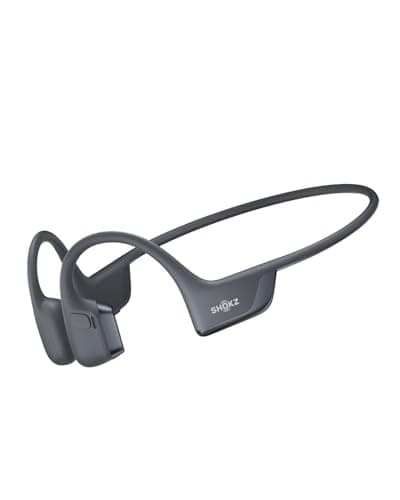
Shokz OpenRun Pro 2
Bone conduction (neckband)8.5/1012 hours and a 5-minute charge worth 2.5 - the best combination of headline and top-up here.
$179.95Amazon#ad · Price as of October 11, 2026 · Disclosure for the link to Shokz OpenRun Pro 2
Best budget clip-on
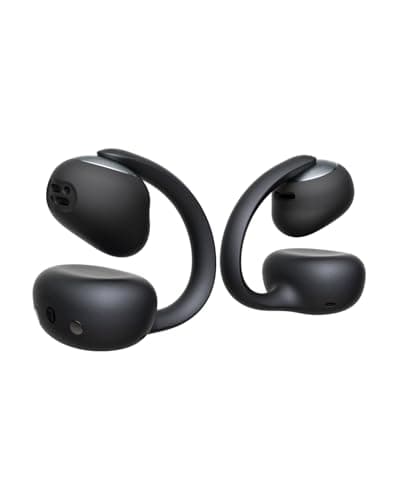
Baseus Bowie MC2
Open-ear clip-on8.6/10The longest published per-charge figure on the site at 11.5 to 13 hours, measured at 50% volume, plus IP67.
$59.98Amazon#ad · Price as of October 11, 2026 · Disclosure for the link to Baseus Bowie MC2
Best open-ear earbuds overall
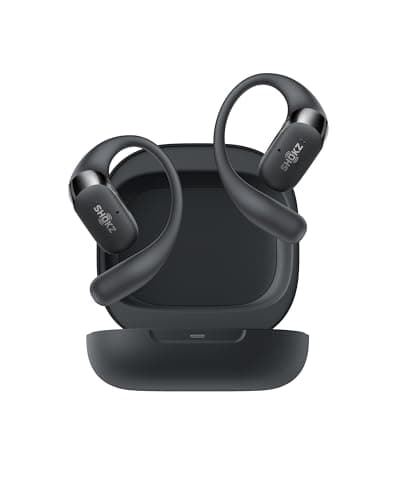
Shokz OpenFit 2
Open-ear hook8.3/1011 hours and 48 with the case; note Shokz states the case itself is not water resistant.
$179.95Amazon#ad · Price as of October 11, 2026 · Disclosure for the link to Shokz OpenFit 2
Best for heavy sweaters
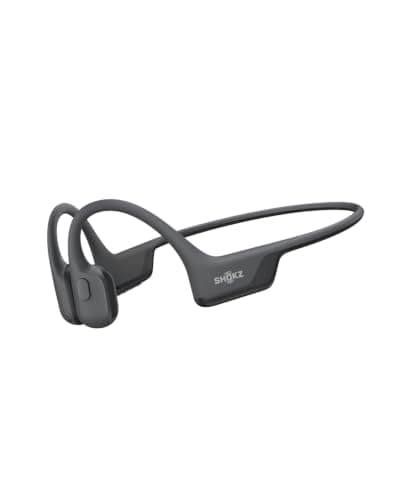
Shokz OpenRun Air 2
Bone conduction (neckband)8.7/1010 hours, IP67 and no case at all, which removes the commonest point of failure entirely.
$129.95Amazon#ad · Price as of October 11, 2026 · Disclosure for the link to Shokz OpenRun Air 2
How we scored this
The research behind every pick
Each pair on this page is researched and compared the same way: we classify the retention system that holds it on (hook, clip, wing, neckband), read the maker's published IP rating, weight, battery, charging, mic and control type straight off its own product page and manual, check the sweat and water rating against the IEC 60529 standard, cross-reference independent published reviews, and score every pick on a public rubric. Every figure links to the document it came from, so you can check any number in one click.
Prices come live from Amazon, so what you see is what you pay today. Commissions never set a score or decide a pick. The rubric and its weights are published.
Questions
Frequently asked
How long do earbuds last on one charge?
How many years do earbuds last?
Why has my earbud battery got worse?
Do open-ear earbuds last longer than sealed ones?
Does charging earbuds overnight damage them?
How can I make my earbuds last longer?
Keep reading
Related on Openear Club
Receipts
Sources
- Shokz — official product comparison table (checked 2026-09-21)
- Baseus — Bowie MC2 product page, specifications (checked 2026-09-21)
- Bose — Ultra Open Earbuds (2nd Gen) product page (checked 2026-09-21)
- Apple — AirPods Pro 3 technical specifications (checked 2026-09-26)
- SoundGuys — Sony LinkBuds Clip review (checked 2026-09-21)
- Creative — Outlier Free Pro product page, specifications (checked 2026-09-21)
- Cleer Audio — ARC 5 product page, specifications (checked 2026-09-21)
- Soundcore — V30i product page, specifications (checked 2026-10-03)
- IEC 60529 (IP Code) — degree-of-protection definitions, Keystone Compliance summary (checked 2026-09-21)
Every spec here is traceable: figures come from the maker's own product pages and are linked on each product, independent findings are attributed to whoever published them, and prices come live from Amazon so the number you see is the number you pay today. Read the full method.