Fit, Sweat & Safety Guides · Guide
How to clean sweaty earbuds: the salt is the problem, not the sweat
Sweat evaporates. What it leaves behind is a salt crust that holds moisture against the housing, blocks mesh, corrodes contacts and smells. Here is the routine, split by what your pair's IP rating actually permits.
By Mike M.Updated Researched · every spec sourced
#adReader-supported: we may earn a commission if you buy through our links, at no extra cost to you. It never decides a ranking. How we rank · Disclosure
The short routine
Why dried salt is the damage
Sweat is mostly water, and water evaporates on its own. The problem is the roughly one percent that does not: sodium chloride, potassium, lactate, urea and skin oils. Once the water has gone, those stay, and three things follow.
- Salt is hygroscopic. It pulls humidity out of the air and holds it against the housing. That means a pair you did not clean is damp again the next morning without ever going near more sweat, and a seal that was designed for brief exposure is now in permanent contact with moisture.
- Salt plus metal is corrosion. Charging contacts are the exposed metal on an earbud, and they are usually on the part that touches your skin. Corroded contacts mean a bud that will not charge, which is the most common way a pair dies that has not been dropped.
- Dried residue blocks mesh. The speaker grille and the microphone ports are fine mesh. Salt crystallises in them, which quietly reduces output until you think the battery is failing or the driver has gone.
That is why timing beats technique. A wipe while the sweat is still liquid removes nearly all of it; the same wipe eight hours later removes a fraction. The broader failure mechanism, including what gets inside the housing, is in can sweat damage earbuds?
What your rating lets you do
The second digit of your IP code decides whether water is a cleaning tool or a risk. It is the only thing that decides it, and the words on the box do not — see waterproof vs water-resistant.
| Your rating | Cleaning method | Examples |
|---|---|---|
| IPX4 / IP54 | Damp cloth only. Wring it out first; no running water anywhere near it. | Bose Ultra Open, Sony LinkBuds Clip, Shokz OpenFit Air, Beats Powerbeats Pro 2 |
| IP55 / IP66 | Damp cloth, and you can be generous with it. Still no immersion — these are jet tests, not soak tests. | Shokz OpenFit 2 and OpenFit Pro buds, Soundcore AeroClip, Suunto Wing 2 |
| IP57 / IP67 / IPX7 / IPX8 / IP68 | Cool running tap is fine. Shokz describes the IP67 OpenRun as fully washable under the tap; it reserves damp-cloth treatment for its IP55 Pro models. | Shokz OpenDots 2 and OpenRun Air 2, Baseus Bowie MC2, Cleer ARC 5, Creative Outlier Free Pro |
Two caveats that apply at every level. Cool water, not hot: the immersion tests in IEC 60529 are conducted at ambient temperature, and hot water expands air inside the housing and then draws moisture in as it cools. And the rating almost never covers the case — most makers rate the buds only.
The four-step routine
1. Wipe before it dries
A microfibre cloth, damp with cool water, over every surface that touched you: the transducer pads on a neckband, the inner face of a clip-on cuff, the hook and the body of an ear-hook. Thirty seconds in the changing room is worth more than ten minutes at home.
2. Rinse if you can
Cool tap, low flow, no soap and no detergent. Soap leaves its own film and some surfactants attack adhesives. If the pair is a neckband there is nothing to protect: it is a single sealed object with no lid and no case, which is why neckbands carry the strongest ratings on this site.
3. Dry properly, which takes longer than you think
Cloth first, then leave them out, charging contacts facing up, for twenty minutes minimum. Do not use a hairdryer on heat, do not put them on a radiator, and do not use compressed air directly at a speaker mesh — it pushes debris inward and can damage a diaphragm.
4. Then, and only then, close the case
This is the step everyone skips and it is the one that kills cases. A closed case with damp buds inside has nowhere for the moisture to go, so it condenses on the contacts and sits there until you next open it. If you are in a hurry, carry the buds in a jacket pocket and case them when you are home.
Clearing a blocked mesh or speaker grille
If one side has gone quiet or your voice has stopped carrying on calls, suspect a blocked mesh before you suspect a fault. The symptom is usually one-sided, because people sweat asymmetrically.
- Dry brush first. A soft, dry toothbrush or a clean paintbrush, held with the mesh facing down so debris falls out rather than in.
- Then a wooden or plastic pick, gently. Never metal: a pin will punch through a mesh you cannot replace.
- If the rating allows it, rinse at the end, not the start. Water turns loose salt into a paste that is harder to brush out.
- Do not suck on it. People do. It puts more moisture into the exact place you are trying to clear.
One structural advantage of the open-ear designs this site covers: no silicone tips and no deep canal insertion means no earwax in the mesh, which is the other half of the blocked-grille problem for sealed earbuds.
The charging case and the contacts
The case is the weak point of almost every true wireless pair, because makers rate the earbuds and say nothing about the case. Two exceptions worth knowing: Shokz rates the OpenDots 2 case IP54 and the OpenFit Air 2 case IP54. Shokz explicitly states that the OpenFit 2's case is not water resistant, and the Bose and Soundcore cases carry no rating we can cite.
So: never rinse a case. Wipe the outside, then wipe the inside wells with a cloth wrapped around a fingertip and leave it open to dry. For the pogo pins in the wells and the matching contacts on the buds, a dry cotton bud removes residue; if they are visibly green or dull, a pencil eraser gently rubbed across them lifts oxidation without scratching.
And do not store the case in a gym bag with a wet towel, which is where most of them live and the reason most of them fail.
Dealing with the smell
The smell is bacteria metabolising what the sweat left behind, not the sweat itself. Which means the fix is removal rather than masking.
Wipe or rinse as above, dry fully, and store them somewhere with airflow rather than sealed. If a pair already smells, a cloth dampened with a very dilute solution of water and a drop of mild soap on the outer plastic only — never near a mesh, a port or a contact — followed by a clean damp cloth and a full dry, usually clears it. If the smell persists after that, it is in the mesh, and the brush routine above is the next step.
Three things never to use
- Alcohol, sanitiser or disinfectant wipes. Isopropyl and ethanol attack the adhesives holding waterproofing gaskets in place and craze some plastics. One wipe will not destroy a pair; a daily habit will.
- Heat. Hairdryers, radiators, car dashboards and rice. Heat warps gaskets and drives moisture inward; rice adds dust and does less than air does.
- Anything metal in a port. Pins, paperclips, needles. The mesh is the barrier between sweat and the driver, and it is not replaceable.
Also worth saying: this routine does not restore an IP rating. Gaskets compress and adhesives age, so a two-year old IP67 bud is a bud that was IP67. Cleaning slows the decline; it does not reverse it.
Picks
Our picks for this
Three pairs built to be cleaned
If you sweat enough to be reading this, buy a rating that lets you rinse. These three are the ones whose makers publish a figure that permits it, or close to it.
Best for heavy sweaters
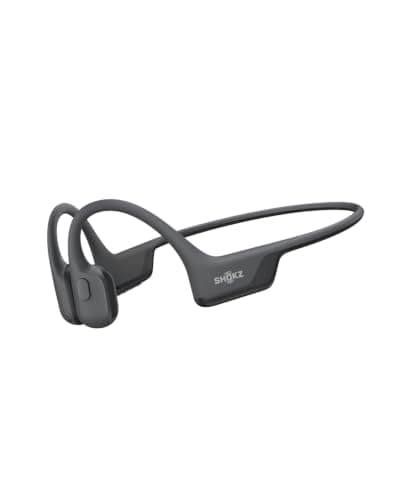
Shokz OpenRun Air 2
Bone conduction (neckband)8.7/10IP67 and no case at all, so there is nothing to seal moisture into. Rinse under a tap and dry.
$129.95Amazon#ad · Price as of October 11, 2026 · Disclosure for the link to Shokz OpenRun Air 2
Best clip-on for sweat
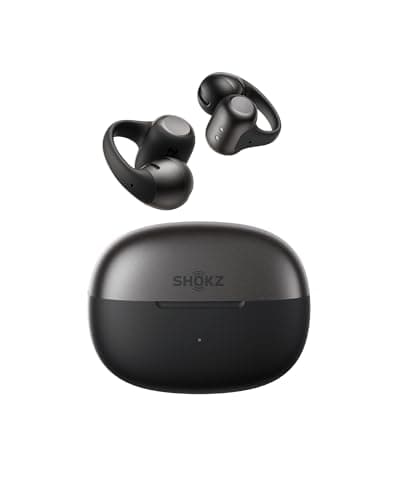
Shokz OpenDots 2
Open-ear clip-on8.6/10IP57 buds and an IP54 case, which is rare: most makers rate the buds and ignore the case entirely.
$199.95Amazon#ad · Price as of October 11, 2026 · Disclosure for the link to Shokz OpenDots 2
Best open-ear earbuds overall
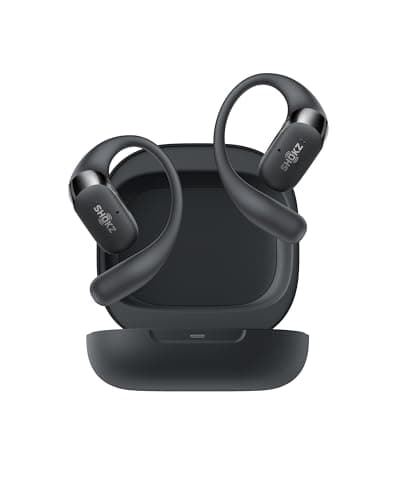
Shokz OpenFit 2
Open-ear hook8.3/10IP55 buds, so damp cloth rather than running water; Shokz states the case is not water resistant, so keep it out of the gym bag.
$179.95Amazon#ad · Price as of October 11, 2026 · Disclosure for the link to Shokz OpenFit 2
How we scored this
The research behind every pick
Each pair on this page is researched and compared the same way: we classify the retention system that holds it on (hook, clip, wing, neckband), read the maker's published IP rating, weight, battery, charging, mic and control type straight off its own product page and manual, check the sweat and water rating against the IEC 60529 standard, cross-reference independent published reviews, and score every pick on a public rubric. Every figure links to the document it came from, so you can check any number in one click.
Prices come live from Amazon, so what you see is what you pay today. Commissions never set a score or decide a pick. The rubric and its weights are published.
Questions
Frequently asked
How do you clean sweaty earbuds?
Can I wash my earbuds with water?
Why do my earbuds smell?
Can I use alcohol wipes on earbuds?
How do I clear a blocked earbud mesh?
Should I put wet earbuds in the charging case?
Keep reading
Related on Openear Club
Receipts
Sources
- Shokz — OpenRun Air 2 vs OpenRun Pro 2 vs OpenRun (checked 2026-09-21)
- Shokz — official product comparison table (checked 2026-09-21)
- IEC 60529 (IP Code) — degree-of-protection definitions, Keystone Compliance summary (checked 2026-09-21)
- IPX4 vs IPX5 test conditions (IEC 60529 nozzle, flow and duration), BONAD test-equipment summary (checked 2026-09-21)
- Bose — Ultra Open Earbuds (2nd Gen) product page (checked 2026-09-21)
- Apple — AirPods Pro 3 technical specifications (checked 2026-09-26)
Every spec here is traceable: figures come from the maker's own product pages and are linked on each product, independent findings are attributed to whoever published them, and prices come live from Amazon so the number you see is the number you pay today. Read the full method.