Fit, Sweat & Safety Guides · Guide
IP67 vs IP68 earbuds: one of these ratings is a fixed test, the other is a promise
Both digits mean immersion, and only one of them is defined. IP67 is the same test for every product that carries it. IP68 is a depth the maker chooses - so IP68 with no depth printed is weaker information than IP67.
By Mike M.Updated Researched · every spec sourced
#adReader-supported: we may earn a commission if you buy through our links, at no extra cost to you. It never decides a ranking. How we rank · Disclosure
The direct answer
What each test actually is
- IPX7 / IP67: the unit is submerged in fresh water, 1 m deep, for 30 minutes. No water may enter in a quantity that interferes with operation. Static water, room temperature, no pressure cycling, no movement.
- IPX8 / IP68: continuous immersion, with depth and duration declared by the manufacturer and tested to those declared conditions. The test is therefore product-specific by design.
Two things follow that catch people out. An IP67 product has not been tested at 2 m, so a dive to the bottom of a pool is outside its spec even though it is “immersion-rated.” And an IP68 product tested to 1.5 m is genuinely worse in the water than another IP68 product tested to 3.6 m, despite identical labels.
The lower rungs of the ladder — 4, 5 and 6 — are a separate conversation and the one most sweaty buyers actually need: see IPX4 vs IPX5 vs IPX7 and the full decode in earbud IP ratings explained.
Why the depth statement is the whole value
Water pressure rises by roughly one atmosphere every ten metres, so at swimming-pool depths the absolute pressures are small — which is exactly why the declaration matters more than the physics. A maker that states 2 m has committed to a figure you can hold them to and that a retailer has to honour. A maker that says only “IP68 waterproof” has committed to nothing specific.
On this site the declarations we can cite are: Shokz OpenSwim Pro, IP68, swimproof to 2 m. Mojawa Run Plus, IP68, described by Mojawa as fully submersible. H2O Audio TRI 2 PRO, IPX8, submersion to 12 ft / 3.6 m. Creative Outlier Free Pro, IPX8, which Creative describes as suitable to run, cycle and even swim in. Raycon publishes IP68 with no depth and very little else, which is a good example of why the label alone is thin information.
The broader point — that the words on the box carry no definition at all while the code does — is in waterproof vs water-resistant earbuds.
The first digit: both are dust-tight
The 6 in IP67 and IP68 is the top of the solids scale: dust-tight, meaning no ingress of dust at all, tested under vacuum. That is a real difference from IP55 and IP54, which are dust-protected — some dust gets in, not enough to interfere.
For a headphone that lives in a gym bag with chalk in it, or goes on a dusty trail, that is worth more than people assume. It is also why an IPX7 or IPX8 rating is weaker information than it looks: the X means dust was never tested, so the IPX8 Creative Outlier Free Pro carries no dust claim at all while the IP68 Mojawa Run Plus does.
What neither rating covers
Four exclusions, every one of them relevant to this site's reader:
- Sweat. The IP tests use fresh water. Sweat is salt water with skin oils, and dried salt is hygroscopic: it pulls moisture back onto charging contacts and corrodes them. A high rating lets you rinse the salt off, which is the real benefit — see can sweat damage earbuds?
- Chlorine and salt water. Pool chemistry and sea water are chemical exposures no IP test includes. Rinse in fresh water afterwards regardless of the number on the box.
- Soap and hot water. Surfactants reduce surface tension, which defeats seals designed against plain water, and heat expands and contracts housings. That is why a shower is not covered by an immersion rating — see IPX7 earbuds, showers and swimming.
- Age. Seals and adhesives degrade, and ratings are tested on new units. Three years of thermal cycling and sweat is not in the test protocol — see how long do earbuds last?
One more practical exclusion: the charging case is usually a separate product with its own rating, or no rating at all. An IP67 earbud in an unrated case is still a damp earbud in a plastic box.
Neither one lets you stream underwater
Which one you actually need
If you sweat heavily and never swim: IP67 is plenty, and it is the practical sweet spot. It is dust-tight, it permits a rinse under a tap, and it comes without the compromises an IP68 swim design carries — the swim models tend to use proprietary magnetic charging cables rather than USB-C, because a USB-C port is a hole and a hole is the hardest thing to seal.
If you swim laps: you need IP68 with a stated depth, plus storage. Nothing less does the job, and the rating alone does not do it either.
If you are choosing between an IP67 and an IP68 product at the same price and neither swims: decide on everything else — weight, battery, controls, charging port — because the water difference will never be tested in your life. On this site that often means choosing IP67 and USB-C over IP68 and a magnetic cable.
And if the pairs you are comparing are IPX4 or IP55, this page is not your question: that comparison is in IPX4 vs IPX5 vs IPX7, and the picks that survive sweat are in best sweatproof earbuds.
Picks
Our picks for this
Two at IP67, two at IP68 with a depth
The two IP67 picks are the ones to buy if you sweat and never swim: dust-tight, rinseable, USB-C. The two IP68 picks state a depth and carry onboard storage, which is what a pool actually requires.
Best for heavy sweaters
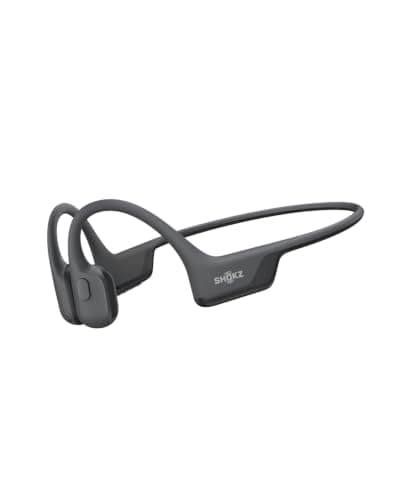
Shokz OpenRun Air 2
Bone conduction (neckband)8.7/10IP67 and 26.4 g, 10 hours, Bluetooth 6.0 and USB-C. Shokz prints 'not for swimming' beside the rating, which is the honest reading of a 7.
$129.95Amazon#ad · Price as of October 17, 2026 · Disclosure for the link to Shokz OpenRun Air 2
Best budget clip-on
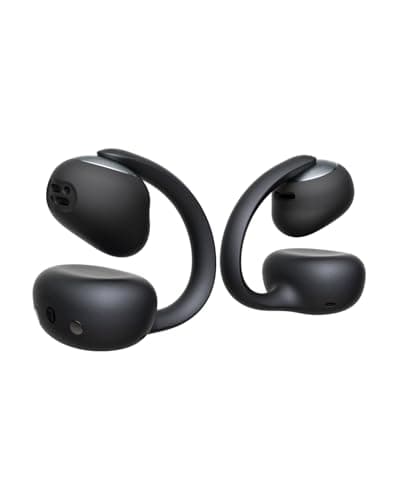
Baseus Bowie MC2
Open-ear clip-on8.6/10The IP67 clip-on: 5.1 g per side, up to 13 hours, three cushion sizes and the strongest water rating of any cuff here.
$59.98Amazon#ad · Price as of October 17, 2026 · Disclosure for the link to Baseus Bowie MC2
Best for swimming
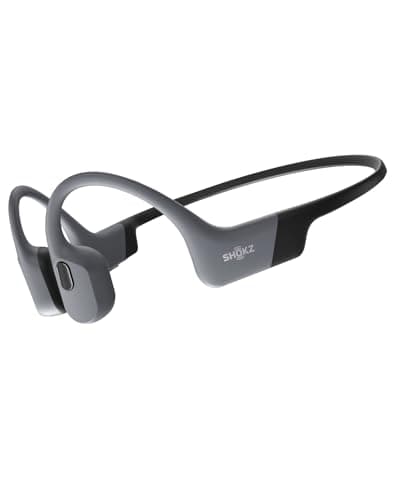
Shokz OpenSwim Pro
Bone conduction (neckband)8.5/10IP68 with a stated 2 m swim depth and 32 GB of MP3 storage, because Bluetooth stops at the waterline. Magnetic cable, not USB-C.
$229.95Amazon#ad · Price as of October 17, 2026 · Disclosure for the link to Shokz OpenSwim Pro
Best swim-capable budget pick
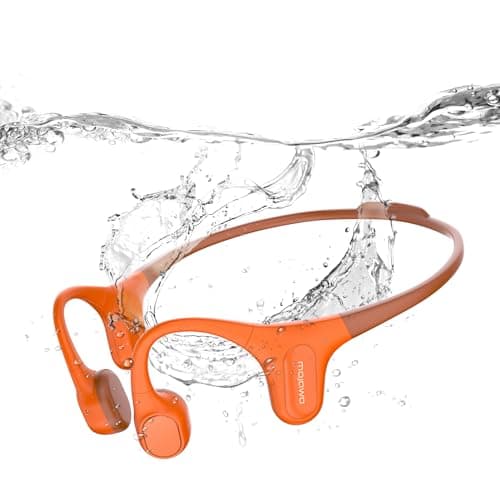
Mojawa Run Plus
Bone conduction (neckband)8.2/10IP68 and 32 GB at a much lower price, with a 5-minute quick charge worth 90 minutes. Fewer independent reviews than Shokz.
$89.99Amazon#ad · Price as of October 17, 2026 · Disclosure for the link to Mojawa Run Plus
How we scored this
The research behind every pick
Each pair on this page is researched and compared the same way: we classify the retention system that holds it on (hook, clip, wing, neckband), read the maker's published IP rating, weight, battery, charging, mic and control type straight off its own product page and manual, check the sweat and water rating against the IEC 60529 standard, cross-reference independent published reviews, and score every pick on a public rubric. Every figure links to the document it came from, so you can check any number in one click.
Prices come live from Amazon, so what you see is what you pay today. Commissions never set a score or decide a pick. The rubric and its weights are published.
Questions
Frequently asked
What is the difference between IP67 and IP68?
Is IP68 waterproof?
Can I swim with IP67 earbuds?
Does IP68 cover chlorine or sea water?
Is IPX8 the same as IP68?
Keep reading
Related on Openear Club
- IPX4 vs IPX5 vs IPX7The lower rungs, which is where most sweat questions actually sit.
- IP ratings explainedBoth digits decoded, with what the tests use and skip.
- IPX7, showers and swimmingWhy soap and heat sit outside every rating.
- Best for swimmingRating plus onboard storage, which is what a pool needs.
Receipts
Sources
- IEC 60529 (IP Code) — degree-of-protection definitions, Keystone Compliance summary (checked 2026-09-21)
- IPX4 vs IPX5 test conditions (IEC 60529 nozzle, flow and duration), BONAD test-equipment summary (checked 2026-09-21)
- Shokz — official product comparison table (checked 2026-09-21)
- Shokz — OpenSwim Pro product page (checked 2026-09-21)
- Mojawa — Run Plus product page, specifications (checked 2026-09-21)
- Baseus — Bowie MC2 product page, specifications (checked 2026-09-21)
- H2O Audio — TRI 2 PRO product page (checked 2026-09-21)
- Creative — Outlier Free Pro product page, specifications (checked 2026-09-21)
Every spec here is traceable: figures come from the maker's own product pages and are linked on each product, independent findings are attributed to whoever published them, and prices come live from Amazon so the number you see is the number you pay today. Read the full method.