Fit, Sweat & Safety Guides · Guide
Why do my earbuds hurt my ears? Five causes, and the one that explains most of them
Ear pain from earbuds is almost always mechanical: something is pressing on cartilage that is not built to take pressure. Work out which structure hurts and the fix follows, up to and including a design that touches nothing at all.
By Mike M.Updated Researched · every spec sourced
#adReader-supported: we may earn a commission if you buy through our links, at no extra cost to you. It never decides a ranking. How we rank · Disclosure
The short answer
First: work out where it hurts
Take the earbuds out and press gently around your ear to find the sore spot. Three places, three different answers:
- Inside, deep in the canal. A dull ache or a feeling of pressure. The tip is too large or inserted too deep.
- The ridge just above and behind the canal opening — the antihelix. A sharp, localised sore point, sometimes with a visible red mark. The bud body is pressing on it, not the tip.
- The top of the ear, where it meets your head — the helix. An ache rather than a point. A hook, a glasses arm, or both at once.
If the pain is behind the ear rather than on it, or at your temples, that is a band problem rather than an ear problem — see the neckband note below.
The five causes
1. The tip is one size too large
This is the most common single cause, and it is counterintuitive: a larger tip feels more secure in the shop, because a tight seal feels like a good fit. A tip that is slightly too large has to be compressed to go in, and once in it pushes outward continuously against the canal walls. Twenty minutes of that is fine and two hours is not.
The test is simple. Go down one size. If the sound stays full and the pain goes, you were a size too big. Most makers ship three or four sizes and some ship more — Apple includes five on the AirPods Pro 3, down to XXS; Beats ships XS to L on the Powerbeats Fit. If your pair only came with one size, that is the whole problem.
2. The bud body is pressing on the antihelix
Independent of the tip. A bud with a wide body or a prominent stem can rest against the ridge above the canal regardless of which tip is fitted, and no tip change helps. This is the cause of the classic red sore spot at the top edge of the canal opening.
The fix is a different fit type, not a different size. A wingtip design puts its contact point in the concha — the bowl of the ear — rather than on the ridge; an ear-hook moves the load to the top of the ear; an open-ear design removes the contact entirely.
3. The hook has the wrong arc for your ear
An ear-hook has to match how far your helix stands off your head. Too tight and it compresses the top of the ear against your skull; too loose and it rests rather than grips, which is a security problem rather than a pain one.
The real fix is an adjustable hook. Soundcore uses a four-position hinge on the AeroFit 2 and the V20i, and Soundcore's Sport X20 hooks rotate 30 degrees and extend 4 mm in four steps. That is a genuine accommodation and the only one in this category that addresses ear shape rather than ear size. Failing that, a lighter bud gives the hook less work to do: the Shokz OpenFit Air 2 is 7.2 g against the OpenFit Pro's 12.3 g.
4. The bud is simply heavy
Weight on an ear-hook is leveraged, because the mass hangs off a loop and tries to rotate. The spread across this site is 5.1 g per side (Baseus Bowie MC2 clip-on) to 12.3 g (Shokz OpenFit Pro), which is more than a doubling. If a pair hurts after two hours and not after twenty minutes, suspect weight before you suspect anything else.
5. You are wearing them for too long without a break
Sustained pressure on cartilage reduces blood flow, which is the mechanism behind every pressure sore. The remedy is not a product: take them out for a few minutes every hour or so. That is also the single best thing you can do about your noise dose, which matters if you wear earbuds all day — see open-ear headphones and hearing safety.
One more, specific to neckbands rather than earbuds: if the ache is at your temples or behind your ears with a bone conduction band, the frame is too small for your head. Shokz sells Standard and Mini and publishes a head-circumference cutoff of about 9.25 inches. That is a buying mistake and not a wearing mistake — see bone conduction for big heads.
Why only one ear hurts
Because your ears are not the same. Most people have measurably different canal diameters and different helix angles left to right, and earbuds are sold as symmetrical pairs with one tip size per box.
So the obvious move is the one nobody makes: fit different sizes on each side. Nothing stops you, the tips are interchangeable, and it fixes a lot of one-sided pain in one go. The same asymmetry explains the related complaint of one bud working loose — covered in earbud keeps falling out of one ear.
If one ear hurts and it is also the ear you sleep on, or the ear with a history of infection, treat that as a reason to see a clinician rather than to keep experimenting with tips.
Fixing a sealed pair you already own
- Go down a tip size. One size, both ears, then one size on the sore ear only. Free, and it works more often than anything else here.
- Insert less deeply, then rotate. Seat the tip, then twist the bud slightly backward until the body clears the antihelix. The seal survives a surprising amount of rotation.
- Try foam tips if the maker supports them. Foam compresses over a few seconds rather than pushing back continuously, which is why it suits sore canals. It also traps more moisture, so for sweaty training it is a trade.
- Clean them. A tip with dried salt and residue on it has a different surface texture, grips unevenly and can irritate skin. Routine in how to clean sweaty earbuds.
- Stop wearing them for two days. If the cartilage is already sore, no fit feels right. Let it settle before you judge a change.
The designs that remove the cause
If none of the above works, the honest answer is that the problem is the category rather than the product. Three designs put nothing inside your ear canal at all:
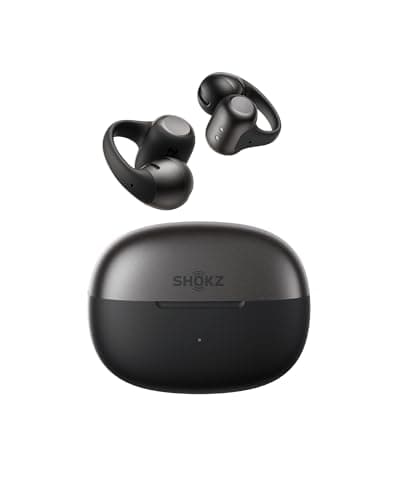
- Clip-on. A cuff on the outer rim of the ear, with the speaker in front of the canal and a barrel behind. Contact is on the rim, not the canal or the antihelix, and nothing crosses the top of the ear where glasses arms sit. This is the design to try first if sealed tips hurt you.
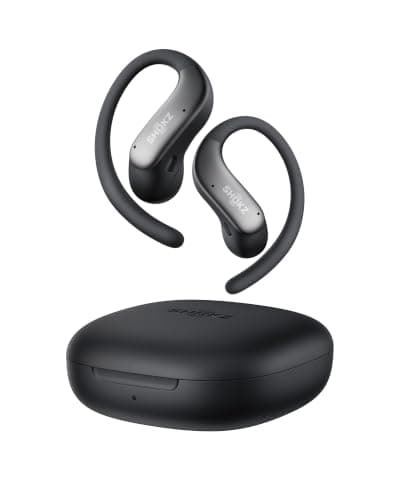
- Ear-hook. Load on the top of the ear, canal untouched. Better sound than a neckband; can conflict with glasses.
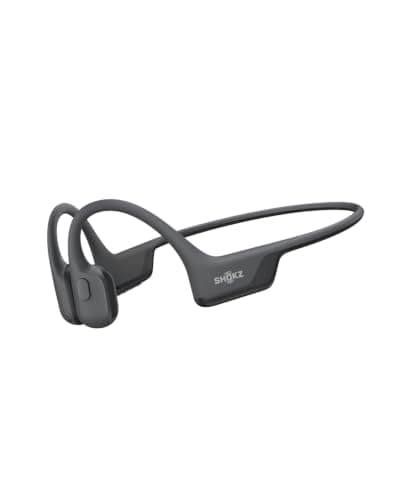
- Bone conduction neckband. Transducers rest on the cheekbone and the ear is not involved at all. The only pressure point is the band on your skull, which is a sizing question rather than an ear one.
There is a second benefit worth naming: no occlusion effect. Sealing a canal traps bone-conducted sound and makes your own voice boom on calls, and it also traps moisture. With an open canal neither happens. The whole family is ranked in best open-ear earbuds, and the tip-free argument is in best earbuds without rubber tips.
Picks
Our picks for this
Three that touch nothing, and one if you must stay sealed
In order of how little they ask of your ear: a clip-on that grips the outer rim, a neckband that skips the ear entirely, the lightest ear-hook here, and the sealed pair with the widest range of tip sizes if a seal is non-negotiable.
Best clip-on for sweat
Shokz OpenDots 2
Open-ear clip-on8.6/106.4 g per side on the outer rim of the ear: nothing in the canal, nothing over the top. IP57 buds.
$199.95Amazon#ad · Price as of October 11, 2026 · Disclosure for the link to Shokz OpenDots 2
Best for heavy sweaters
Shokz OpenRun Air 2
Bone conduction (neckband)8.7/10The ear is not involved at all. The only pressure point is the band, so buy the right frame size.
$129.95Amazon#ad · Price as of October 11, 2026 · Disclosure for the link to Shokz OpenRun Air 2
Best lightweight ear-hook
Shokz OpenFit Air 2
Open-ear hook8.4/107.2 g, the lightest Shokz hook, with pressure buttons rather than a touch panel.
$129.95Amazon#ad · Price as of October 11, 2026 · Disclosure for the link to Shokz OpenFit Air 2
Best ANC and iPhone integration
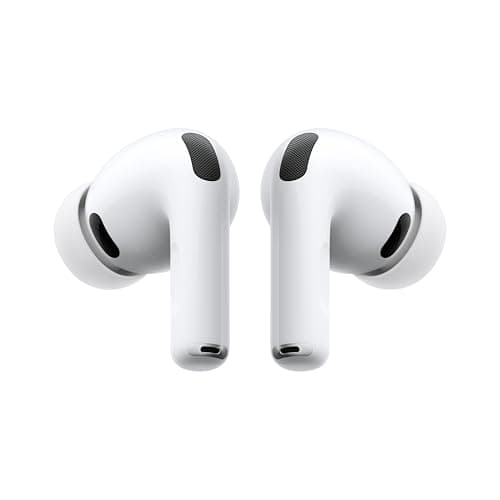
Apple AirPods Pro 3
Sealed in-ear (tip only)8.0/10If you need a seal: five tip sizes down to XXS, which is the widest range on this site, plus IP57.
$199.00Amazon#ad · Price as of October 11, 2026 · Disclosure for the link to Apple AirPods Pro 3
When it is not the earbuds
See a clinician rather than buying something else if any of these apply: pain that persists for days after you stop wearing them, discharge, pain accompanied by reduced hearing, a feeling of blockage that does not clear, or pain in one ear with a history of infection in that ear. Pressure from an earbud can irritate skin and inflame cartilage, and an existing problem can be aggravated by something that was previously comfortable.
We are a buying guide. Nothing here is medical advice, and we have not examined you.
How we scored this
The research behind every pick
Each pair on this page is researched and compared the same way: we classify the retention system that holds it on (hook, clip, wing, neckband), read the maker's published IP rating, weight, battery, charging, mic and control type straight off its own product page and manual, check the sweat and water rating against the IEC 60529 standard, cross-reference independent published reviews, and score every pick on a public rubric. Every figure links to the document it came from, so you can check any number in one click.
Prices come live from Amazon, so what you see is what you pay today. Commissions never set a score or decide a pick. The rubric and its weights are published.
Questions
Frequently asked
Why do my earbuds hurt my ears after a while?
Should earbuds be a tight fit?
Why does only one earbud hurt?
Which earbuds do not hurt your ears?
Can earbuds damage your ears?
Keep reading
Related on Openear Club
Receipts
Sources
- Shokz — In-Ear, Semi-In-Ear and Open-Ear Headphones Explained, NIKI Jane, April 7, 2026 (checked 2026-09-24)
- Shokz — OpenRun vs. OpenRun Mini: find your perfect fit (checked 2026-09-26)
- Shokz — official product comparison table (checked 2026-09-21)
- Apple — AirPods Pro 3 technical specifications (checked 2026-09-26)
- Beats — Powerbeats Fit product page, tech specs (checked 2026-09-21)
- Soundcore — AeroFit 2 product page (checked 2026-09-21)
- Soundcore — Sport X20 product page (checked 2026-09-21)
- Occlusion effect — definition and low-frequency mechanism, Wikipedia (checked 2026-09-24)
- NIDCD (NIH) — Noise-Induced Hearing Loss (checked 2026-09-21)
Every spec here is traceable: figures come from the maker's own product pages and are linked on each product, independent findings are attributed to whoever published them, and prices come live from Amazon so the number you see is the number you pay today. Read the full method.