Bone Conduction · Guide
Are bone conduction headphones safe for kids?
The sound skips the eardrum, which is the part parents are told about. It does not skip the inner ear, which is the part that gets damaged. The design helps in three real ways and protects against nothing on its own.
By Mike M.Updated Researched · every spec sourced
#adReader-supported: we may earn a commission if you buy through our links, at no extra cost to you. It never decides a ranking. How we rank · Disclosure
The direct answer
What bypassing the eardrum does and does not do
A conventional earbud pushes air down the canal; the eardrum moves, the three middle-ear bones amplify that movement, and the cochlea receives it. Bone conduction skips the first two stages by vibrating the skull directly, which is why it works for some people with conductive hearing loss — that case is covered in bone conduction headphones for hearing loss.
The practical consequence for a child without hearing loss is narrow. Nothing is pressing on the eardrum and nothing is occluding the canal, so the specific irritations of a sealed tip go away. The cochlea's exposure does not. The full version of this argument, with the research, is in do bone conduction headphones cause hearing loss? and are bone conduction headphones safe?
Three ways the design genuinely helps
1. Nothing goes in the ear canal. For a younger child this removes a whole category of problems at once: no tip to push too deep, no tip to lose in a car seat, no small silicone part within reach of a toddler sibling, and no closed, damp chamber held against the canal for an hour. The tip-free options across the whole site are in best earbuds without rubber tips.
2. They can still hear you, and the road. This is the biggest practical argument. A child wearing a neckband hears a car, a bike bell, a coach and a parent calling, with normal directional hearing intact, because the ear canal is an open tube. A sealed earbud with transparency mode routes the world through microphones instead. For walking to school, riding a bike or a park run, that difference is the point — see can you hear traffic with open-ear headphones?
3. They do not fall out. A sprung band behind the head holds the transducers on the cheekbones; nothing is held by friction, so nothing creeps loose during a game. That is also why they survive being thrown in a school bag better than a two-piece earbud and a case, and why nothing gets lost one bud at a time.
Three things it does not fix
Volume. No model on this site publishes a hardware volume limit, and none is marketed as a children's product. If you want a hard cap, that has to come from the device: iOS and Android both have headphone volume limits and iOS can warn on cumulative exposure. Set it on the phone or tablet before you hand anything over.
The volume-creep trap. Open-ear designs block nothing, so the natural response in a noisy place is to turn it up until it beats the noise. With a child that is worse, not better, because they will not report it. The WHO's Make Listening Safe programme exists for exactly this behaviour pattern. The full version is in open-ear headphones and hearing safety.
Leakage, which cuts both ways. Bone conduction leaks audibly at higher volumes, so in a quiet classroom or a car it will annoy other people. The flip side is useful: as a parent you can hear roughly how loud it is from a metre away, which you cannot do with a sealed earbud. Treat audible leakage as a free volume meter.
The two things to set up before you hand them over
- A volume limit on the source device. Both major phone platforms have one, and on iOS headphone notifications will also flag cumulative loud exposure. Do this first; it is the only control that is actually enforced.
- A time habit, not just a level. Hearing damage is dose-based, so an hour at a moderate level is not the same as four. The simplest workable rule for a child is to keep the volume low enough that you can still talk to them at a normal speaking level without them taking the headphones off — which, with an open ear canal, is a test you can actually run.
For infants and very young children, nothing on this site is appropriate: these are adult sports headphones with adult band sizes, and hearing protection for babies is a different product category entirely. If a child has existing hearing loss, tinnitus, repeated ear infections or a diagnosed condition, the question belongs with their audiologist or doctor rather than a buying guide.
Fit: the band is made for adult heads
Bone conduction headphones are sized by head circumference measured between the midpoints behind the ears, and Shokz publishes a cut-off at 9.25 inches: above it, Standard; below it, Mini. Most children are well below that line, so the Mini variant is the one to buy — and it is the same price as Standard, so there is no reason to guess. The method and the numbers are in Shokz Standard vs Mini sizing.
A band that is too long is not just loose: as the transducers lift off the cheekbone the sound thins, and the instinctive fix is to turn the volume up, which is the exact failure we are trying to avoid. Measure first. For younger or smaller children even the Mini may sit loose, in which case a lightweight clip-on or hook is a better shape — those are ranked in best running headphones for kids, which is the buying page this guide supports, and in best open-ear earbuds for small ears.
One more practical note: the picks below are IP55 to IPX8, which for a child's headphones is a feature rather than a specification. Rain, spilled drinks and being left outside are the normal failure modes, and the models rated for immersion can simply be rinsed. The ladder is in earbud IP ratings explained.
Picks
Our picks for this
Neckbands that come in a smaller band size
None of these is sold as a children's product and none has a hardware volume limit - set that on the phone. What they do have is a Mini band option (the first three), a rating that survives being left in the rain, and a shape that cannot be lost one earbud at a time.
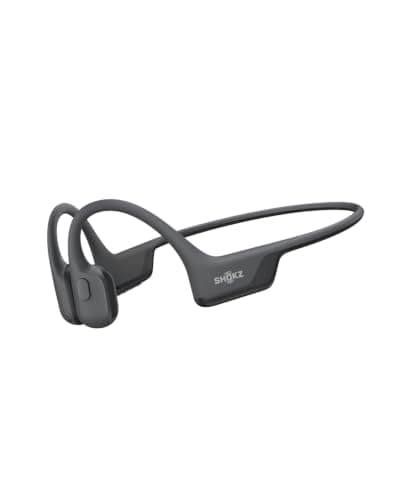
Best for heavy sweaters
Shokz OpenRun Air 2
Bone conduction (neckband)8.7/10The pick for most families: Mini at 25.9 g, IP67 so it can be rinsed, 10 hours, USB-C and physical buttons.
$129.95Amazon#ad · Price as of October 17, 2026 · Disclosure for the link to Shokz OpenRun Air 2
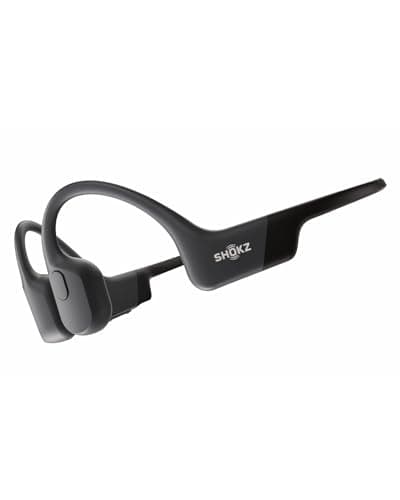
Best-known running pick
Shokz OpenRun
Bone conduction (neckband)8.1/10The same IP67 rating and a Mini size, usually cheaper now that the Air 2 exists. Shokz's own comparison calls it washable under the tap.
$129.95Amazon#ad · Price as of October 17, 2026 · Disclosure for the link to Shokz OpenRun
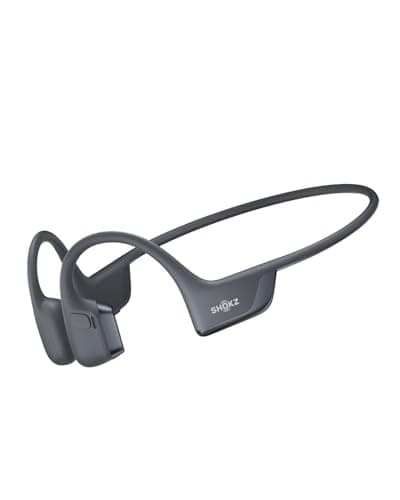
Best bone conduction overall
Shokz OpenRun Pro 2
Bone conduction (neckband)8.5/10Mini at 30 g, 12 hours and the only Shokz neckband with a bass driver - worth it only if thin sound is the complaint.
$179.95Amazon#ad · Price as of October 17, 2026 · Disclosure for the link to Shokz OpenRun Pro 2
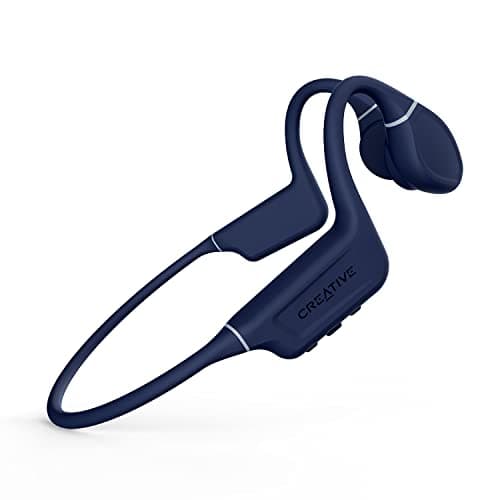
Best bone conduction under $100
Creative Outlier Free Pro
Bone conduction (neckband)8.3/10The budget option, and the toughest here at IPX8 with 8 GB of onboard storage for phone-free listening. One band size only, so measure first.
$59.99Amazon#ad · Price as of October 17, 2026 · Disclosure for the link to Creative Outlier Free Pro
How we scored this
The research behind every pick
Each pair on this page is researched and compared the same way: we classify the retention system that holds it on (hook, clip, wing, neckband), read the maker's published IP rating, weight, battery, charging, mic and control type straight off its own product page and manual, check the sweat and water rating against the IEC 60529 standard, cross-reference independent published reviews, and score every pick on a public rubric. Every figure links to the document it came from, so you can check any number in one click.
Prices come live from Amazon, so what you see is what you pay today. Commissions never set a score or decide a pick. The rubric and its weights are published.
Questions
Frequently asked
Are bone conduction headphones safer for a child's hearing?
What age are bone conduction headphones suitable for?
Why do people recommend them for kids then?
Do any have a built-in volume limit?
Can I tell how loud my child's music is?
Keep reading
Related on Openear Club
- Best running headphones for kidsThe buying page: sizes, weights and ratings for younger runners.
- Do they cause hearing loss?The research on the cochlea, in full.
- Open-ear and hearing safetyThe volume-creep trap that open designs create.
- Shokz Standard vs Mini sizingHow to measure a head before you buy a band.
Receipts
Sources
- NIDCD (NIH) — Noise-Induced Hearing Loss (checked 2026-09-21)
- WHO — Make Listening Safe (checked 2026-09-21)
- WHO — Deafness and hearing loss fact sheet (checked 2026-09-21)
- Surendran, Prodanovic & Stenfelt, Hearing Through Bone Conduction Headsets, Trends in Hearing 27 (2023), NIH PMC (checked 2026-09-26)
- Shokz — bone conduction technology page (checked 2026-09-21)
- Shokz — official product comparison table (checked 2026-09-21)
- Shokz — OpenRun vs. OpenRun Mini: find your perfect fit (checked 2026-09-26)
- Apple — Headphone notifications on your iPhone, iPad, or Apple Watch (checked 2026-09-26)
Every spec here is traceable: figures come from the maker's own product pages and are linked on each product, independent findings are attributed to whoever published them, and prices come live from Amazon so the number you see is the number you pay today. Read the full method.