Open-Ear Earbuds · Head to head
Bose Ultra Open Earbuds vs Sony LinkBuds Clip: two cuffs, two answers to the leakage problem
Both clip to the outer ear, both are IPX4, both leave the canal open. Bose spends its engineering on sound and buttons; Sony spends it on a leakage-protection mode and a control you tap on your own ear. Neither is the pick for a heavy sweater.
By Mike M.Updated Researched · every spec sourced
#adReader-supported: we may earn a commission if you buy through our links, at no extra cost to you. It never decides a ranking. How we rank · Disclosure
The contenders
Side by side
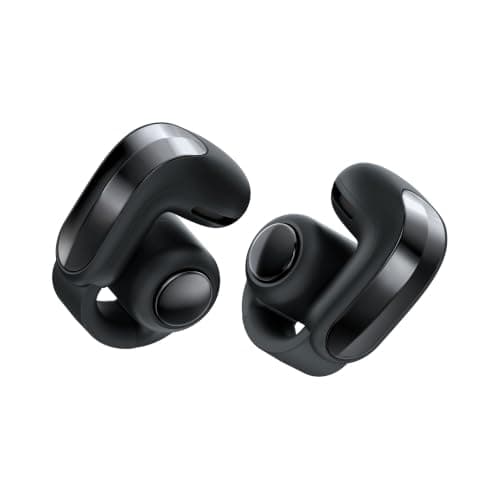
Buy for sound, buttons and battery
Bose Ultra Open Earbuds (2nd Gen)
Open-ear clip-on7.5 /10Same cuff, 9 hours instead of 7, Bluetooth 5.4, two mics with SpeechClarity and a wireless-charging case. Still IPX4, so the sweat story hasn't changed.
$299.00Amazon#ad · Price as of October 11, 2026 · Disclosure for the link to Bose Ultra Open Earbuds (2nd Gen)
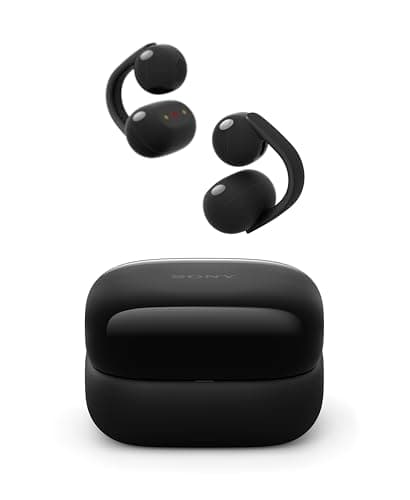
Buy for quiet shared rooms
Sony LinkBuds Clip
Open-ear clip-on6.9 /10Sony's cuff: IPX4, tap-on-the-ear controls and a leakage-protection mode for quiet rooms. SoundGuys measured 7 hours 10 minutes per charge and found the fit secure but 'precarious'-feeling.
$158.00Amazon#ad · Price as of October 11, 2026 · Disclosure for the link to Sony LinkBuds Clip
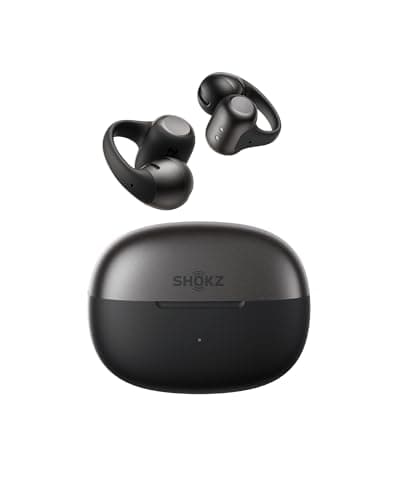
Buy instead if you sweat
Shokz OpenDots 2
Open-ear clip-on8.6 /10The clip-on with a real sweat rating: IP57 buds, 6.4 g, 10 hours plus 40 with the case, a 5-minute quick charge and a bone-conduction mic for calls. This is the clip-on for people who sweat.
$199.95Amazon#ad · Price as of October 11, 2026 · Disclosure for the link to Shokz OpenDots 2
The verdict
Side by side on the numbers
Bose publishes a full spec sheet. Sony publishes very little about the LinkBuds Clip beyond the basics, so the figures below come from SoundGuys' review, which measured battery life on its own test rig rather than repeating a maker's claim. Where a cell is absent, neither party states it.
| Evidence | Bose Ultra Open Earbuds (2nd Gen) | Sony LinkBuds Clip |
|---|---|---|
| Water & sweat rating | IPX4 | IPX4 |
| Weight | 0.013 lb per earbud (about 5.9 g) | Case 41.7 g (SoundGuys) |
| Battery | 9 hours; 5 hours with Immersive Audio or Auto Volume on; 4 with both; up to 19.5 more in the case | 7 hours 10 minutes per charge, as measured by SoundGuys |
| Quick charge | 10 min = up to 2 hours | — |
| Charging | 1 hour; wireless charging case | — |
| Bluetooth | 5.4 | 5.3 |
| Multipoint | Yes | — |
| Microphones | 2 microphones with SpeechClarity | — |
| Controls | Button on each barrel | Tap on the tragus (the ear itself), not the earbud |
| Codecs | — | SBC, AAC |
| Extras | — | Leakage-protection listening mode; optional silicone stability accessories |
| Score | 7.5/10 | 6.9/10 |
1. Buttons vs tapping your ear
This is the most interesting difference between them and it will decide the purchase for a lot of people.
Bose puts a physical button on each barrel — the cylinder that sits behind your ear. You press it. It works with wet fingers, with gloves, and without looking, and it gives tactile confirmation. On a site about earbuds for sweaty hands, that is not a small thing: a capacitive panel misreads a wet fingertip and skips a track you did not want skipped.
Sony does something cleverer and more fragile: you tap your own tragus — the small flap of cartilage in front of your ear canal — and a sensor in the bud picks up the knock. No pressure on the earbud at all, which means no risk of shifting the fit while you operate it. It is genuinely a neat solution to a real problem. It is also a gesture you have to learn, and it can misfire when you adjust your hair or wipe sweat off your face.
Our rubric rewards the Bose approach because reliability under sweat is what the site measures. If you are shopping for a desk rather than a treadmill, the Sony's approach may suit you better.
2. Leakage: Sony's one real edge
Every open-ear design leaks, because the speaker is pointed at the outside of your ear canal rather than sealed into it, and some of that output continues past your head. At home it is irrelevant. At a desk two feet from a colleague it is the reason people stop wearing these.
Sony ships a leakage-protection listening mode for it. Bose ships nothing equivalent; what Bose ships is Immersive Audio, a spatial processing mode that makes the sound seem to sit in front of you — pleasant, and expensive in battery terms (9 hours drops to 5 with it on, or 4 with Auto Volume as well).
If you want the quietest open-ear option for a shared room, the LinkBuds Clip is the answer in this pair. If you want the quietest open-ear option overall, the honest answer is a different form factor — the mechanics, and what actually reduces leakage, are in open-ear earbuds and sound leakage.
3. Battery and charging
Bose claims 9 hours per charge with up to 19.5 more in the case, dropping to 5 with Immersive Audio or Auto Volume on and 4 with both. A 10-minute charge is worth up to 2 hours, the case refills in an hour, and it charges wirelessly.
SoundGuys measured the LinkBuds Clip at 7 hours 10 minutes, which is a real-world figure rather than a claim and is competitive. Sony does not publish a quick-charge figure that we can cite, and there is no wireless charging.
So: Bose by about two hours on paper, and by more than that once you count the case and the charging options. Neither is close to the 10-hour clip-ons — the Shokz OpenDots 2 does 10 plus 40 with its case, and the Baseus Bowie MC2 publishes 11.5 to 13. The full field is in best clip-on earbuds.
4. Fit and the “precarious” feeling
A clip-on works like an earring with a weight behind it: a flexible band wraps the outer edge of your ear, the speaker module sits in front of the canal and the battery barrel counterbalances it behind. Nothing enters the canal and nothing hooks over the top of the ear, which is why clip-ons are the first thing to try if hooks fight your glasses.
Both of these stay on. SoundGuys' verdict on the Sony is worth quoting precisely because it is ambivalent: the tester found the fit secure in practice but said they felt “ready to fall out.” That is the honest clip-on experience in general — a feeling of precariousness that the hardware does not actually justify. Sony sells optional silicone stability accessories if the feeling bothers you.
Bose is heavier per side on paper than the OpenDots at about 5.9 g for the 2nd Gen, and the cuff is wider. Both are fine for running at steady pace; neither is what we would pick for sprints or burpees. Hook versus clip is argued out in ear-hook vs clip-on open-ear earbuds.
5. Both are IPX4, and that is the problem
If you are buying a clip-on to train in, the pair to buy is neither of these. The Shokz OpenDots 2 is IP57 on the buds and IP54 on the case, with 10 hours, a 5-minute charge worth 2, and a bone-conduction microphone that reads your voice through your jaw on windy days. The Baseus Bowie MC2 goes further still at IP67. Both cost less than the Bose.
Which one is for you
- Calls, walking, commuting, an office you have to yourself — Bose 2nd Gen. Buttons, SpeechClarity mics, 9 hours, wireless charging.
- A shared quiet room, library or open-plan desk — Sony LinkBuds Clip, for the leakage-protection mode.
- Training, sweating, running in the rain — neither. Shokz OpenDots 2 at IP57, or the Baseus Bowie MC2 at IP67.
- Absolute certainty the thing will not move — neither clip-on. An open-ear hook or a bone conduction neckband, ranked in best open-ear earbuds.
- You want the Bose but not the price — the first-generation Ultra Open Earbuds have the identical cuff and IPX4 rating with 7 hours instead of 9 and no wireless charging. On a discount it is the same product.
In detail
The contenders, in full
Buy for sound, buttons and battery
Bose Ultra Open Earbuds (2nd Gen)
Same cuff, 9 hours instead of 7, Bluetooth 5.4, two mics with SpeechClarity and a wireless-charging case. Still IPX4, so the sweat story hasn't changed.
Spec sheetResearched · sources linked
| Fit system | Open-ear clip-on. Ear canal stays open: you hear the room and traffic. |
|---|---|
| Water & sweat rating | IPX4 |
| Weight | 0.013 lb per earbud (about 5.9 g) |
| Battery | 9 hours; 5 hours with Immersive Audio or Auto Volume on; 4 with both; up to 19.5 more in the case |
| Quick charge | 10 min = up to 2 hours |
| Charging | 1 hour; wireless charging case |
| Bluetooth | 5.4 |
| Multipoint | Yes |
| Microphones | 2 microphones with SpeechClarity |
| Controls | Button on each barrel |
How the 7.5 score breaks down
- Fit security (25%)
- 8
- Sweat & water resistance (20%)
- 5
- Awareness (open canal) (15%)
- 9
- Sound & leakage (15%)
- 9
- Calls & wind (10%)
- 8
- Battery & charging (10%)
- 8
- Value (5%)
- 3
What the spec sheet supports
- 9 hours per charge, up from 7
- SpeechClarity mics and Bluetooth 5.4
- Wireless charging and a metallic finish
Where it falls short
- IPX4 again
- Both spatial features on together drops battery to 4 hours
- The most expensive clip-on here
Skip this if…
…the first-gen is on sale; the fit and the IPX4 rating are identical, and 2 more hours is the main gain.
#ad · Price as of October 11, 2026 · Disclosure for the link to Bose Ultra Open Earbuds (2nd Gen)
Buy for quiet shared rooms
Sony LinkBuds Clip
Sony's cuff: IPX4, tap-on-the-ear controls and a leakage-protection mode for quiet rooms. SoundGuys measured 7 hours 10 minutes per charge and found the fit secure but 'precarious'-feeling.
Spec sheetResearched · sources linked
| Fit system | Open-ear clip-on. Ear canal stays open: you hear the room and traffic. |
|---|---|
| Water & sweat rating | IPX4 |
| Weight | Case 41.7 g (SoundGuys) |
| Battery | 7 hours 10 minutes per charge, as measured by SoundGuys |
| Bluetooth | 5.3 |
| Controls | Tap on the tragus (the ear itself), not the earbud |
| Codecs | SBC, AAC |
| Extras | Leakage-protection listening mode; optional silicone stability accessories |
How the 6.9 score breaks down
- Fit security (25%)
- 7
- Sweat & water resistance (20%)
- 5
- Awareness (open canal) (15%)
- 9
- Sound & leakage (15%)
- 8
- Calls & wind (10%)
- 7
- Battery & charging (10%)
- 7
- Value (5%)
- 3
What the spec sheet supports
- Leakage-protection mode is a real answer to the open-ear office problem
- Tap-on-ear controls don't need a dry fingertip on the bud
- Sony's app and EQ
Where it falls short
- IPX4
- SoundGuys' tester said they felt 'ready to fall out' even though they stayed put
- Priced above the OpenDots 2, which is IP57
Skip this if…
…you sweat hard or sprint; the Shokz OpenDots 2 has the rating and the battery.
#ad · Price as of October 11, 2026 · Disclosure for the link to Sony LinkBuds Clip
Buy instead if you sweat
Shokz OpenDots 2
The clip-on with a real sweat rating: IP57 buds, 6.4 g, 10 hours plus 40 with the case, a 5-minute quick charge and a bone-conduction mic for calls. This is the clip-on for people who sweat.
Spec sheetResearched · sources linked
| Fit system | Open-ear clip-on. Ear canal stays open: you hear the room and traffic. |
|---|---|
| Water & sweat rating | Earbuds IP57; charging case IP54 |
| Weight | 6.4 g per earbud; case 38.8 g |
| Battery | 10 hours; 40 hours with case |
| Quick charge | 5 min = 2 hours |
| Charging | Case: wireless and USB-C; earbuds 1 hour |
| Bluetooth | 6.1 |
| Multipoint | Yes |
| Microphones | Triple AI noise-canceling: two air-conduction mics plus one bone-conduction mic |
| Controls | Touch controls (upgraded) |
| Driver / tech | Bassphere 2.0 + Dolby Audio + DirectPitch + MirrorPitch |
| Launched | June 2026 |
How the 8.6 score breaks down
- Fit security (25%)
- 8
- Sweat & water resistance (20%)
- 10
- Awareness (open canal) (15%)
- 9
- Sound & leakage (15%)
- 8
- Calls & wind (10%)
- 9
- Battery & charging (10%)
- 9
- Value (5%)
- 5
What the spec sheet supports
- IP57 on the buds: immersion-rated, which no Bose clip-on is
- 10 hours per charge and a 5-minute charge worth 2
- Bone-conduction mic picks up your voice through the jaw on windy days
- Even the case is IP54
Where it falls short
- Touch controls rather than buttons
- Clip-ons sit lighter than hooks but can shift on heavy impact; check the fit on the first sprint
Skip this if…
…you want buttons; the Bose cuffs have them, or go to an ear-hook.
#ad · Price as of October 11, 2026 · Disclosure for the link to Shokz OpenDots 2
How we scored this
The research behind every pick
Each pair on this page is researched and compared the same way: we classify the retention system that holds it on (hook, clip, wing, neckband), read the maker's published IP rating, weight, battery, charging, mic and control type straight off its own product page and manual, check the sweat and water rating against the IEC 60529 standard, cross-reference independent published reviews, and score every pick on a public rubric. Every figure links to the document it came from, so you can check any number in one click.
Prices come live from Amazon, so what you see is what you pay today. Commissions never set a score or decide a pick. The rubric and its weights are published.
Questions
Frequently asked
Are the Bose Ultra Open Earbuds better than the Sony LinkBuds Clip?
Do the Sony LinkBuds Clip fall out?
Can you work out in either of these?
Which leaks less sound?
Do either support multipoint?
Keep reading
Related on Openear Club
- Best clip-on earbudsEvery cuff on the site, ranked.
- Bose Ultra Open Earbuds reviewThe Bose on its own terms.
- Bose Ultra Open vs Shokz OpenDotsThe same Bose against the IP57 alternative.
- Open-ear earbuds and sound leakageWhy Sony's leakage mode exists.
- Best clip-on earbuds for cyclingClip-ons under a helmet, ranked.
Receipts
Sources
- Bose — Ultra Open Earbuds (2nd Gen) product page (checked 2026-09-21)
- Bose — Ultra Open Earbuds product page (checked 2026-09-21)
- SoundGuys — Sony LinkBuds Clip review (checked 2026-09-21)
- Shokz — official product comparison table (checked 2026-09-21)
- Baseus — Bowie MC2 product page, specifications (checked 2026-09-21)
- IEC 60529 (IP Code) — degree-of-protection definitions, Keystone Compliance summary (checked 2026-09-21)
Every spec here is traceable: figures come from the maker's own product pages and are linked on each product, independent findings are attributed to whoever published them, and prices come live from Amazon so the number you see is the number you pay today. Read the full method.