Running & Cycling · The rankings
Best clip-on earbuds for cycling: nothing over the ear, nothing fighting your helmet straps
A clip-on is the one open-ear design that never touches the top of your ear, which is exactly where a helmet strap and a pair of sunglasses arms already live. Here are the five worth riding in, ranked on the two specs that decide it: the sweat rating and the microphone.
By Mike M.Updated Researched · every spec sourced
#adReader-supported: we may earn a commission if you buy through our links, at no extra cost to you. It never decides a ranking. How we rank · Disclosure
Quick picks
The rankings at a glance
| # | Product | Best for | Score | Price |
|---|---|---|---|---|
| 1 | 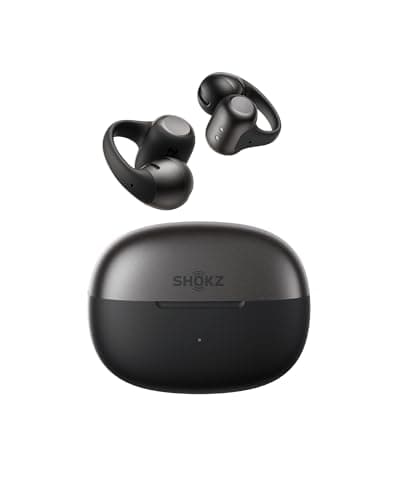 Shokz OpenDots 2 IP57 buds, a bone-conduction mic that reads your voice through your jaw in a headwind, 10 hours and a 5-minute charge worth 2. | Best clip-on for cyclingOpen-ear clip-on | 8.6 /10 | $199.95Amazon |
| 2 | 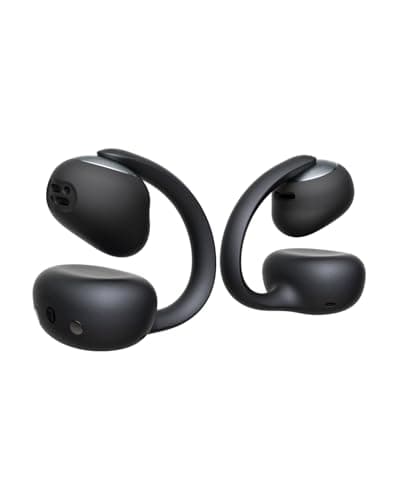 Baseus Bowie MC2 The strongest water rating of any clip-on here, at 5.1 g, with three cushion sizes and a 38 ms low-latency mode. | Best value: IP67 and 13 hoursOpen-ear clip-on | 8.6 /10 | $59.98Amazon |
| 3 | 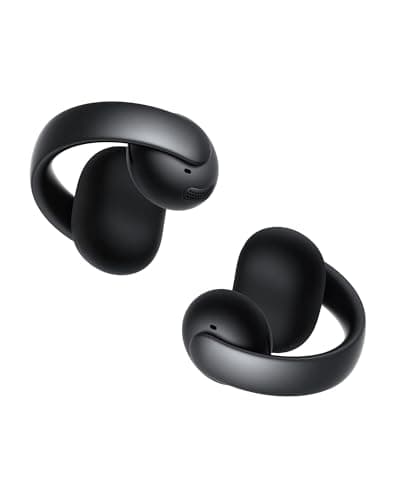 Soundcore AeroClip Four beamforming mics with AI noise reduction, IP55, LDAC on Android and a 10-minute charge worth 3 hours. | Best mic array for calls on the moveOpen-ear clip-on | 8.1 /10 | $105.99Amazon |
| 4 | 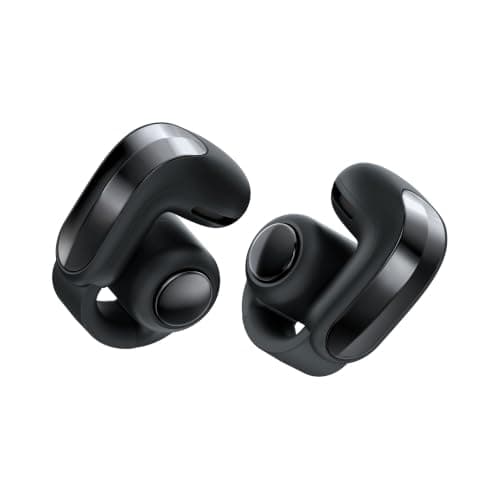 Bose Ultra Open Earbuds (2nd Gen) 9 hours, buttons and SpeechClarity mics, but IPX4 is a splash rating and summer riding is not splashing. | Best sound, weakest ratingOpen-ear clip-on | 7.5 /10 | $299.00Amazon |
| 5 | 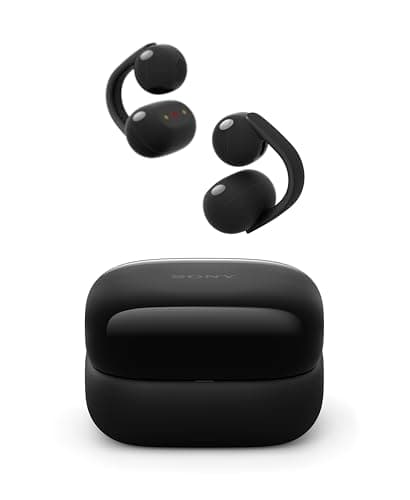 Sony LinkBuds Clip Leakage protection and tap-on-ear controls; IPX4 and no published wind handling make it the commuter pick, not the training pick. | Best for the cafe stopOpen-ear clip-on | 6.9 /10 | $158.00Amazon |
#ad · Prices come live from Amazon, last checked October 11, 2026. Scores are ours, built from published specs and cited independent reviews, with every figure linked to its source. Photos are illustrative stock. Tap a row for the full write-up.
Why a clip-on for cycling
There are three open-ear designs and they all keep your ear canal free, which on a road bike is the whole point: a car closing from behind, a rider calling “on your left,” a chain starting to skip. What separates them for cycling specifically is real estate.
The top of your ear is already crowded. A helmet retention strap runs in front of it and under it, sunglasses arms run over it, and in winter a headband or a cap sits across it too. An ear-hook puts a silicone loop in exactly that space. A bone conduction neckband runs around the back of your skull, which usually works but competes with the helmet's rear cradle and a hood. A clip-on grips the outer rim of the ear and nothing crosses the top at all.
That is why cyclists who wear glasses and a helmet keep arriving at clip-ons. It is also why we rank them lower for sprint-and-jump sports and higher here: a bike delivers much less head impact than a footstrike does, so the clip-on's one weakness barely applies. If you want the neckband case instead, it is in best bone conduction headphones for cycling, and the wider field is in best earbuds for cycling.
The table
Every figure is the maker's own, except the Sony, where Sony publishes little and the numbers come from SoundGuys' measured review.
Wind is the real problem
On a bike at 20 mph you are generating a 20 mph headwind, and it hits the one part of an open-ear earbud that has nowhere to hide: the microphone. Air turbulence across a mic port is louder than your voice, which is why calls from a bike are usually unintelligible no matter how good the earbuds are at playing music.
There is exactly one approach in this group that solves it rather than filtering it. The OpenDots 2 carries a bone-conduction microphone alongside its two air mics: it picks up the vibration of your voice through your jaw, which wind cannot interfere with because it never travels through the air. Shokz lists it as part of a triple AI noise-cancelling array.
The alternatives filter instead: Soundcore's four beamforming mics with AI noise reduction and Baseus's four-mic call clarity both work by rejecting sound that is not arriving from your mouth, and both help. Bose offers SpeechClarity on two mics. Sony publishes no wind handling we can cite.
Note that none of this affects listening, only talking. If you never take calls while riding, deprioritise this section entirely. If you do, it is the single most important row in the table. The physics and the fixes are in wind noise on open-ear earbuds while cycling.
Helmet straps and sunglasses
The Bicycle Helmet Safety Institute's fitting guidance is specific about the straps: the side straps should form a V around your ears and the buckle should sit under your jaw, snug enough that the helmet does not move when you shake your head. Nothing in that geometry crosses the outer rim of your ear — which is precisely where a clip-on sits.
Two practical rules follow. First, fit the earbuds, then the glasses, then the helmet. Doing it in any other order means something gets knocked out of place and you fix it one-handed at 18 mph. Second, anything you pull over your head is the actual risk: the commonest way to lose a clip-on is a jersey or a base layer catching it, not riding.
Weight matters less here than you would think, because the clip is not fighting gravity in the way a hook is. For reference the spread is 5.1 g (Baseus) to about 6.4 g (Shokz, Bose first gen); you will not feel the difference through a helmet.
The rating you need for riding
Legality and awareness
Open-ear earbuds leave your ear canals completely uncovered, so traffic reaches you unprocessed — no microphone, no latency, no battery cost, nothing to switch on. That is the safety argument for the whole category and it is a real one.
It is not a legal argument. Headphone rules for cyclists vary by state and sometimes by city, and some jurisdictions restrict both ears regardless of design. Check your own rules; we are not going to generalise about them from a product page. The road-safety reasoning is in can you hear traffic with open-ear headphones? and safest headphones for running.
One volume note that applies to every pick here: an open ear canal has no isolation, so road noise competes with your audio and your thumb goes to the volume button. NIDCD is clear that long or repeated exposure at or above 85 dBA causes hearing loss, and that applies to the open designs too. Set a cap on your phone — the full argument is in open-ear headphones and hearing safety.
In detail
The picks, in full
Rank 1
Best clip-on for cycling
Shokz OpenDots 2
IP57 buds, a bone-conduction mic that reads your voice through your jaw in a headwind, 10 hours and a 5-minute charge worth 2.
Spec sheetResearched · sources linked
| Fit system | Open-ear clip-on. Ear canal stays open: you hear the room and traffic. |
|---|---|
| Water & sweat rating | Earbuds IP57; charging case IP54 |
| Weight | 6.4 g per earbud; case 38.8 g |
| Battery | 10 hours; 40 hours with case |
| Quick charge | 5 min = 2 hours |
| Charging | Case: wireless and USB-C; earbuds 1 hour |
| Bluetooth | 6.1 |
| Multipoint | Yes |
| Microphones | Triple AI noise-canceling: two air-conduction mics plus one bone-conduction mic |
| Controls | Touch controls (upgraded) |
| Driver / tech | Bassphere 2.0 + Dolby Audio + DirectPitch + MirrorPitch |
| Launched | June 2026 |
How the 8.6 score breaks down
- Fit security (25%)
- 8
- Sweat & water resistance (20%)
- 10
- Awareness (open canal) (15%)
- 9
- Sound & leakage (15%)
- 8
- Calls & wind (10%)
- 9
- Battery & charging (10%)
- 9
- Value (5%)
- 5
What the spec sheet supports
- IP57 on the buds: immersion-rated, which no Bose clip-on is
- 10 hours per charge and a 5-minute charge worth 2
- Bone-conduction mic picks up your voice through the jaw on windy days
- Even the case is IP54
Where it falls short
- Touch controls rather than buttons
- Clip-ons sit lighter than hooks but can shift on heavy impact; check the fit on the first sprint
Skip this if…
…you want buttons; the Bose cuffs have them, or go to an ear-hook.
#ad · Price as of October 11, 2026 · Disclosure for the link to Shokz OpenDots 2
Rank 2
Best value: IP67 and 13 hours
Baseus Bowie MC2
The strongest water rating of any clip-on here, at 5.1 g, with three cushion sizes and a 38 ms low-latency mode.
Spec sheetResearched · sources linked
| Fit system | Open-ear clip-on. Ear canal stays open: you hear the room and traffic. |
|---|---|
| Water & sweat rating | IP67 |
| Weight | About 5.1 g per earbud; about 52 g with case |
| Battery | About 11.5 h (bass boost on) or 13 h (off) per charge; 55 to 60 h with case |
| Bluetooth | 6.0; 38 ms low-latency mode |
| Multipoint | Yes |
| Microphones | 4-mic AI call clarity |
| Codecs | SBC, AAC, LDAC |
| Driver / tech | 11 mm dynamic, 20 Hz to 40 kHz |
| Extras | Detachable air cushions in M/L/XL |
How the 8.6 score breaks down
- Fit security (25%)
- 8
- Sweat & water resistance (20%)
- 10
- Awareness (open canal) (15%)
- 9
- Sound & leakage (15%)
- 7
- Calls & wind (10%)
- 7
- Battery & charging (10%)
- 10
- Value (5%)
- 10
What the spec sheet supports
- IP67 at a budget price: the best water rating of any clip-on here
- Lightest clip-on at 5.1 g
- Battery figures nobody else in the category matches
- Three cushion sizes for fit
Where it falls short
- Less brand track record and fewer independent reviews than Bose, Shokz or Soundcore
- Baseus's battery figures are at 50% volume
Skip this if…
…you want a known name with a long warranty history; Shokz and Bose cost more for that reason.
#ad · Price as of October 11, 2026 · Disclosure for the link to Baseus Bowie MC2
Rank 3
Best mic array for calls on the move
Soundcore AeroClip
Four beamforming mics with AI noise reduction, IP55, LDAC on Android and a 10-minute charge worth 3 hours.
Spec sheetResearched · sources linked
| Fit system | Open-ear clip-on. Ear canal stays open: you hear the room and traffic. |
|---|---|
| Water & sweat rating | IP55 |
| Weight | 6.0 g per earbud |
| Battery | 8 hours; 32 hours with case |
| Quick charge | 10 min = 3 hours |
| Bluetooth | 5.4 |
| Multipoint | Yes |
| Microphones | 4 beamforming mics with AI noise reduction |
| Controls | Tap control |
| Codecs | LDAC (Android only) |
| Driver / tech | 12 mm titanium-coated driver |
How the 8.1 score breaks down
- Fit security (25%)
- 8
- Sweat & water resistance (20%)
- 8
- Awareness (open canal) (15%)
- 9
- Sound & leakage (15%)
- 8
- Calls & wind (10%)
- 8
- Battery & charging (10%)
- 8
- Value (5%)
- 7
What the spec sheet supports
- IP55 where Bose is IPX4
- LDAC and a 12 mm driver
- 10-minute charge worth 3 hours
Where it falls short
- 8 hours is two short of the OpenDots
- Tap controls
- No wireless charging
Skip this if…
…you want the best sweat rating in a clip-on; the OpenDots 2's IP57 is a step up.
#ad · Price as of October 11, 2026 · Disclosure for the link to Soundcore AeroClip
Rank 4
Best sound, weakest rating
Bose Ultra Open Earbuds (2nd Gen)
9 hours, buttons and SpeechClarity mics, but IPX4 is a splash rating and summer riding is not splashing.
Spec sheetResearched · sources linked
| Fit system | Open-ear clip-on. Ear canal stays open: you hear the room and traffic. |
|---|---|
| Water & sweat rating | IPX4 |
| Weight | 0.013 lb per earbud (about 5.9 g) |
| Battery | 9 hours; 5 hours with Immersive Audio or Auto Volume on; 4 with both; up to 19.5 more in the case |
| Quick charge | 10 min = up to 2 hours |
| Charging | 1 hour; wireless charging case |
| Bluetooth | 5.4 |
| Multipoint | Yes |
| Microphones | 2 microphones with SpeechClarity |
| Controls | Button on each barrel |
How the 7.5 score breaks down
- Fit security (25%)
- 8
- Sweat & water resistance (20%)
- 5
- Awareness (open canal) (15%)
- 9
- Sound & leakage (15%)
- 9
- Calls & wind (10%)
- 8
- Battery & charging (10%)
- 8
- Value (5%)
- 3
What the spec sheet supports
- 9 hours per charge, up from 7
- SpeechClarity mics and Bluetooth 5.4
- Wireless charging and a metallic finish
Where it falls short
- IPX4 again
- Both spatial features on together drops battery to 4 hours
- The most expensive clip-on here
Skip this if…
…the first-gen is on sale; the fit and the IPX4 rating are identical, and 2 more hours is the main gain.
#ad · Price as of October 11, 2026 · Disclosure for the link to Bose Ultra Open Earbuds (2nd Gen)
Rank 5
Best for the cafe stop
Sony LinkBuds Clip
Leakage protection and tap-on-ear controls; IPX4 and no published wind handling make it the commuter pick, not the training pick.
Spec sheetResearched · sources linked
| Fit system | Open-ear clip-on. Ear canal stays open: you hear the room and traffic. |
|---|---|
| Water & sweat rating | IPX4 |
| Weight | Case 41.7 g (SoundGuys) |
| Battery | 7 hours 10 minutes per charge, as measured by SoundGuys |
| Bluetooth | 5.3 |
| Controls | Tap on the tragus (the ear itself), not the earbud |
| Codecs | SBC, AAC |
| Extras | Leakage-protection listening mode; optional silicone stability accessories |
How the 6.9 score breaks down
- Fit security (25%)
- 7
- Sweat & water resistance (20%)
- 5
- Awareness (open canal) (15%)
- 9
- Sound & leakage (15%)
- 8
- Calls & wind (10%)
- 7
- Battery & charging (10%)
- 7
- Value (5%)
- 3
What the spec sheet supports
- Leakage-protection mode is a real answer to the open-ear office problem
- Tap-on-ear controls don't need a dry fingertip on the bud
- Sony's app and EQ
Where it falls short
- IPX4
- SoundGuys' tester said they felt 'ready to fall out' even though they stayed put
- Priced above the OpenDots 2, which is IP57
Skip this if…
…you sweat hard or sprint; the Shokz OpenDots 2 has the rating and the battery.
#ad · Price as of October 11, 2026 · Disclosure for the link to Sony LinkBuds Clip
Buyer's guide: picking a clip-on to ride in
Rank the water rating first
You are buying a device that will be soaked for an hour at a time in salty liquid, repeatedly, for years. IP55 is the floor we would accept for training; IP57 and IP67 mean you can rinse the salt off, which is the single habit that extends the life of a sweaty pair.
Then the microphone, if you talk
A bone-conduction mic is the only approach that is immune to wind rather than filtered against it. Four beamforming mics are the next best thing. Two mics with a speech mode is a desk spec, not a bike spec.
Check whether the case is rated
Most makers rate the buds and say nothing about the case. If the case lives in a jersey pocket it will get wet from the outside too. Shokz rates the OpenDots 2 case IP54; Bose, Soundcore and Sony publish no case rating we can cite.
Buttons beat touch panels in the rain
Water on a capacitive panel reads as a touch. Bose uses a physical button on each barrel and Sony moves the gesture onto your own tragus; Shokz, Soundcore and Baseus use touch. If you ride in wet weather, weight this more than you would in a gym.
Battery: look at the quick charge, not the headline
Every pick here covers a long ride on one charge. What saves the ride you did not plan is the top-up: Shokz turns 5 minutes into 2 hours, Soundcore turns 10 into 3, Bose turns 10 into 2.
If the clip-on feeling bothers you, buy the cushions
Clip-ons feel precarious even when they are secure — SoundGuys' tester described the Sony as feeling ready to fall out while conceding it stayed put. Baseus ships detachable air cushions in M, L and XL and Sony sells silicone stability accessories. A half-size change in the pad is usually the whole fix. The wider question is in do open-ear earbuds fall out?
How we scored this
The research behind every pick
Each pair on this page is researched and compared the same way: we classify the retention system that holds it on (hook, clip, wing, neckband), read the maker's published IP rating, weight, battery, charging, mic and control type straight off its own product page and manual, check the sweat and water rating against the IEC 60529 standard, cross-reference independent published reviews, and score every pick on a public rubric. Every figure links to the document it came from, so you can check any number in one click.
Prices come live from Amazon, so what you see is what you pay today. Commissions never set a score or decide a pick. The rubric and its weights are published.
Corrections & updates
- First edition.
Questions
Frequently asked
Are clip-on earbuds good for cycling?
Do clip-on earbuds work under a helmet?
Which clip-on handles wind noise best for calls?
Is IPX4 enough for cycling?
Clip-on or bone conduction for cycling?
Keep reading
Related on Openear Club
- Best earbuds for cyclingEvery design, not just clip-ons.
- Best bone conduction for cyclingThe neckband route.
- Wind noise on open-ear earbudsWhy your calls from the bike are unintelligible.
- Best clip-on earbudsThe whole clip-on field, ranked without a cycling bias.
- Headphones under a cycling helmetWhat fits where, strap by strap.
Receipts
Sources
- Shokz — official product comparison table (checked 2026-09-21)
- Baseus — Bowie MC2 product page, specifications (checked 2026-09-21)
- Soundcore — AeroClip product page (checked 2026-09-21)
- Bose — Ultra Open Earbuds (2nd Gen) product page (checked 2026-09-21)
- SoundGuys — Sony LinkBuds Clip review (checked 2026-09-21)
- Bicycle Helmet Safety Institute — "A Helmet That Fits", updated August 15, 2026 (checked 2026-10-05)
- IEC 60529 (IP Code) — degree-of-protection definitions, Keystone Compliance summary (checked 2026-09-21)
- NIDCD (NIH) — Noise-Induced Hearing Loss (checked 2026-09-21)
Every spec here is traceable: figures come from the maker's own product pages and are linked on each product, independent findings are attributed to whoever published them, and prices come live from Amazon so the number you see is the number you pay today. Read the full method.