Running & Cycling · Guide
Headphones under a cycling helmet: the strap, the rear dial, and the three places a headphone gets in the way
A bike helmet already has something behind your ears and something cradling the back of your skull. Your headphones want both of those spots. Here is which design loses that argument least, and how to set the helmet up so nothing gets pushed out of place.
By Mike M.Updated Researched · every spec sourced
#adReader-supported: we may earn a commission if you buy through our links, at no extra cost to you. It never decides a ranking. How we rank · Disclosure
The short version
Nothing about a bike helmet makes open-ear headphones impossible — cyclists are one of the biggest groups buying them. But three parts of a correctly fitted helmet live in the same real estate your headphones want, and if you get the order or the design wrong you spend the ride reaching up to fix something. This page is about the geometry, not the brands, and then the brands at the end.
What a helmet actually occupies
The Bicycle Helmet Safety Institute's fit guidance is the clearest public statement of where a helmet is supposed to sit, and three of its rules are the ones that matter here. The helmet “should sit level on the head, with the front just above the eyebrows, or if the rider uses glasses, just above the frame of the glasses.” The side straps run down each side of your head so that “the Y of the side straps should meet just below your ear.” And where the helmet has a rear stabilizer, BHSI notes that it “can keep the helmet from jiggling in normal use and make it feel more stable, but only a well-adjusted strap can keep it on in a crash.”
The three conflict points
1. The strap path over the ear. On most helmets the forward strap descends in front of the ear and the rear strap descends behind it, meeting below the lobe. An over-ear hook crosses the top of the ear and tucks into the groove behind it; the rear strap wants that groove too. They can share it, but only if the hook goes on first and the strap settles outside it.
2. The rear retention cradle. Modern helmets use a dial at the back that tightens a band with two pods cradling the occipital bone — the bump at the lower back of your skull. A bone conduction neckband crosses exactly there. If the cradle sits low and the band sits high, no problem. If they land on top of each other, every click of the dial pushes the band and you feel it as pressure behind the ears.
3. The shell edge at the temples. Less common, but on deeper aero helmets the shell drops far enough at the sides that a bulky transducer pad or a thick clip hinge can touch it. You notice this one standing still, not at speed.
The three fit systems, ranked for helmet use
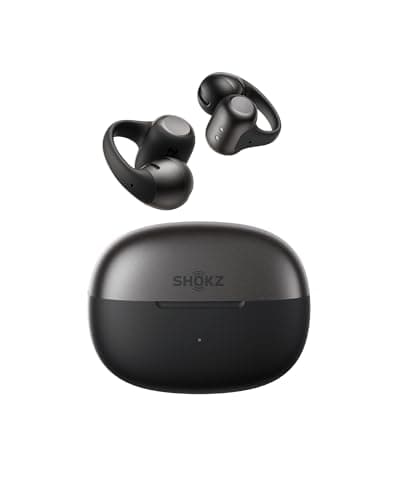
Clip-ons (best). A cuff that pinches the outer rim of the ear, with a small weight behind it. It occupies the middle of the ear, which is the one zone no part of a helmet touches: below the strap's crossing, above the Y, nowhere near the rear cradle. Nothing to seat, nothing to route, and you can put them on after the helmet is already buckled. The trade is that clip-ons have the weakest grip of the three on rough ground and the thinnest sound.
Ear hooks (very good, with a rule). A silicone hook over the top of the ear, speaker in front of the canal. The hook and the rear strap compete for the groove behind the ear, which is entirely manageable: seat the hooks, then lower the helmet, then do the straps. Done in that order, the strap lies outside the hook and you forget about both. Done in the wrong order, you spend a mile convinced the hook is loose. Hooks have the best sound of the open designs and the best grip for a bike's vibration, which is why they lead best earbuds for cycling. The head-to-head with clip-ons is in ear hook vs clip-on open-ear earbuds.
Bone conduction neckbands (helmet-dependent). The most secure fit of anything on this site and the one with a real compatibility question, because it is the only design that occupies the back of your head. Most riders get on fine. Some find their particular helmet's cradle sits exactly on the band. You cannot tell from a spec sheet and you can tell in thirty seconds with the helmet in your hands, so do that test (below) before you order.
Sealed in-ear buds: not recommended on a bike at all. Not a helmet problem, a hearing-the-road problem. The whole argument is laid out in safest headphones for running and can you hear traffic with open-ear headphones.
The order you put things on
This is the whole trick, and almost nobody is told it:
- Headphones first. Seat the hook, clip the cuff, or settle the neckband where it is comfortable.
- Helmet second, with the rear dial slackened off. Lower it onto your head rather than pushing it forward from the back of your neck, which drags the band or the hook with it.
- Rear dial third. Tighten until snug, and stop the moment you feel it loading the headphone.
- Straps last. Set the Y below the ear, then the chin strap, and check it the way BHSI describes: “snug against the chin so that when you open your mouth very wide you feel the helmet pull down a little bit.”
Taking it off, reverse it: straps, dial, helmet, headphones. Pulling a helmet off over a seated ear hook is the single most common way people lose an earbud in a parking lot.
The rear-dial clash, and how to test for it in 30 seconds
If your helmet turns out to be a bad neighbor for a neckband, you have two good answers and one bad one. Good: buy a hook or a clip-on instead, or buy a helmet whose cradle sits lower. Bad: wear the helmet loose. A helmet that moves is a helmet that is not doing its job, and no headphone is worth that trade.
Adding sunglasses: three things, two slots
Most cyclists are wearing eyewear too, and the arms of a pair of sunglasses run exactly along the top of the ear — the same groove the ear hook and the helmet strap are negotiating over. Three items, one groove. The order that works: headphones, then glasses, then helmet, with the glasses' arms outside the hook and the strap outside both. BHSI's own fit rule accounts for eyewear directly, putting the helmet's front edge “just above the frame of the glasses.” Thin-armed sport frames make all of this easier than thick acetate; the full version of this problem is in open-ear earbuds with glasses.
The thing helmets make worse: wind
A helmet does not cause wind noise, but vented shells channel air and some riders find certain helmets noticeably louder at 20 mph than others. Since an open-ear headphone leaves your canal open, that noise lands directly on the same signal path as your music, and no amount of fit tuning fixes it. What helps is choosing a headphone whose maker publishes a wind figure for the microphones — Suunto states anti-wind noise to 30 km/h on the Wing 2; Shokz rates several models wind-resistant to 25 km/h — and understanding what that claim covers. It covers calls, not what you hear. Full detail in wind noise on open-ear earbuds on a bike.
Before you ride: the safety and legal part
An open ear canal is the entire reason this category exists for cyclists — you keep the traffic, the freewheel click behind you and the shout at the junction. That is a real benefit and it is also not unlimited: volume still masks, and an open-ear headphone at high volume on a loud road is closer to a sealed earbud than people assume. We cover the hearing side in open-ear headphones and hearing safety.
Local rules vary and we are not in a position to advise on your jurisdiction; a few places restrict headphone use on a bicycle, more restrict both ears than one. Check your own state or country before you make a habit of it. And the helmet rules above are not optional extras: a headphone should never be the reason a strap is loose or a dial is slack beyond snug.
Picks that clear a helmet
Our picks for this
One of each fit system, chosen for helmet use
Ranked by how little negotiation they need with a helmet, not by overall score.
Best clip-on for sweat
Shokz OpenDots 2
Open-ear clip-on8.6/10Clip-on. Sits in the one zone a helmet never touches, and you can put them on after the helmet is buckled.
$199.95Amazon#ad · Price as of October 5, 2026 · Disclosure for the link to Shokz OpenDots 2
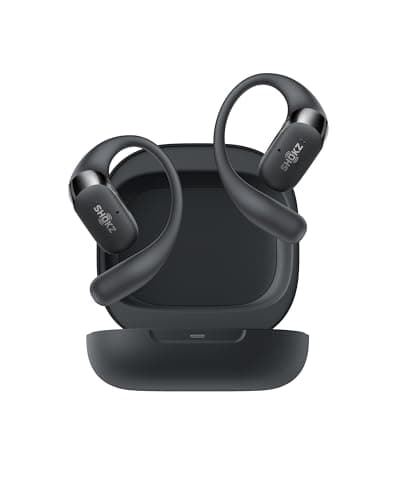
Best open-ear earbuds overall
Shokz OpenFit 2
Open-ear hook8.3/10Ear hook. Best sound and grip of the open designs; seat the hooks before the helmet and the strap lies outside them.
$179.95Amazon#ad · Price as of October 5, 2026 · Disclosure for the link to Shokz OpenFit 2
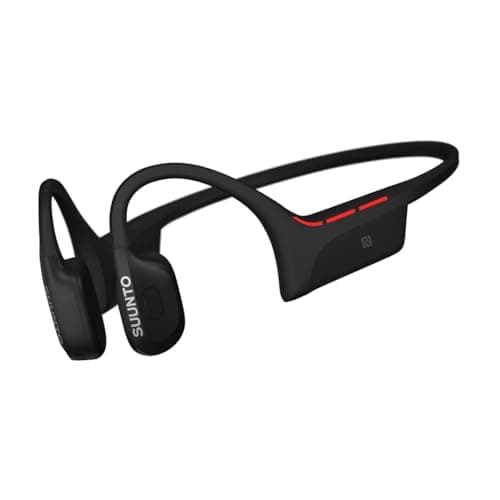
Best for cyclists and low-light runs
Suunto Wing 2
Bone conduction (neckband)8.3/10Neckband with cadence-reactive LED lights and nod-to-answer gestures, so your hands stay on the bars. Do the rear-dial test first.
$179.00Amazon#ad · Price as of October 5, 2026 · Disclosure for the link to Suunto Wing 2
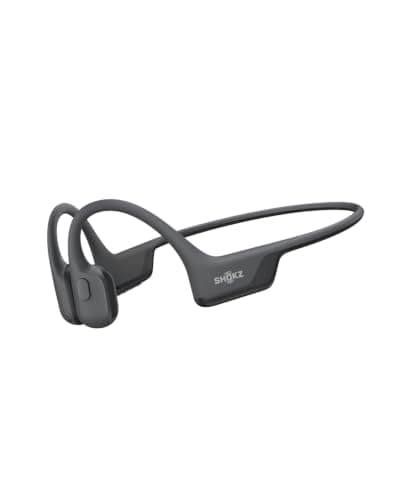
Best for heavy sweaters
Shokz OpenRun Air 2
Bone conduction (neckband)8.7/10Neckband, IP67 and the lightest current Shokz band at 26.4 g, which is the one that slots past a low cradle most easily.
$129.95Amazon#ad · Price as of October 5, 2026 · Disclosure for the link to Shokz OpenRun Air 2
If you want the picks ranked on merit rather than on helmet clearance, that is best earbuds for cycling for the open-ear field and best bone conduction for cycling for neckbands. If you have narrowed it to two specific neckbands, the lights-versus-sound argument is settled in Suunto Wing vs Shokz OpenRun Pro 2.
How we scored this
The research behind every pick
Each pair on this page is researched and compared the same way: we classify the retention system that holds it on (hook, clip, wing, neckband), read the maker's published IP rating, weight, battery, charging, mic and control type straight off its own product page and manual, check the sweat and water rating against the IEC 60529 standard, cross-reference independent published reviews, and score every pick on a public rubric. Every figure links to the document it came from, so you can check any number in one click.
Prices come live from Amazon, so what you see is what you pay today. Commissions never set a score or decide a pick. The rubric and its weights are published.
Questions
Frequently asked
Do bone conduction headphones fit under a bike helmet?
Which open-ear headphones are easiest to wear with a helmet?
Should the helmet strap go over or under an ear hook?
Can I wear headphones, sunglasses and a helmet at the same time?
Does a helmet make wind noise worse with open-ear earbuds?
Is it safe to ride with headphones on?
Keep reading
Related on Openear Club
- Best earbuds for cyclingThe open-ear field ranked, with helmet clearance as one of the criteria.
- Best bone conduction for cyclingNeckbands only, where the LED lights and wind ratings decide it.
- Suunto Wing vs Shokz OpenRun Pro 2Lights and gestures against sound and USB-C, head to head.
- Ear hook vs clip-onThe two designs that cope with a helmet best, compared properly.
- Open-ear earbuds with glassesThree things, one groove behind the ear.
- Wind noise on a bikeWhat a 25 or 30 km/h wind rating actually promises.
Receipts
Sources
- Bicycle Helmet Safety Institute — "A Helmet That Fits", updated August 15, 2026 (checked 2026-10-05)
- Suunto — Wing 2 product page, technical specifications (checked 2026-09-21)
- Shokz — official product comparison table (checked 2026-09-21)
- Shokz — In-Ear, Semi-In-Ear and Open-Ear Headphones Explained, NIKI Jane, April 7, 2026 (checked 2026-09-24)
- Shokz — OpenDots 2 product page (checked 2026-09-21)
Every spec here is traceable: figures come from the maker's own product pages and are linked on each product, independent findings are attributed to whoever published them, and prices come live from Amazon so the number you see is the number you pay today. Read the full method.