Running & Cycling · Head to head
Suunto Wing vs Shokz OpenRun Pro 2: safety lights and nod-to-answer, or the one that sounds better
Three bone conduction neckbands at roughly the same money, splitting along one line: Suunto sells you visibility and hands-free control, Shokz sells you a driver that can actually do bass. Every figure is read from the maker's own spec page and linked.
By Mike M.Updated Researched · every spec sourced
#adReader-supported: we may earn a commission if you buy through our links, at no extra cost to you. It never decides a ranking. How we rank · Disclosure
The contenders
Side by side
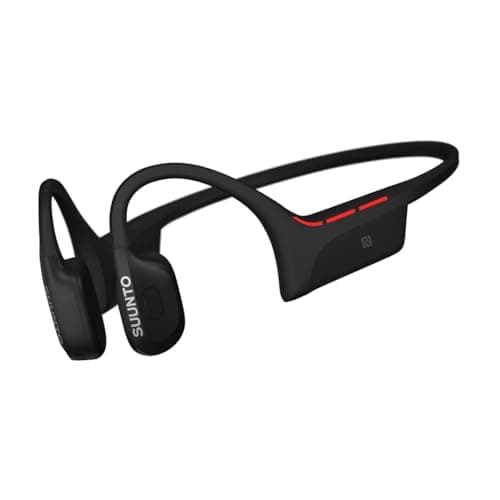
Buy for the dark and the bars
Suunto Wing 2
Bone conduction (neckband)8.3 /10The cyclist's bone conduction set: IP66, 12 hours plus a 24-hour power bank, LED safety lights that react to your cadence, and head-movement controls so you never take a hand off the bars.
$179.00Amazon#ad · Price as of October 5, 2026 · Disclosure for the link to Suunto Wing 2
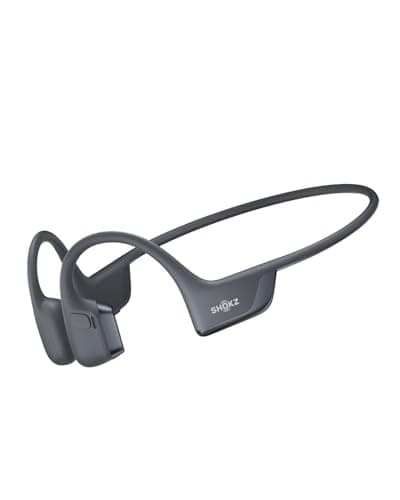
Buy for sound and USB-C
Shokz OpenRun Pro 2
Bone conduction (neckband)8.5 /10The bone conduction pick for most people: the neckband stays put through anything, 12 hours of battery, and Shokz's DualPitch driver adds an air-conduction unit for bass the older models can't make.
$179.95Amazon#ad · Price as of October 5, 2026 · Disclosure for the link to Shokz OpenRun Pro 2
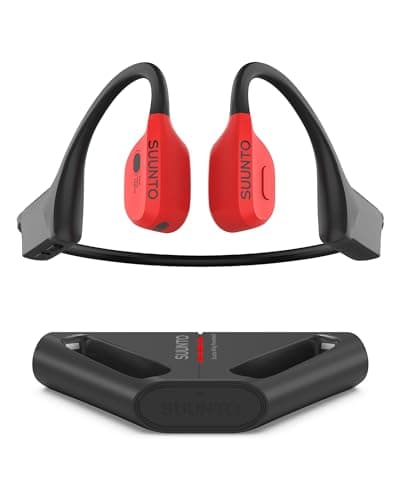
Buy for the same lights, less money
Suunto Wing
Bone conduction (neckband)8.3 /10The original Wing keeps the LED lights, head-movement control and the power bank, at IP67 and a lower price than the Wing 2; you lose two hours of battery and Bluetooth 5.3.
$109.00Amazon#ad · Price as of October 5, 2026 · Disclosure for the link to Suunto Wing
The verdict
What's the same across all three
All three are bone conduction neckbands: a titanium band around the back of the skull, transducer pads resting on the cheekbones just in front of the ears, nothing in the ear canal. That means all three score a 10 for awareness on our rubric and a 9 or 10 for fit security — there is no tip to work loose and no hook to rotate off the ear rim, which is the entire reason this design exists. If your earbuds keep falling out, any of these three ends that problem on day one.
All three also publish a wind answer, which is rarer than it should be. Suunto states anti-wind noise up to 30 km/h on both Wings; Shokz rates the OpenRun Pro 2's dual AI mics “Wind-Resistant (Up to 25 km/h).” Those claims are about the microphones, not about what you hear, and the distinction matters enough that we wrote wind noise on open-ear earbuds on a bike about it. And all three sound thin at the bottom end, because every bone conduction headphone does.
1. The LED lights: Suunto's only unmatched feature
Both Wings carry LED strips on the band behind your head, and on the Wing 2 they pulse in time with your running cadence. SoundGuys, reviewing the original Wing, called this out as the thing that justifies the product: “Suunto's LED feature sets it apart from other bone conduction headphones, giving them an edge when it comes to safety.” That is a reviewer who scored the headphone 7.1 out of 10 and still singled out the lights.
No Shokz has this. If you ride a road at dusk, you are already thinking about being seen, and a light at the back of your head sits higher than a seatpost light and moves when you turn to look. It does not replace a rear light, and we would not want anyone reading it that way, but it is a genuine second point of conspicuity that you were going to be wearing anyway. The broader case for hearing and being seen in traffic is in can you hear traffic with open-ear headphones.
2. Head-movement controls, and why a cyclist cares
Suunto's second unmatched feature: nod to accept a call, shake your head to decline. On a bike this is not a gimmick. Taking a hand off the bars to find a flush button on the back of your own head, at speed, in gloves, is the kind of small risk that accumulates. Both Wings have it; the OpenRun Pro 2 does not.
Worth knowing that SoundGuys found the Wing's physical buttons “completely flush with the headphones,” which makes them hard to find by touch — which is, uncomfortably, part of why the gestures exist. The OpenRun Pro 2's buttons are raised and easy to locate blind, and Shokz has had a decade to get that right.
3. Water: IP66 vs IP67 vs IP55
None of the three is a swim headphone. For that you need a published depth and onboard storage, which is a different product — see the Shokz OpenSwim Pro review.
4. Sound, and the vibration an independent review flagged
This is where Shokz wins, and it is not close. The OpenRun Pro 2 uses DualPitch: the bone transducer plus a small air-conduction driver that pushes sound toward the canal from outside, six EQ presets and two custom in the Shokz app. Both Wings are single-path bone conduction on the SBC codec only, with no higher-quality codec published. We score the Pro 2 a 6 for sound and leakage and the Wings a 5 and a 4. Six out of ten is the top of this category, not a good score in absolute terms; SoundGuys' roundup says bone conduction's “sub-bass and bass are virtually inaudible,” and we agree.
The specific, usable criticism comes from SoundGuys' Wing review: “When I increase the volume beyond 50%, the vibrations from the Wing become distracting,” and “sound quality distorts when pushing past 60% volume.” That is a real ceiling on a windy road, where you want volume and the wind is competing with you. The reviewer also found “the fit leaves the headband sloping downward behind my ears, rather than staying parallel with the floor” — one person's head, but worth knowing before you buy, since Suunto sells the Wing in one size and Shokz sells the Pro 2 in Standard and Mini.
One point back to Suunto: SoundGuys credited the Wing with “better mic quality than most bone conduction headphones.” If calls on the move are a daily thing, both brands have an argument, and the boom-mic option is covered in best bone conduction headphones with a mic.
It is fair to note how SoundGuys closed that review: it recommended most buyers get a Shokz instead, saying the Wing “could be a great alternative…if they were more affordable.” We think the lights change that calculus for one specific rider — the one riding at night — and not for anyone else.
5. Battery: the power bank changes the math
On the headphone alone it is 12 hours for the Wing 2, 12 for the OpenRun Pro 2 and 10 for the Wing. A tie at the top. The difference is what Suunto puts in the box: a clip-on power bank worth up to 24 more hours on the Wing 2 and up to 20 on the Wing, which Suunto presents as 36 and 30 hours of total range. SoundGuys confirmed the original's figure as “an extra 20 hours of playtime, totaling 30 hours of battery life.”
For a bikepacking weekend or a multi-day event that is a decisive advantage, because the bank charges the headphone from your jersey pocket with no wall socket involved. For a person doing an hour a day, 12 hours is already a week and a half and the bank is one more thing to keep charged. Shokz counters with the better top-up: five minutes on the cable buys 2.5 hours, and the Wings publish no quick-charge figure at all.
6. Charging, weight and sizes
The OpenRun Pro 2 charges over USB-C in an hour. Both Wings use a proprietary connector — SoundGuys describes the Wing's as a “2-pin connector” — which means a cable you have to not lose, and a headphone you cannot charge from a hotel desk or a friend's charger. After a decade of proprietary magnetic cables, Shokz moving its flagship to USB-C was the single most practical change it has made.
Weight: 30.3 g Standard or 30 g Mini for the Pro 2, 33 g for the Wing, 35 g for the Wing 2 — the Wing 2 is the heaviest neckband on this site. Five grams sounds trivial and mostly is, but it sits at the back of your head alongside a pair of sunglass arms, and the Pro 2 is the only one of the three sold in two sizes. If band length has been a problem for you before, read bone conduction for big heads first.
7. Wing 2 or the original Wing?
If you have decided on Suunto, the Wing 2 adds two hours on the headphone, four more from the bank, Bluetooth 5.3 and the cadence-reactive light behavior; it costs more and weighs 2 g more. The original Wing gives up all of that and gains the better water rating — IP67 against IP66 — at a list price well below both other products here. Our scores land within half a point of each other, which is the honest summary: the Wing is the better value and the Wing 2 is the better headphone. The full bone conduction ranking, including where each Wing falls, is at best bone conduction headphones.
Who should buy which
Night riders and dark-morning runners: Wing 2. The lights and the gestures are the product, and no Shokz offers either. It is also our pick in best bone conduction for cycling.
Anyone whose main complaint about bone conduction is how it sounds: OpenRun Pro 2. DualPitch is the only answer any maker has to that complaint, the Mini size exists if the band has never fit you, and USB-C removes a daily annoyance. Full writeup in the Shokz OpenRun Pro 2 review.
Riders on a budget who still want to be seen: the original Wing, which keeps the lights and gestures, adds the better IP67 rating, and gives up battery, Bluetooth version and two hours of runtime.
Anyone who wants the full open-ear field, not just neckbands: ear-hook designs sound noticeably better with the same open canal, and they are ranked against each other in best earbuds for cycling.
In detail
The contenders, in full
Buy for the dark and the bars
Suunto Wing 2
The cyclist's bone conduction set: IP66, 12 hours plus a 24-hour power bank, LED safety lights that react to your cadence, and head-movement controls so you never take a hand off the bars.
Spec sheetResearched · sources linked
| Fit system | Bone conduction (neckband). Ear canal stays open: you hear the room and traffic. |
|---|---|
| Water & sweat rating | IP66 |
| Weight | 35 g / 1.23 oz |
| Battery | 12 hours; up to 24 more from the included power bank |
| Charging | Headphones 1 h or less; power bank 1.5 h or less |
| Bluetooth | 5.3, over 10 m; SBC codec |
| Wind handling | Anti-wind noise to 30 km/h |
| Controls | Head-movement control plus buttons |
| Extras | Reactive LED lights; titanium build; -20 to 60 C operating range; Suunto app |
How the 8.3 score breaks down
- Fit security (25%)
- 9
- Sweat & water resistance (20%)
- 9
- Awareness (open canal) (15%)
- 10
- Sound & leakage (15%)
- 5
- Calls & wind (10%)
- 8
- Battery & charging (10%)
- 9
- Value (5%)
- 6
What the spec sheet supports
- LED lights that pulse with cadence, a genuine visibility feature for road cyclists
- Head-movement controls: nod to answer, shake to decline
- 36 hours total with the power bank clipped on
Where it falls short
- 35 g, heavier than every Shokz neckband
- IP66, not IP67: heavy spray yes, immersion no
- SBC only; SoundGuys noted excessive vibration at high volume on the original Wing
Skip this if…
…you don't ride or run in the dark; the lights and head gestures are the reason to pay for this over an OpenRun.
#ad · Price as of October 5, 2026 · Disclosure for the link to Suunto Wing 2
Buy for sound and USB-C
Shokz OpenRun Pro 2
The bone conduction pick for most people: the neckband stays put through anything, 12 hours of battery, and Shokz's DualPitch driver adds an air-conduction unit for bass the older models can't make.
Spec sheetResearched · sources linked
| Fit system | Bone conduction (neckband). Ear canal stays open: you hear the room and traffic. |
|---|---|
| Water & sweat rating | IP55 (dust, sweat and water resistant) |
| Weight | 30.3 g standard / 30 g mini |
| Battery | 12 hours listening |
| Quick charge | 5 min = 2.5 hours |
| Charging | USB-C, 1 hour to full |
| Bluetooth | 5.3, 33 ft range |
| Multipoint | Yes |
| Microphones | Dual AI noise-canceling, wind-resistant to 25 km/h |
| Controls | Physical buttons |
| Driver / tech | 10th-gen bone conduction (DualPitch: bone + air conduction unit) |
| Sizes | Standard (over 9.25 in head circumference) and Mini |
| Launched | August 2024 |
How the 8.5 score breaks down
- Fit security (25%)
- 10
- Sweat & water resistance (20%)
- 8
- Awareness (open canal) (15%)
- 10
- Sound & leakage (15%)
- 6
- Calls & wind (10%)
- 8
- Battery & charging (10%)
- 9
- Value (5%)
- 6
What the spec sheet supports
- Titanium neckband plus ear hooks: nothing to fall out of an ear canal
- 12 hours per charge and a real quick charge, on USB-C instead of a proprietary cable
- DualPitch adds an air-conduction driver, so bass exists where older bone conduction sets had none
- Wind-resistant dual mics rated to 25 km/h for calls on the move
Where it falls short
- IP55, not IP67 like the cheaper OpenRun and OpenRun Air 2: fine for sweat, not for rinsing under a tap
- Bone conduction still leaks at high volume in a quiet room
- The most expensive of the three OpenRun models
Skip this if…
…you want to rinse the headphones under a tap after a soaked run (get the IP67 OpenRun Air 2) or you train mostly indoors where a sealed earbud's bass would matter more than an open ear.
#ad · Price as of October 5, 2026 · Disclosure for the link to Shokz OpenRun Pro 2
Buy for the same lights, less money
Suunto Wing
The original Wing keeps the LED lights, head-movement control and the power bank, at IP67 and a lower price than the Wing 2; you lose two hours of battery and Bluetooth 5.3.
Spec sheetResearched · sources linked
| Fit system | Bone conduction (neckband). Ear canal stays open: you hear the room and traffic. |
|---|---|
| Water & sweat rating | IP67 (power bank IP55) |
| Weight | 33 g / 1.16 oz |
| Battery | 10 hours; up to 20 more from the power bank |
| Charging | Headphones 1 h or less; power bank 1.5 h or less |
| Bluetooth | Dual-device connection; SBC codec |
| Wind handling | Anti-wind noise to 30 km/h |
| Controls | Head-movement control plus buttons |
| Extras | LED lights; titanium alloy frame; earplugs in the box |
How the 8.3 score breaks down
- Fit security (25%)
- 9
- Sweat & water resistance (20%)
- 10
- Awareness (open canal) (15%)
- 10
- Sound & leakage (15%)
- 4
- Calls & wind (10%)
- 8
- Battery & charging (10%)
- 8
- Value (5%)
- 7
What the spec sheet supports
- IP67 headphones, so a rinse after a muddy ride is fine
- Same LED lights and head-movement control as the Wing 2
- Dual-device connection for a bike computer and a phone
Where it falls short
- 10 hours on the headphones alone
- SoundGuys flagged excessive vibrations at high volume
- Suunto doesn't publish a Bluetooth version for this model
Skip this if…
…you want the longest single-charge time; the Wing 2 adds two hours and Bluetooth 5.3 for a modest premium.
#ad · Price as of October 5, 2026 · Disclosure for the link to Suunto Wing
How we scored this
The research behind every pick
Each pair on this page is researched and compared the same way: we classify the retention system that holds it on (hook, clip, wing, neckband), read the maker's published IP rating, weight, battery, charging, mic and control type straight off its own product page and manual, check the sweat and water rating against the IEC 60529 standard, cross-reference independent published reviews, and score every pick on a public rubric. Every figure links to the document it came from, so you can check any number in one click.
Prices come live from Amazon, so what you see is what you pay today. Commissions never set a score or decide a pick. The rubric and its weights are published.
Questions
Frequently asked
Is the Suunto Wing 2 better than the Shokz OpenRun Pro 2?
Which has the longer battery, the Suunto Wing or the Shokz OpenRun Pro 2?
Can you swim with the Suunto Wing or the OpenRun Pro 2?
Does the Suunto Wing charge over USB-C?
Do the Suunto Wing's LED lights replace a bike light?
Which is lighter?
Keep reading
Related on Openear Club
- Best bone conduction for cyclingThe full ranking the Wing 2 leads, and why lights and wind decide it.
- Headphones under a cycling helmetWhere a neckband crosses the strap, and the rear-dial clash to check before you buy.
- Wind noise on a bikeWhat a '30 km/h' wind rating does and does not promise.
- Shokz OpenRun Pro 2 reviewThe Shokz side of this comparison, in full.
- Best bone conduction headphonesAll the neckbands ranked on one rubric.
- Best earbuds for cyclingIf an ear-hook might suit you better than a band around your skull.
Receipts
Sources
- Suunto — Wing 2 product page, technical specifications (checked 2026-09-21)
- Suunto — Wing product page, technical specifications (checked 2026-09-21)
- Shokz — official product comparison table (checked 2026-09-21)
- Shokz — OpenRun Pro 2 product page (checked 2026-09-21)
- SoundGuys — Suunto Wing review, Lil Katz, November 30, 2024, scored 7.1/10 (checked 2026-10-05)
- SoundGuys — Best bone conduction headphones, Chase Bernath, updated Jan 23, 2026 (checked 2026-09-21)
- IEC 60529 (IP Code) — degree-of-protection definitions, Keystone Compliance summary (checked 2026-09-21)
Every spec here is traceable: figures come from the maker's own product pages and are linked on each product, independent findings are attributed to whoever published them, and prices come live from Amazon so the number you see is the number you pay today. Read the full method.