Running & Cycling · The rankings
Best earbuds for skiing and snowboarding: what survives a helmet, a glove and the cold
A ski helmet is not a bike helmet. It has a padded shell over both ears, which is exactly where most earbuds want to live. These seven are ranked by where the hardware actually sits, whether you can work it with gloves on, and what happens to a battery at ten degrees.
By Mike M.Updated Researched · every spec sourced
#adReader-supported: we may earn a commission if you buy through our links, at no extra cost to you. It never decides a ranking. How we rank · Disclosure
Quick picks
The rankings at a glance
| # | Product | Best for | Score | Price |
|---|---|---|---|---|
| 1 | 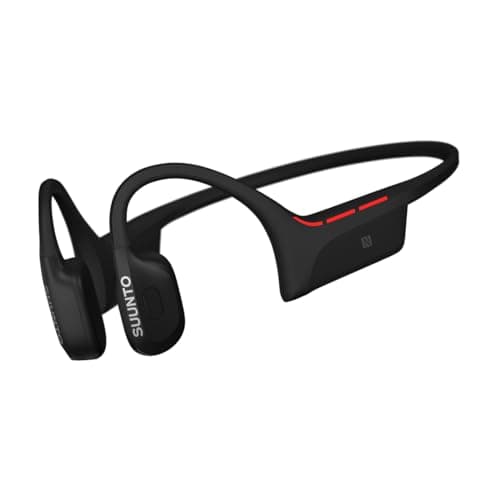 Suunto Wing 2 The only pair here with a published operating range down to -20 C, head-gesture controls that work through mittens, and LED lights for the last run of the day. | Best overall for the slopesBone conduction (neckband) | 8.3 /10 | $179.00Amazon |
| 2 | 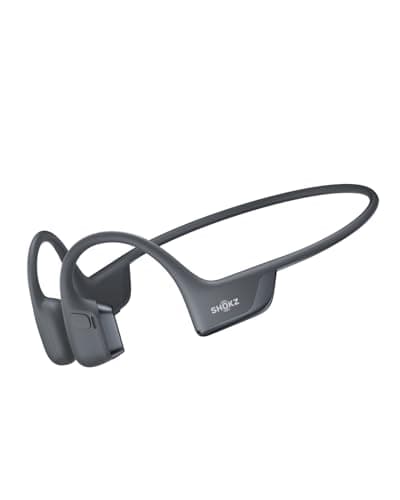 Shokz OpenRun Pro 2 Transducers sit on your cheekbones, forward of the ear pad, and the controls are two physical buttons you can find through a glove. Twelve hours covers a full day on one charge. | Best under a helmetBone conduction (neckband) | 8.5 /10 | $179.95Amazon |
| 3 | 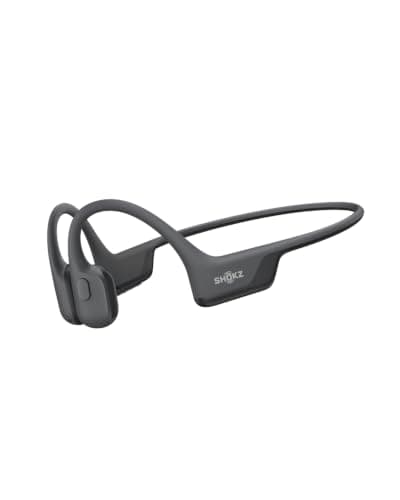 Shokz OpenRun Air 2 IP67 and the lightest Shokz band at 26.4 g. Snow that melts on a warm March afternoon is just water, and this is the one you can rinse. | Best for spring slushBone conduction (neckband) | 8.7 /10 | $129.95Amazon |
| 4 | 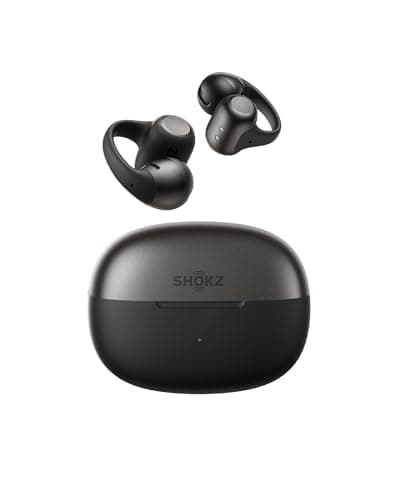 Shokz OpenDots 2 No helmet, no band across the nape: a 6.4 g clip on the ear rim with IP57 buds and an IP54 case. The best pick here for anyone riding in a hat. | Best for beanie daysOpen-ear clip-on | 8.6 /10 | $199.95Amazon |
| 5 | 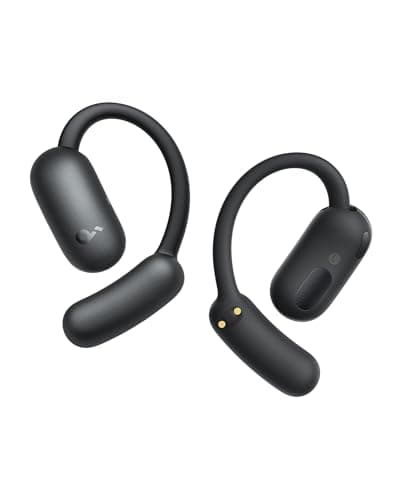 Soundcore AeroFit 2 A four-level adjustable hook, so you can set how far the arm stands off your ear before the helmet pad presses on it. IP55 and 10 hours for well under the Shokz bands. | Best value hookOpen-ear hook | 8.4 /10 | $79.99Amazon |
| 6 | 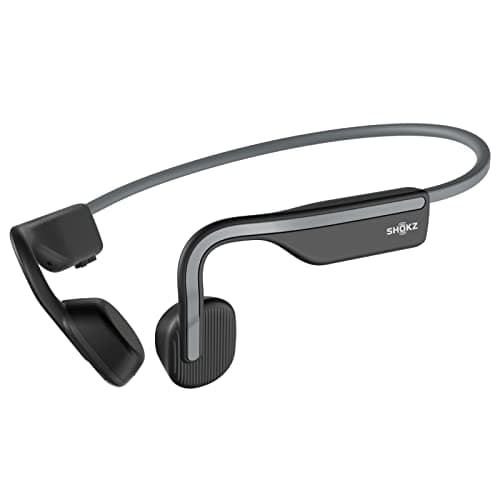 Shokz OpenMove The same neckband geometry and the same physical buttons as the OpenRun models, at Shokz's entry price. Six hours is the compromise. | Cheapest way under a helmetBone conduction (neckband) | 7.4 /10 | $79.95Amazon |
| 7 | 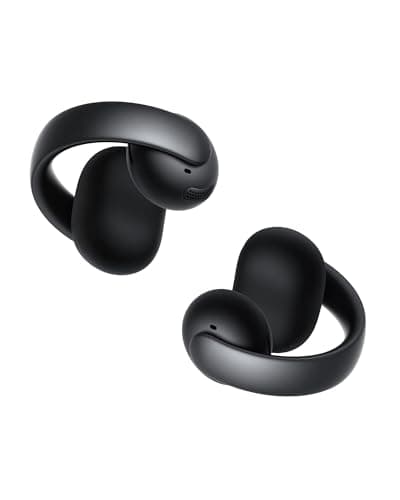 Soundcore AeroClip IP55, a clamp rated for 20,000 bends and LDAC on Android, for noticeably less than the OpenDots 2. Tap controls are the thing to think about in gloves. | Best mid-price clipOpen-ear clip-on | 8.1 /10 | $129.99Amazon |
#ad · Prices come live from Amazon, last checked November 4, 2026. Scores are ours, built from published specs and cited independent reviews, with every figure linked to its source. Photos are illustrative stock. Tap a row for the full write-up.
The ear pad is the whole problem
Most guidance about headphones and helmets on this site has been about bikes, where a helmet is a shell held on by webbing straps and the area around your ear is open air. A snow helmet is a different object. It has a padded, insulated ear pad covering each ear, pressed in place by the shell and often by a fit dial at the back of your head. The entire volume where an ear hook, a clip-on cuff or a speaker pod wants to sit is already occupied.
That one fact reorders the whole category. On a bike, the most comfortable open-ear earbuds are the clip-ons, because a cuff on the ear rim clears the straps completely — we worked that out in headphones under a cycling helmet. On the snow, the cuff is the design most directly in the way, because it occupies the outer rim of the ear, which is exactly the surface the pad presses against.
What clears a snow helmet best is the design that puts nothing on or over the ear at all: a bone-conduction neckband, whose transducers rest on your cheekbones, forward of the pad and below the shell, with a thin band running behind your head under the helmet's rear edge. That is why four of the seven picks below are neckbands, on a site that usually spreads its lists across all four fit systems.
The five things we ranked on
No product on this page is marketed for skiing. Every one of them is marketed for running, riding or the gym, and we are judging them on a job the maker did not write the spec sheet for — so the criteria have to be explicit and the reasoning has to be visible. Here is the rubric, in the order it decided the ranking.
- Where the hardware sits relative to the ear pad. Cheekbone beats over-the-ear beats on-the-rim. A neckband's transducers sit forward of the pad; a hook's arm crosses the top of the ear where the pad's edge lands; a cuff sits on the rim itself, under the thickest part of the pad.
- Controls you can operate in gloves. Physical buttons and head gestures work. Capacitive touch panels do not work through a glove at all, because there is no skin contact to change the capacitance.
- Hours per charge, in cold. A lift day is five to seven hours of elapsed time. Published battery figures are measured at room temperature, and cold reduces them.
- The water digit. Snow is water. It melts on a warm jacket collar, on a face, and on electronics.
- Awareness. The reason this is an open-ear site. The slope version of the argument is in its own section below.
Controls you can work in gloves
This is the criterion that separates the top of the list from the bottom, and almost nobody writes about it, because almost nobody is wearing gloves when they review earbuds.
A capacitive touch panel detects a change in capacitance at its surface. Skin does that; a leather or synthetic glove does not. So a touch-controlled earbud is not a slow or unreliable control on a cold day — it is no control at all until you take a glove off, on a chairlift, in wind, with poles in your lap. That rules out exactly the products a gym shopper would pick first.
There are two designs here that do not have this problem at all:
- Physical buttons. A mechanical switch does not care what is between your finger and it. Every Shokz neckband on this page — OpenRun Pro 2, OpenRun Air 2, OpenMove — uses buttons, and they sit on the outside of the band behind your ear where a gloved hand can find them by feel.
- Head gestures. The Suunto Wing 2 adds head-movement control on top of buttons: nod to answer, shake to decline. That is a zero-hands control, which on a lift with mittens, poles and a phone in a zipped pocket is the most useful thing on this page.
The force-sensor pinch on the Shokz OpenDots 2 is a partial answer. A force sensor responds to pressure rather than capacitance, so a thin glove liner can work it where a tap panel cannot — but a thick mitten still will not give you the precision to pinch a six-gram cuff without pushing it off your ear.
The table
Every figure below is the maker's own published number, linked to the page it came from. All seven listings were verified live, in stock and title-matched on Amazon on October 26, 2026 through the price pipeline this site runs. We do not print prices in prose — use the buy buttons for today's figures.
What the cold does to a battery
Here is the number that drove the top of this ranking: Suunto publishes an operating range of −20 to 60 C for the Wing 2. That is the only cold-weather operating figure published for any product on this site. Shokz does not print one. Soundcore does not print one. Bose does not print one. On a page about skiing, a maker who has thought about temperature enough to publish a bound is telling you something the others are not.
Nobody publishing an earbud spec sheet is obliged to tell you what happens at −10 C, so for the rest we have to reason from what a comparable maker does publish. Apple states that iPhones and iPads are designed for ambient temperatures “between 0º and 35º C (32º to 95º F)”, and that using one in very cold conditions outside that range “might temporarily shorten battery life and could cause your device to turn off” — but that “battery life will return to normal” once the device warms up again.
That is lithium-ion chemistry, not an Apple quirk, and it applies to the battery in your earbuds and the much bigger one in your phone. Three practical consequences for a ski day:
- Treat the published hours as a warm-room number. A pair rated at six hours is not a comfortable choice for a seven-hour lift day in January. Twelve hours is.
- Keep the charging case in an inside pocket, not the outside one. A cold case charges slowly or not at all, which is how people discover at lunch that the top-up did nothing.
- Do not panic at a sudden shutdown. Cold-related cutoffs usually recover; warm the hardware up before you decide it is broken.
This is also an argument for a neckband over any true-wireless pair on a cold day. A band has one larger cell instead of two tiny ones, it is worn against a warm head under a helmet rather than exposed on the outside of an ear, and there is no case in the equation at all. Twelve hours on the OpenRun Pro 2 and the Wing 2 covers first chair to last with margin; six hours on the OpenMove is the honest compromise you are making to save money.
Snow is water that has not melted yet
An IP code's second digit is the water test. On a ski day the relevant exposure is not immersion, it is melt — snow landing on your collar and turning to water, spray off a carved turn, the inside of a jacket after a bootpack, and the sweat that a layered-up body produces even at freezing temperatures.
- IP67 (Shokz OpenRun Air 2) — dust-tight and tested for immersion in one meter of water for 30 minutes. You can rinse it. The strongest water digit on this page.
- IP57 (Shokz OpenDots 2 buds, with an IP54 case) — immersion-tested too, and the only clip-on case on the market we can cite a rating for.
- IP66 (Suunto Wing 2) — powerful jets, not immersion. Fine for snow, melt and spray; not for a rinse under a running tap.
- IP55 (OpenRun Pro 2, OpenMove, AeroFit 2, AeroClip) — a low-pressure jet. Comfortably enough for snow and sweat, and the limit of what most of this category offers.
One genuinely counterintuitive entry: the Suunto Wing 2 is rated lower for water than the original Suunto Wing, which is IP67. The newer and more expensive model has the weaker water digit. That is the kind of thing a spec sheet tells you and a marketing page does not, and we wrote it up in the Suunto Wing 2 review. If the water digit is what you care about most, the OpenRun Air 2 is the pick on this page. The full explainer is in earbud IP ratings explained.
What you actually need to hear on a slope
The National Ski Areas Association's Your Responsibility Code runs to ten points, and headphones are not mentioned in any of them. We checked, because it would be easy to assume otherwise and dishonest to imply a rule that does not exist. What the Code does say, twice, is about situational awareness: “Always stay in control. You must be able to stop or avoid people or objects” and “Look uphill and avoid others before starting downhill or entering a trail.”
Point 4 is the one earbuds affect. Looking uphill is a visual instruction, but what prompts you to look uphill — and what warns you in the half second before someone passes close on your blind side — is almost always sound: edges on hardpack, a shout, a snowmobile or a patrol sled, grooming equipment, the lift operator telling you to lower the bar. Noise cancellation in a sealed earbud deletes exactly that band of information, and it does it under a helmet that is already muffling your hearing.
That is why every pick here is an open-ear or bone-conduction design and none of them is a sealed in-ear with ANC. The category-level case is in open-ear vs in-ear earbuds, and the same argument for roads is in can you hear traffic with open-ear headphones?
Two practical riders. First, check your resort's own policy before the first chair — individual areas can and do publish rules the national Code does not. Second, a helmet and a hood already cut what reaches your ears, so an open-ear design is a way of preserving some of what is left, not a way of restoring normal hearing. Run the volume lower than you would on a road for the same reason; the hearing-safety version of that argument is in open-ear headphones and hearing safety.
In detail
The picks, in full
Rank 1
Best overall for the slopes
Suunto Wing 2
The only pair here with a published operating range down to -20 C, head-gesture controls that work through mittens, and LED lights for the last run of the day.
Spec sheetResearched · sources linked
| Fit system | Bone conduction (neckband). Ear canal stays open: you hear the room and traffic. |
|---|---|
| Water & sweat rating | IP66 |
| Weight | 35 g / 1.23 oz |
| Battery | 12 hours; up to 24 more from the included power bank |
| Charging | Headphones 1 h or less; power bank 1.5 h or less |
| Bluetooth | 5.3, over 10 m; SBC codec |
| Wind handling | Anti-wind noise to 30 km/h |
| Controls | Head-movement control plus buttons |
| Extras | Reactive LED lights; titanium build; -20 to 60 C operating range; Suunto app |
How the 8.3 score breaks down
- Fit security (25%)
- 9
- Sweat & water resistance (20%)
- 9
- Awareness (open canal) (15%)
- 10
- Sound & leakage (15%)
- 5
- Calls & wind (10%)
- 8
- Battery & charging (10%)
- 9
- Value (5%)
- 6
What the spec sheet supports
- LED lights that pulse with cadence, a genuine visibility feature for road cyclists
- Head-movement controls: nod to answer, shake to decline
- 36 hours total with the power bank clipped on
Where it falls short
- 35 g, heavier than every Shokz neckband
- IP66, not IP67: heavy spray yes, immersion no
- SBC only; SoundGuys noted excessive vibration at high volume on the original Wing
Skip this if…
…you don't ride or run in the dark; the lights and head gestures are the reason to pay for this over an OpenRun.
#ad · Price as of November 4, 2026 · Disclosure for the link to Suunto Wing 2
Rank 2
Best under a helmet
Shokz OpenRun Pro 2
Transducers sit on your cheekbones, forward of the ear pad, and the controls are two physical buttons you can find through a glove. Twelve hours covers a full day on one charge.
Spec sheetResearched · sources linked
| Fit system | Bone conduction (neckband). Ear canal stays open: you hear the room and traffic. |
|---|---|
| Water & sweat rating | IP55 (dust, sweat and water resistant) |
| Weight | 30.3 g standard / 30 g mini |
| Battery | 12 hours listening |
| Quick charge | 5 min = 2.5 hours |
| Charging | USB-C, 1 hour to full |
| Bluetooth | 5.3, 33 ft range |
| Multipoint | Yes |
| Microphones | Dual AI noise-canceling, wind-resistant to 25 km/h |
| Controls | Physical buttons |
| Driver / tech | 10th-gen bone conduction (DualPitch: bone + air conduction unit) |
| Sizes | Standard (over 9.25 in head circumference) and Mini |
| Launched | August 2024 |
How the 8.5 score breaks down
- Fit security (25%)
- 10
- Sweat & water resistance (20%)
- 8
- Awareness (open canal) (15%)
- 10
- Sound & leakage (15%)
- 6
- Calls & wind (10%)
- 8
- Battery & charging (10%)
- 9
- Value (5%)
- 6
What the spec sheet supports
- Titanium neckband plus ear hooks: nothing to fall out of an ear canal
- 12 hours per charge and a real quick charge, on USB-C instead of a proprietary cable
- DualPitch adds an air-conduction driver, so bass exists where older bone conduction sets had none
- Wind-resistant dual mics rated to 25 km/h for calls on the move
Where it falls short
- IP55, not IP67 like the cheaper OpenRun and OpenRun Air 2: fine for sweat, not for rinsing under a tap
- Bone conduction still leaks at high volume in a quiet room
- The most expensive of the three OpenRun models
Skip this if…
…you want to rinse the headphones under a tap after a soaked run (get the IP67 OpenRun Air 2) or you train mostly indoors where a sealed earbud's bass would matter more than an open ear.
#ad · Price as of November 4, 2026 · Disclosure for the link to Shokz OpenRun Pro 2
Rank 3
Best for spring slush
Shokz OpenRun Air 2
IP67 and the lightest Shokz band at 26.4 g. Snow that melts on a warm March afternoon is just water, and this is the one you can rinse.
Spec sheetResearched · sources linked
| Fit system | Bone conduction (neckband). Ear canal stays open: you hear the room and traffic. |
|---|---|
| Water & sweat rating | IP67 (dust-tight, temporary immersion); Shokz: not for swimming |
| Weight | 26.4 g standard / 25.9 g mini |
| Battery | 10 hours listening |
| Quick charge | 5 min = 2 hours |
| Charging | USB-C, 1 hour to full |
| Bluetooth | 6.0 |
| Multipoint | Yes |
| Microphones | Dual AI noise-canceling, wind-resistant |
| Controls | Physical buttons |
| Driver / tech | 8.5-gen bone conduction (PremiumPitch 3.0) |
| Launched | August 2026 |
How the 8.7 score breaks down
- Fit security (25%)
- 10
- Sweat & water resistance (20%)
- 10
- Awareness (open canal) (15%)
- 10
- Sound & leakage (15%)
- 5
- Calls & wind (10%)
- 8
- Battery & charging (10%)
- 8
- Value (5%)
- 7
What the spec sheet supports
- IP67 means sweat, rain and a rinse under the tap are all inside the rating
- Lightest current Shokz neckband; Shokz says the frame is 9% smaller than the OpenRun's
- USB-C charging and a 5-minute quick charge
- Bluetooth 6.0 with multipoint
Where it falls short
- No DualPitch air-conduction unit, so bass is thinner than the Pro 2
- Two hours less battery than the Pro 2
- Bone conduction leakage and cheekbone buzz at high volume, like every neckband here
Skip this if…
…sound quality is the reason you'd spend more (the Pro 2's DualPitch is audibly fuller) or you need the Pro 2's 12-hour battery for ultra-distance days.
#ad · Price as of November 4, 2026 · Disclosure for the link to Shokz OpenRun Air 2
Rank 4
Best for beanie days
Shokz OpenDots 2
No helmet, no band across the nape: a 6.4 g clip on the ear rim with IP57 buds and an IP54 case. The best pick here for anyone riding in a hat.
Spec sheetResearched · sources linked
| Fit system | Open-ear clip-on. Ear canal stays open: you hear the room and traffic. |
|---|---|
| Water & sweat rating | Earbuds IP57; charging case IP54 |
| Weight | 6.4 g per earbud; case 38.8 g |
| Battery | 10 hours; 40 hours with case |
| Quick charge | 5 min = 2 hours |
| Charging | Case: wireless and USB-C; earbuds 1 hour |
| Bluetooth | 6.1 |
| Multipoint | Yes |
| Microphones | Triple AI noise-canceling: two air-conduction mics plus one bone-conduction mic |
| Controls | Touch controls (upgraded) |
| Driver / tech | Bassphere 2.0 + Dolby Audio + DirectPitch + MirrorPitch |
| Launched | June 2026 |
How the 8.6 score breaks down
- Fit security (25%)
- 8
- Sweat & water resistance (20%)
- 10
- Awareness (open canal) (15%)
- 9
- Sound & leakage (15%)
- 8
- Calls & wind (10%)
- 9
- Battery & charging (10%)
- 9
- Value (5%)
- 5
What the spec sheet supports
- IP57 on the buds: immersion-rated, which no Bose clip-on is
- 10 hours per charge and a 5-minute charge worth 2
- Bone-conduction mic picks up your voice through the jaw on windy days
- Even the case is IP54
Where it falls short
- Touch controls rather than buttons
- Clip-ons sit lighter than hooks but can shift on heavy impact; check the fit on the first sprint
Skip this if…
…you want buttons; the Bose cuffs have them, or go to an ear-hook.
#ad · Price as of November 4, 2026 · Disclosure for the link to Shokz OpenDots 2
Rank 5
Best value hook
Soundcore AeroFit 2
A four-level adjustable hook, so you can set how far the arm stands off your ear before the helmet pad presses on it. IP55 and 10 hours for well under the Shokz bands.
Spec sheetResearched · sources linked
| Fit system | Open-ear hook. Ear canal stays open: you hear the room and traffic. |
|---|---|
| Water & sweat rating | IP55 |
| Weight | 10 g per earbud |
| Battery | 10 hours; 42 hours with case |
| Quick charge | 10 min = 4 hours |
| Charging | USB-C; case supports wireless charging |
| Bluetooth | 5.4 |
| Multipoint | Yes |
| Microphones | 4 mics with AI noise reduction |
| Controls | Touch control |
| Codecs | LDAC Hi-Res (Android only) |
| Driver / tech | 20 x 11.5 mm drivers |
| Extras | Four-level adjustable ear hook |
How the 8.4 score breaks down
- Fit security (25%)
- 9
- Sweat & water resistance (20%)
- 8
- Awareness (open canal) (15%)
- 9
- Sound & leakage (15%)
- 8
- Calls & wind (10%)
- 7
- Battery & charging (10%)
- 9
- Value (5%)
- 8
What the spec sheet supports
- Four hook positions: the fix for ears a fixed hook never quite fits
- 10 hours and a 10-minute charge worth 4 hours
- LDAC and large drivers for open-ear sound with some bass
- Wireless-charging case
Where it falls short
- 10 g per side; heavier than the Shokz OpenFit Air 2
- Touch controls, not buttons
- IP55 earbuds; Soundcore doesn't rate the case
Skip this if…
…you want a button you can hit mid-set; the Shokz OpenFit 2's physical button is more reliable when wet.
#ad · Price as of November 4, 2026 · Disclosure for the link to Soundcore AeroFit 2
Rank 6
Cheapest way under a helmet
Shokz OpenMove
The same neckband geometry and the same physical buttons as the OpenRun models, at Shokz's entry price. Six hours is the compromise.
Spec sheetResearched · sources linked
| Fit system | Bone conduction (neckband). Ear canal stays open: you hear the room and traffic. |
|---|---|
| Water & sweat rating | IP55 |
| Weight | 29 g |
| Battery | 6 hours listening |
| Quick charge | None |
| Charging | USB-C, 2 hours to full |
| Bluetooth | 5.1 |
| Multipoint | Yes |
| Microphones | Dual noise-canceling |
| Controls | Physical buttons |
| Driver / tech | 7th-gen bone conduction (PremiumPitch 2.0) |
| Launched | September 2020 |
How the 7.4 score breaks down
- Fit security (25%)
- 9
- Sweat & water resistance (20%)
- 8
- Awareness (open canal) (15%)
- 10
- Sound & leakage (15%)
- 4
- Calls & wind (10%)
- 6
- Battery & charging (10%)
- 4
- Value (5%)
- 8
What the spec sheet supports
- Under $100 at Shokz's own list price, so the cheapest entry to the brand
- IP55 covers sweat and rain
- USB-C charging, no proprietary cable
Where it falls short
- 6 hours of battery and no quick charge
- Older 7th-gen driver: the thinnest sound of the Shokz neckbands
- Heavier than the OpenRun models despite the lower price
Skip this if…
…you run long or forget to charge: six hours with no quick charge is the deal-breaker. The Creative Outlier Free Pro costs less and lasts longer.
#ad · Price as of November 4, 2026 · Disclosure for the link to Shokz OpenMove
Rank 7
Best mid-price clip
Soundcore AeroClip
IP55, a clamp rated for 20,000 bends and LDAC on Android, for noticeably less than the OpenDots 2. Tap controls are the thing to think about in gloves.
Spec sheetResearched · sources linked
| Fit system | Open-ear clip-on. Ear canal stays open: you hear the room and traffic. |
|---|---|
| Water & sweat rating | IP55 |
| Weight | 6.0 g per earbud |
| Battery | 8 hours; 32 hours with case |
| Quick charge | 10 min = 3 hours |
| Bluetooth | 5.4 |
| Multipoint | Yes |
| Microphones | 4 beamforming mics with AI noise reduction |
| Controls | Tap control |
| Codecs | LDAC (Android only) |
| Driver / tech | 12 mm titanium-coated driver |
How the 8.1 score breaks down
- Fit security (25%)
- 8
- Sweat & water resistance (20%)
- 8
- Awareness (open canal) (15%)
- 9
- Sound & leakage (15%)
- 8
- Calls & wind (10%)
- 8
- Battery & charging (10%)
- 8
- Value (5%)
- 7
What the spec sheet supports
- IP55 where Bose is IPX4
- LDAC and a 12 mm driver
- 10-minute charge worth 3 hours
Where it falls short
- 8 hours is two short of the OpenDots
- Tap controls
- No wireless charging
Skip this if…
…you want the best sweat rating in a clip-on; the OpenDots 2's IP57 is a step up.
#ad · Price as of November 4, 2026 · Disclosure for the link to Soundcore AeroClip
Buyer's guide: picking for the snow
Start with your head covering, not your sport. The single biggest factor here is whether you wear a helmet or a beanie, and it splits the list almost in half. In a helmet, go to a neckband — the OpenRun Pro 2 for the battery and buttons, the Wing 2 for the gestures and lights, the OpenRun Air 2 for the water rating, the OpenMove if the budget is firm. In a beanie, the clip-ons open up: the OpenDots 2 and the AeroClip both become comfortable choices, and a soft hat accommodates a hook far better than a rigid shell does.
Then check the controls against your gloves. Put your actual gloves on and think about what you will want to change mid-run. If the answer is “nothing, I set it on the lift,” a touch panel is survivable. If the answer involves taking calls or skipping tracks, you want buttons or gestures, and that is a hard filter rather than a preference.
Then buy enough battery for the day you actually ski. A lift ticket day is five to seven hours of elapsed time and the cold is working against you the whole time. Twelve hours published gives you room; eight is adequate for a half day; six is not a full day in January. Both 12-hour picks here are neckbands, which is not a coincidence — one large cell against two tiny ones, kept warm under a helmet.
Treat the water rating as the tiebreak, not the headline. Everything on this page clears snow and sweat. The water digit only becomes decisive in spring, when the snow is wet and the afternoon is warm, or if you want to be able to rinse salt off at the end of a season. If that is you, the IP67 OpenRun Air 2 is the answer.
Two things to ignore. Codec support, which matters far less than spec sheets imply and far less than wind noise and a helmet shell; and noise cancellation, which is the opposite of what you want on a slope and is not offered on any of these designs anyway. If you want the honest version of that second point, we wrote it in do open-ear earbuds have noise cancellation?
What we would not do. We would not recommend a sealed in-ear with ANC for a resort day, we would not modify a helmet's ear pads to make room for hardware, and we would not tell you a battery figure measured in a lab will hold up at −8 C. Where a maker has not published a number, this page says so rather than inventing one.
How we scored this
The research behind every pick
Each pair on this page is researched and compared the same way: we classify the retention system that holds it on (hook, clip, wing, neckband), read the maker's published IP rating, weight, battery, charging, mic and control type straight off its own product page and manual, check the sweat and water rating against the IEC 60529 standard, cross-reference independent published reviews, and score every pick on a public rubric. Every figure links to the document it came from, so you can check any number in one click.
Prices come live from Amazon, so what you see is what you pay today. Commissions never set a score or decide a pick. The rubric and its weights are published.
Corrections & updates
- First published. All seven picks verified live and in stock on Amazon the same day; the Suunto Wing 2's -20 to 60 C operating range is the only published cold-weather figure for any product in our registry.
Questions
Frequently asked
Can you wear earbuds under a ski helmet?
Are headphones allowed while skiing?
Do earbuds work in cold weather?
Which earbuds can you use with ski gloves on?
Are bone conduction headphones good for skiing?
Should I get clip-on earbuds for snowboarding?
How much battery do I need for a ski day?
Keep reading
Related on Openear Club
- Headphones under a cycling helmetThe same problem where the straps, not a pad, are in the way.
- Best earbuds for hikingThe other cold-weather outdoor list.
- Suunto Wing 2 reviewThe full write-up on the winner here, lights and gestures included.
- Best bone conduction headphonesEvery neckband on this page, ranked against the rest.
- Earbud IP ratings explainedWhat each digit was actually tested for.
Receipts
Sources
- National Ski Areas Association — Your Responsibility Code (2022), 10 points, including "Always stay in control" and "Look uphill and avoid others before starting downhill or entering a trail"; headphones are not mentioned anywhere in the Code (checked 2026-10-26)
- ASTM International — F2040-18, Standard Specification for Helmets Used for Recreational Snow Sports: impact testing on flat, hemispherical and edge anvils per F1446 after heat, cold and water conditioning; "Partial utilization of this specification is prohibited"; "Although a helmet that meets this specification will help reduce the risk of some types of injuries to the head at slower speeds, the protection is limited" (checked 2026-10-26)
- Apple Support — "If your iPhone or iPad gets too hot or too cold": designed for ambient temperatures "between 0º and 35º C (32º to 95º F)"; cold outside that range "might temporarily shorten battery life and could cause your device to turn off" but "battery life will return to normal" on warming (checked 2026-10-26)
- Suunto — Wing 2 product page, technical specifications (checked 2026-09-21)
- Suunto — Wing product page, technical specifications (checked 2026-09-21)
- Shokz — official product comparison table (checked 2026-09-21)
- Shokz — OpenDots 2 product page, re-read: IP57 earbuds, 6.4 g ± 0.2 g per earbud, 10 h / 40 h with case, "5 min = 2 hours playback", Bluetooth 6.1, triple AI noise-canceling mics (two air-conduction plus one bone conduction), "taps or the upgraded force-sensor pinch gesture", Bassphere 2.0 with upgraded Dolby Audio, DirectPitch and MirrorPitch, nickel-titanium JointArc, and all four colorways marked "Sold out" at $199.95 (checked 2026-10-26)
- Anker (soundcore) — AeroClip product page, re-read: IP55, 8 h / 32 h with case, "10M = 3H" quick charge, Bluetooth 5.4, multipoint, "4 Mics with AI", "12mm Customized Driver, Titanium-Coated", Tap Control, and an "adaptive open-ring design that endures 20,000 bends"; in stock (checked 2026-10-26)
- Soundcore — AeroFit 2 product page (checked 2026-09-21)
- IEC 60529 (IP Code) — degree-of-protection definitions, Keystone Compliance summary (checked 2026-09-21)
- IPX4 vs IPX5 test conditions (IEC 60529 nozzle, flow and duration), BONAD test-equipment summary (checked 2026-09-21)
- The Run Testers — Suunto Wing 2 review: IP66, 12 hours at lower volumes, head gestures "too sensitive for running at times", audible leakage, sound behind Shokz (checked 2026-10-19)
Every spec here is traceable: figures come from the maker's own product pages and are linked on each product, independent findings are attributed to whoever published them, and prices come live from Amazon so the number you see is the number you pay today. Read the full method.