Running & Cycling · Review
Suunto Wing 2 review: you are buying lights and gestures, not sound
Almost every bone conduction neckband competes on battery and water rating. The Wing 2 competes on being seen in the dark and controlled without taking a hand off the bars. Judge it on those, because on audio it sits behind the Shokz it costs the same as.
By Mike M.Updated Researched · every spec sourced
#adReader-supported: we may earn a commission if you buy through our links, at no extra cost to you. It never decides a ranking. How we rank · Disclosure
Reviewed
The pair under review
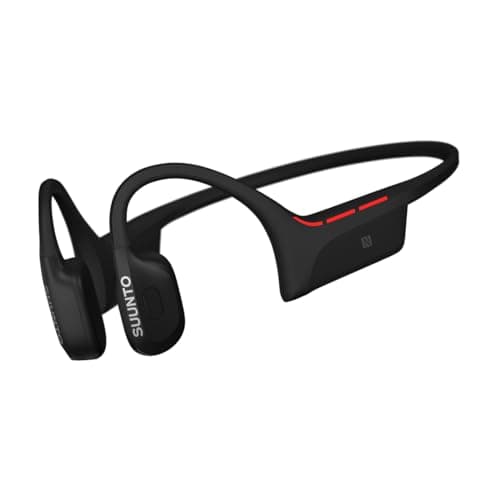
Best for cyclists and low-light runs
Suunto Wing 2
Bone conduction (neckband)8.3 /10The cyclist's bone conduction set: IP66, 12 hours plus a 24-hour power bank, LED safety lights that react to your cadence, and head-movement controls so you never take a hand off the bars.
$179.00Amazon#ad · Price as of October 19, 2026 · Disclosure for the link to Suunto Wing 2
What this review is based on
The specifications here come from Suunto's own Wing 2 technical specification table, and the in-use observations come from The Run Testers' published review, which we read on October 19, 2026; both are linked in the sources below. Suunto's product page is script-rendered, so where a figure could not be re-read directly on the day we have used the figure recorded in this site's registry from the page and said so rather than inventing a fresh one.
Availability was verified the same day through the Amazon price pipeline this site runs: the listing was live, in stock and title-verified as the Wing 2. We do not print prices in prose; use the buy button for the current figure. We have not worn this pair — what follows is a reading of published specifications and named independent testing against the rest of the bone conduction field. The rubric is at how we rank earbuds.
The verdict in one box
The LED lights: the actual reason to buy it
Suunto publishes them as reactive LED lights, and the behavior is the interesting part: they respond to your cadence rather than simply blinking on a timer. The hardware sits on the sections of the band that pass behind your ears, which is close to the highest point on your body that is not your head — and height is what decides whether a driver's headlights pick something up early or late.
Be clear about the scale of the claim, though. The Run Testers found the lights gave “modest visibility for nighttime running” and said outright that they wished they were larger. That is the right way to read them: a secondary conspicuity aid, not a substitute for a reflective vest or a proper rear light. If you ride, a real tail lamp still does the heavy lifting; the Wing 2 adds a moving, blinking signal at head height, which is a different and genuinely useful cue because it reads as a person rather than as a reflector.
The case for conspicuity gear generally — and the honest limits of what headphones contribute to it — is in the safest headphones for running. If hearing the traffic is the part you care about, that mechanism is covered in can you hear traffic with open-ear headphones?
Head-movement controls, and their one flaw
Suunto lists head-movement control alongside physical buttons. In practice it means you can nod to accept a call and shake your head to decline it, without reaching up at all. On a bike, in winter gloves, that is a meaningfully better interaction than any button or touch panel.
And here is the honest problem, from The Run Testers' review: the gestures proved “too sensitive for running at times.” That is not hard to believe. Running is repetitive vertical head motion by definition, and a system tuned to detect a deliberate nod has to discriminate that from a few thousand involuntary ones per mile. A false accept is an embarrassing phone call; a false decline is a missed one.
The flip side is that gesture control is the single best argument for this set over a Shokz on a bike, where taking a hand off the bars to work a button is the thing you are trying to avoid. That whole problem — including how a neckband interacts with a helmet strap — is in headphones under a cycling helmet.
Battery and the bundled power bank
Suunto publishes 12 hours on the headphones, plus up to 24 more from the power bank included in the box, for 36 total. The headphones charge in an hour or less, the power bank in an hour and a half or less.
Twelve hours is the top of the bone conduction field: the Shokz OpenRun Pro 2 publishes 12 as well, the OpenRun Air 2 ten, the Creative Outlier Free Pro ten, the OpenMove six. The Run Testers reported that 12 holds up at lower volumes and falls at higher ones, which is true of every battery claim ever published and worth repeating anyway.
The power bank is the unusual part, and it is a better idea than it first sounds. A neckband has nowhere to hide a charging case — that is the structural reason neckbands publish one battery number while earbuds publish two. A clip-on pack restores the thing the form factor gave up: a top-up in a drop bag or a jersey pocket without finding a wall socket. For a multi-day bikepacking trip or an ultra, that matters more than the headline 12.
Two caveats. It is one more object to lose, and it is one more object to charge. If you train in hour-long blocks from home, you will never take it out of the box, and you have paid for it.
IP66: the spec that runs backward
The Wing 2 is IP66, confirmed both by Suunto's specification table and independently by The Run Testers. Under IEC 60529 that second 6 means powerful water jets from any direction — which covers sweat, heavy rain and a hose, and does not cover immersion.
Now the odd part, and it is the single most useful thing to know before buying: the original Suunto Wing is IP67, and IP67 is an immersion rating. The newer, more expensive model is rated lower for water than the one it replaced. We have no explanation for that beyond what Suunto publishes, and we are not going to invent one. We just think a buyer should know it before paying the premium, because the usual assumption that the newer model is better at everything does not hold here.
Sound: behind the Shokz it prices against
This is where the Wing 2 gives ground, and the independent verdict is consistent. The Run Testers rated it “very good” for outdoor running where awareness is the priority, but said it “doesn't quite match up to other open-ear headphones built for running,” specifically naming Shokz for better bass and clarity. They also flagged audible leakage — the review's words are that it leaks audio “in a noticeable way.”
The codec list explains part of it: Suunto publishes SBC only, where the OpenRun Pro 2 and most of the open-ear field add AAC at minimum. In fairness, codec choice matters far less than spec sheets imply, and it matters least of all in a design that is already losing most of its low-frequency energy before any of it reaches your cochlea — which is the real constraint here, not the codec.
SoundGuys' review of the original Wing added a related finding worth carrying forward: excessive vibration at high volume. Bone conduction produces sound by vibrating your cheekbones, so past a certain level the sensation stops reading as music and starts reading as buzzing against your face. Suunto markets its own bass processing on the Wing 2; what that cannot change is the physics, and nobody has published a measurement showing it does.
Set expectations accordingly. Bone conduction is thinner than any sealed earbud and thinner than a good open-ear hook; what you get in exchange is an ear that is completely unobstructed. If that trade is new to you, read do bone conduction headphones sound good? before you spend anything, and the drawbacks page for the full list.
One place the Wing 2 does compete: Suunto publishes anti-wind noise to 30 km/h, which is the highest figure on this site — Shokz prints 25 km/h. For calls on a bike that is a real advantage, and it is the subject of wind noise on open-ear earbuds while cycling.
Fit, weight and the 35-gram question
Suunto publishes 35 g with a titanium and silicone frame. That makes it the heaviest neckband on this site: the original Wing is 33 g, the Creative Outlier Free Pro 31.5 g, and the Shokz OpenRun family sits lighter still.
Weight matters less on a neckband than on anything that hangs off your ear, because the load is distributed across the back of your head and the frame is sprung rather than clipped. The Run Testers reported no issues over longer runs and specifically noted it works well with running caps and glasses, which is the practical test that matters — a band and a glasses arm both want the space behind your ear, and plenty of designs lose that argument. The glasses case in detail is in open-ear earbuds with glasses.
One structural note on neckbands in general: they are the single best retention system for anything upright and the worst for anything with your head against a bench or a mat. That is not a Wing 2 flaw, it is the form factor, and we worked it through in best earbuds for lifting. SoundGuys also noted a sloping fit on the original Wing's headband, so if your head is at either end of the size range it is worth buying somewhere with a returns policy.
Who it is for, and who should skip it
Buy it if:
- You train in the dark. Winter mornings, evening commutes, unlit roads. The lights are the product.
- You ride. Gestures plus a 30 km/h wind rating plus a band that clears a helmet strap is a cyclist's specification. The ranked list is best bone conduction headphones for cycling.
- You do long hours away from a socket. Thirty-six total with the bank in a pocket.
- You run cold. An operating range down to -20 C is published; most makers publish nothing.
Skip it if:
- Sound quality is high on your list. Independent testing puts it behind Shokz, and the leakage is noticeable.
- You want an immersion rating. IP66, where the cheaper original Wing is IP67.
- You run and never ride. The gestures are reportedly too sensitive for running, so you would be paying for a feature you switch off.
- You want the lightest band. 35 g is the heaviest here.
- You will not use the lights. Daylight-only training removes the entire reason to choose this over an OpenRun.
Alternatives
Our picks for this
Three to weigh against it
The better-sounding flagship at a similar price, the cheaper original Wing that is rated higher for water, and the IP67 Shokz for anyone who just wants a band that survives everything.
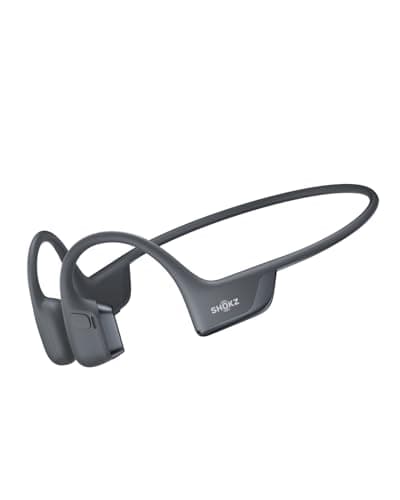
Best bone conduction overall
Shokz OpenRun Pro 2
Bone conduction (neckband)8.5/10The same 12 hours with better-regarded sound and a lower weight - but no lights, no gestures and a 25 km/h wind figure.
$179.95Amazon#ad · Price as of October 19, 2026 · Disclosure for the link to Shokz OpenRun Pro 2
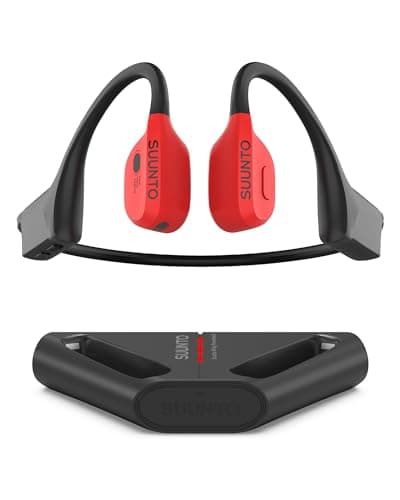
Best value with safety lights
Suunto Wing
Bone conduction (neckband)8.3/10The previous Wing keeps the lights, the gestures and the power bank, adds IP67, and costs less. Two fewer hours.
$149.00Amazon#ad · Price as of October 19, 2026 · Disclosure for the link to Suunto Wing
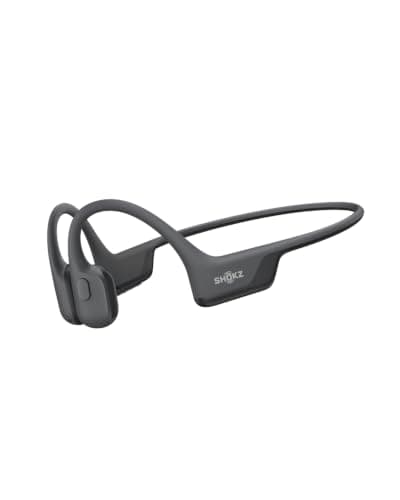
Best for heavy sweaters
Shokz OpenRun Air 2
Bone conduction (neckband)8.7/10IP67 and lighter, for the buyer whose priority is a band that shrugs off a rinse rather than one that glows.
$129.95Amazon#ad · Price as of October 19, 2026 · Disclosure for the link to Shokz OpenRun Air 2
Where it lands
The Wing 2 is a specialist, and specialists are easy to rate once you name the specialty. If your training happens on dark roads, the lights and the gestures are worth real money and nothing else on this site offers them. If it happens in daylight, or indoors, or in a pool, you are paying a premium for hardware you will not switch on, and the Shokz flagship sounds better for the same outlay.
The head-to-head against that flagship, including the full three-way with the original Wing, is in Suunto Wing vs Shokz OpenRun Pro 2, and the whole neckband field is ranked in best bone conduction headphones.
In detail
The full spec sheet and score
Best for cyclists and low-light runs
Suunto Wing 2
The cyclist's bone conduction set: IP66, 12 hours plus a 24-hour power bank, LED safety lights that react to your cadence, and head-movement controls so you never take a hand off the bars.
Spec sheetResearched · sources linked
| Fit system | Bone conduction (neckband). Ear canal stays open: you hear the room and traffic. |
|---|---|
| Water & sweat rating | IP66 |
| Weight | 35 g / 1.23 oz |
| Battery | 12 hours; up to 24 more from the included power bank |
| Charging | Headphones 1 h or less; power bank 1.5 h or less |
| Bluetooth | 5.3, over 10 m; SBC codec |
| Wind handling | Anti-wind noise to 30 km/h |
| Controls | Head-movement control plus buttons |
| Extras | Reactive LED lights; titanium build; -20 to 60 C operating range; Suunto app |
How the 8.3 score breaks down
- Fit security (25%)
- 9
- Sweat & water resistance (20%)
- 9
- Awareness (open canal) (15%)
- 10
- Sound & leakage (15%)
- 5
- Calls & wind (10%)
- 8
- Battery & charging (10%)
- 9
- Value (5%)
- 6
What the spec sheet supports
- LED lights that pulse with cadence, a genuine visibility feature for road cyclists
- Head-movement controls: nod to answer, shake to decline
- 36 hours total with the power bank clipped on
Where it falls short
- 35 g, heavier than every Shokz neckband
- IP66, not IP67: heavy spray yes, immersion no
- SBC only; SoundGuys noted excessive vibration at high volume on the original Wing
Skip this if…
…you don't ride or run in the dark; the lights and head gestures are the reason to pay for this over an OpenRun.
#ad · Price as of October 19, 2026 · Disclosure for the link to Suunto Wing 2
How we scored this
The research behind every pick
Each pair on this page is researched and compared the same way: we classify the retention system that holds it on (hook, clip, wing, neckband), read the maker's published IP rating, weight, battery, charging, mic and control type straight off its own product page and manual, check the sweat and water rating against the IEC 60529 standard, cross-reference independent published reviews, and score every pick on a public rubric. Every figure links to the document it came from, so you can check any number in one click.
Prices come live from Amazon, so what you see is what you pay today. Commissions never set a score or decide a pick. The rubric and its weights are published.
Questions
Frequently asked
Is the Suunto Wing 2 worth it?
Is the Suunto Wing 2 waterproof?
How does head-movement control work on the Suunto Wing 2?
How long does the Suunto Wing 2 battery last?
Suunto Wing 2 or Shokz OpenRun Pro 2?
Do the Suunto Wing 2 lights make you visible enough to skip a reflective vest?
Keep reading
Related on Openear Club
- Suunto Wing vs Shokz OpenRun Pro 2The three-way, including the IP67 original.
- Best bone conduction headphones for cyclingWhere the gestures and the wind rating pay off.
- Best bone conduction headphonesThe whole neckband field, ranked.
- The safest headphones for runningBeing heard, and being seen.
- Wind noise on open-ear earbuds while cyclingWhy the 30 km/h figure matters.
Receipts
Sources
- Suunto — Wing 2 product page, technical specifications (checked 2026-09-21)
- Suunto — Wing product page, technical specifications (checked 2026-09-21)
- The Run Testers — Suunto Wing 2 review: IP66, 12 hours at lower volumes, head gestures "too sensitive for running at times", audible leakage, sound behind Shokz (checked 2026-10-19)
- SoundGuys — Suunto Wing review, Lil Katz, November 30, 2024, scored 7.1/10 (checked 2026-10-05)
- Shokz — OpenRun Pro 2 product page (checked 2026-09-21)
- IEC 60529 (IP Code) — degree-of-protection definitions, Keystone Compliance summary (checked 2026-09-21)
- SoundGuys — Understanding Bluetooth codecs, Lil Katz, updated May 30, 2025 (checked 2026-09-28)
Every spec here is traceable: figures come from the maker's own product pages and are linked on each product, independent findings are attributed to whoever published them, and prices come live from Amazon so the number you see is the number you pay today. Read the full method.