Open-Ear Earbuds · Head to head
Shokz OpenFit 2 vs OpenDots 2: the hook or the clip
Shokz now sells two open-ear fit systems, and this is the choice between them. The hook has the battery and the button. The clip is lighter, immersion-rated, and the only one of the two whose case is rated too.
By Mike M.Updated Researched · every spec sourced
#adReader-supported: we may earn a commission if you buy through our links, at no extra cost to you. It never decides a ranking. How we rank · Disclosure
The contenders
Side by side
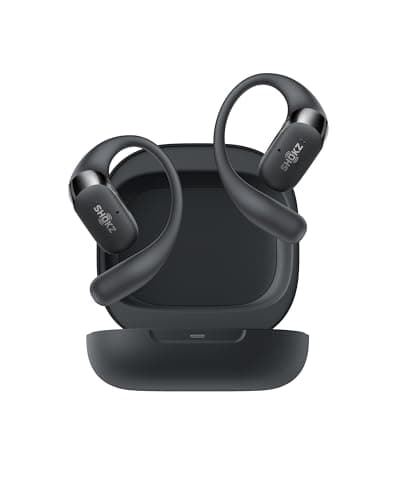
Buy this for the button and the battery
Shokz OpenFit 2
Open-ear hook8.3 /10The open-ear pick for most people: 11 hours per charge, IP55 buds, a physical button plus touch, and Shokz's DualBoost dual-driver sound. The hook fit is the reference the others get compared to.
$179.95Amazon#ad · Price as of October 17, 2026 · Disclosure for the link to Shokz OpenFit 2
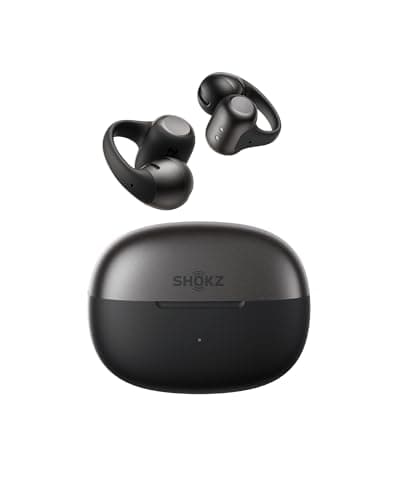
Buy this for sweat and glasses
Shokz OpenDots 2
Open-ear clip-on8.6 /10The clip-on with a real sweat rating: IP57 buds, 6.4 g, 10 hours plus 40 with the case, a 5-minute quick charge and a bone-conduction mic for calls. This is the clip-on for people who sweat.
$199.95Amazon#ad · Price as of October 17, 2026 · Disclosure for the link to Shokz OpenDots 2
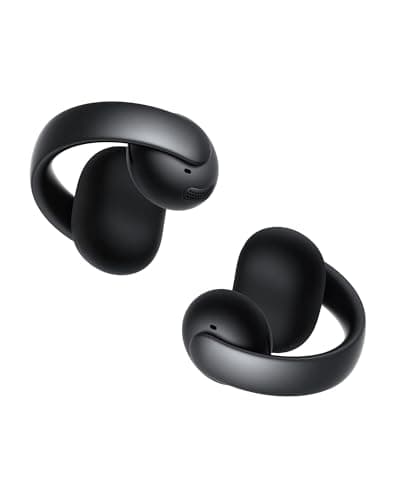
Buy this if the OpenDots 2 costs too much
Soundcore AeroClip
Open-ear clip-on8.1 /10IP55, 6 g, 8 hours plus 32 with the case, LDAC and four beamforming mics. A clip-on with a jet-spray sweat rating for less than Bose or Shokz.
$129.99Amazon#ad · Price as of October 17, 2026 · Disclosure for the link to Soundcore AeroClip
The verdict
Every published number
Both of these come off the same Shokz comparison table, so the figures were measured the same way and the gaps between them are real.
| Evidence | Shokz OpenFit 2 | Shokz OpenDots 2 |
|---|---|---|
| Water & sweat rating | Earbuds IP55; charging case not waterproof | Earbuds IP57; charging case IP54 |
| Weight | 9.4 g per earbud; case 53 g | 6.4 g per earbud; case 38.8 g |
| Battery | 11 hours; 48 hours with case | 10 hours; 40 hours with case |
| Quick charge | 10 min = 2 hours | 5 min = 2 hours |
| Charging | USB-C case; earbuds 1 hour, case 100 min | Case: wireless and USB-C; earbuds 1 hour |
| Bluetooth | 5.4 | 6.1 |
| Multipoint | Yes | Yes |
| Microphones | Dual AI noise-canceling | Triple AI noise-canceling: two air-conduction mics plus one bone-conduction mic |
| Controls | Physical buttons and touch controls | Touch controls (upgraded) |
| Driver / tech | DualBoost dual drivers + DirectPitch | Bassphere 2.0 + Dolby Audio + DirectPitch + MirrorPitch |
| Launched | January 2025 | June 2026 |
| Score | 8.3/10 | 8.6/10 |
1. IP57 and IP54 against IP55 and nothing
This is the only difference on the sheet that can end a pair of headphones, so it goes first. Both codes come from IEC 60529 and both digits move.
- OpenFit 2: IP55 on the earbuds. 5 for dust means dust-protected, not dust-tight. 5 for water means a 6.3 mm jet from any direction. The case carries no rating.
- OpenDots 2: IP57 on the earbuds and IP54 on the case. The 7 is the important digit: immersion, tested for 30 minutes under a metre of water. That is the step from “survives being sprayed” to “survives being submerged.”
In practice the 7 buys you the single most useful maintenance habit for a heavy sweater: you can take the buds to a tap and rinse the dried salt off. Sweat is not rain. It is salt water with skin oils in it, and when it dries it leaves a crust that holds moisture against the housing and corrodes charging contacts. A rating that permits a rinse is worth more than a rating that permits a rain shower. The mechanism is in can sweat damage earbuds? and the rating ladder is in IPX4 vs IPX5 vs IPX7.
Neither is a swim rating. For laps you need an immersion rating and onboard storage, because Bluetooth does not travel through water; the models that have both are in best bone conduction headphones for swimming.
2. Over the ear or around the rim
A hook routes over the top of the ear, in the same groove a glasses arm uses and under the same strap a cycling helmet uses. A clip pinches the outer rim and leaves that groove empty. That single geometric fact decides most of this comparison for people who wear something else on their head.
- Glasses: the clip wins outright. Nothing competes for the space. The hook can work with thin arms if you put the headphones on first, which is covered in open-ear earbuds with glasses.
- A cycling or climbing helmet: the clip again, because the Y of the side straps meets just below the ear and a clip sits inside that triangle. The put-on order and the strap test are in headphones under a cycling helmet.
- Heavy impact and contact: the hook. A clip is held by pinch pressure on one piece of cartilage; a glove, a hood or a hand brushing past can pop it. For boxing and anything where you take contact, the picks are in best earbuds for boxing.
- Small ears: usually the clip, on weight: 6.4 g against 9.4 g. The exception is an ear whose rim is too thin to hold a clip's pinch, which is why best open-ear earbuds for small ears ranks adjustability alongside weight.
Neither design puts anything inside the ear canal, so neither can work loose the way a sealed tip does as it warms and wets. That is the whole point of the category, and it is why open-ear earbuds rarely fall out at all.
3. A button against a touch panel
The OpenFit 2 has a physical button plus a touch surface on each side. The OpenDots 2 has touch controls, which Shokz describes as upgraded over the OpenDots One but which are still a capacitive panel.
This is a smaller line on a spec sheet than it is in a gym. A wet or gloved fingertip on a capacitive panel registers taps you did not make and ignores the ones you did, and the correction gesture is another tap. A button has a mechanical threshold: it either moves or it does not. If you change tracks mid-set, or you ride in gloves, the OpenFit 2 is the one that behaves.
4. The bone-conduction mic
Here the clip takes a lead that the hook has no answer for at this price. The OpenDots 2 carries three mics: two air-conduction and one bone-conduction mic that picks your voice up through the jaw rather than out of the air in front of your mouth. The OpenFit 2 has two air-conduction mics with AI noise cancelling.
The practical difference is wind. An air mic on a bike at 20 mph is being hit by moving air at the same place your voice arrives, and no amount of processing fully separates them. A bone mic is reading vibration from inside your head, where there is no wind. If you take calls outdoors this is the feature to buy. The wider problem is in wind noise on open-ear earbuds, and the full ranking for calls is in best open-ear earbuds for phone calls.
5. Where the hook wins
The OpenFit 2 runs DualBoost: two drivers per side, one aimed at the low end, behind DirectPitch aiming. The OpenDots 2 runs a single-driver Bassphere 2.0 system with Dolby Audio, DirectPitch and MirrorPitch processing.
A hook can simply hold a bigger pod than a clip can, and in a category with no seal and therefore no pressure chamber, moving more air is the only real way to make low frequencies. So the hook is the better-sounding of the two, and both are beaten by any sealed earbud on bass. If that trade is new to you, it is set out in open-ear vs in-ear earbuds.
Battery is close enough to ignore: 11 hours against 10 per charge. The case figures favour the clip on paper — 40 hours against 48 is a loss, but the OpenDots case recharges the buds from a 5-minute connection worth 2 hours, which is the fastest quick charge Shokz publishes on any open-ear model.
If the OpenDots 2 is too expensive
The Soundcore AeroClip is the same fit system at a lower price: 6.0 g, IP55, 8 hours per charge and 32 with the case, four beamforming mics and LDAC on Android. You give up the immersion rating and the bone mic, and you keep the glasses-and-helmet advantage that made you look at a clip in the first place. Every clip-on we rank, including the IP67 budget option, is in best clip-on earbuds.
And if you have not settled the fit-system question at all, read ear-hook vs clip-on open-ear earbuds before you pick a model. It is the decision above this one.
In detail
The contenders, in full
Buy this for the button and the battery
Shokz OpenFit 2
The open-ear pick for most people: 11 hours per charge, IP55 buds, a physical button plus touch, and Shokz's DualBoost dual-driver sound. The hook fit is the reference the others get compared to.
Spec sheetResearched · sources linked
| Fit system | Open-ear hook. Ear canal stays open: you hear the room and traffic. |
|---|---|
| Water & sweat rating | Earbuds IP55; charging case not waterproof |
| Weight | 9.4 g per earbud; case 53 g |
| Battery | 11 hours; 48 hours with case |
| Quick charge | 10 min = 2 hours |
| Charging | USB-C case; earbuds 1 hour, case 100 min |
| Bluetooth | 5.4 |
| Multipoint | Yes |
| Microphones | Dual AI noise-canceling |
| Controls | Physical buttons and touch controls |
| Driver / tech | DualBoost dual drivers + DirectPitch |
| Launched | January 2025 |
How the 8.3 score breaks down
- Fit security (25%)
- 9
- Sweat & water resistance (20%)
- 8
- Awareness (open canal) (15%)
- 9
- Sound & leakage (15%)
- 8
- Calls & wind (10%)
- 7
- Battery & charging (10%)
- 9
- Value (5%)
- 6
What the spec sheet supports
- 11 hours per charge is the longest of the mainstream ear-hooks
- A real button, so a sweaty finger doesn't misfire a touch control
- Dual drivers give it more low end than single-driver open-ears
- IP55 earbuds handle sweat and rain
Where it falls short
- The case is not water resistant at all; don't drop it in a wet gym bag
- 9.4 g per side is heavier than the OpenFit Air 2 (7.2 g) or Shokz's clip-ons
- Open-ear leakage: people next to you on a quiet bus will hear it
Skip this if…
…you have small ears or glasses that fight a thick hook; the 7.2 g OpenFit Air 2 or a clip-on sits lighter.
#ad · Price as of October 17, 2026 · Disclosure for the link to Shokz OpenFit 2
Buy this for sweat and glasses
Shokz OpenDots 2
The clip-on with a real sweat rating: IP57 buds, 6.4 g, 10 hours plus 40 with the case, a 5-minute quick charge and a bone-conduction mic for calls. This is the clip-on for people who sweat.
Spec sheetResearched · sources linked
| Fit system | Open-ear clip-on. Ear canal stays open: you hear the room and traffic. |
|---|---|
| Water & sweat rating | Earbuds IP57; charging case IP54 |
| Weight | 6.4 g per earbud; case 38.8 g |
| Battery | 10 hours; 40 hours with case |
| Quick charge | 5 min = 2 hours |
| Charging | Case: wireless and USB-C; earbuds 1 hour |
| Bluetooth | 6.1 |
| Multipoint | Yes |
| Microphones | Triple AI noise-canceling: two air-conduction mics plus one bone-conduction mic |
| Controls | Touch controls (upgraded) |
| Driver / tech | Bassphere 2.0 + Dolby Audio + DirectPitch + MirrorPitch |
| Launched | June 2026 |
How the 8.6 score breaks down
- Fit security (25%)
- 8
- Sweat & water resistance (20%)
- 10
- Awareness (open canal) (15%)
- 9
- Sound & leakage (15%)
- 8
- Calls & wind (10%)
- 9
- Battery & charging (10%)
- 9
- Value (5%)
- 5
What the spec sheet supports
- IP57 on the buds: immersion-rated, which no Bose clip-on is
- 10 hours per charge and a 5-minute charge worth 2
- Bone-conduction mic picks up your voice through the jaw on windy days
- Even the case is IP54
Where it falls short
- Touch controls rather than buttons
- Clip-ons sit lighter than hooks but can shift on heavy impact; check the fit on the first sprint
Skip this if…
…you want buttons; the Bose cuffs have them, or go to an ear-hook.
#ad · Price as of October 17, 2026 · Disclosure for the link to Shokz OpenDots 2
Buy this if the OpenDots 2 costs too much
Soundcore AeroClip
IP55, 6 g, 8 hours plus 32 with the case, LDAC and four beamforming mics. A clip-on with a jet-spray sweat rating for less than Bose or Shokz.
Spec sheetResearched · sources linked
| Fit system | Open-ear clip-on. Ear canal stays open: you hear the room and traffic. |
|---|---|
| Water & sweat rating | IP55 |
| Weight | 6.0 g per earbud |
| Battery | 8 hours; 32 hours with case |
| Quick charge | 10 min = 3 hours |
| Bluetooth | 5.4 |
| Multipoint | Yes |
| Microphones | 4 beamforming mics with AI noise reduction |
| Controls | Tap control |
| Codecs | LDAC (Android only) |
| Driver / tech | 12 mm titanium-coated driver |
How the 8.1 score breaks down
- Fit security (25%)
- 8
- Sweat & water resistance (20%)
- 8
- Awareness (open canal) (15%)
- 9
- Sound & leakage (15%)
- 8
- Calls & wind (10%)
- 8
- Battery & charging (10%)
- 8
- Value (5%)
- 7
What the spec sheet supports
- IP55 where Bose is IPX4
- LDAC and a 12 mm driver
- 10-minute charge worth 3 hours
Where it falls short
- 8 hours is two short of the OpenDots
- Tap controls
- No wireless charging
Skip this if…
…you want the best sweat rating in a clip-on; the OpenDots 2's IP57 is a step up.
#ad · Price as of October 17, 2026 · Disclosure for the link to Soundcore AeroClip
How we scored this
The research behind every pick
Each pair on this page is researched and compared the same way: we classify the retention system that holds it on (hook, clip, wing, neckband), read the maker's published IP rating, weight, battery, charging, mic and control type straight off its own product page and manual, check the sweat and water rating against the IEC 60529 standard, cross-reference independent published reviews, and score every pick on a public rubric. Every figure links to the document it came from, so you can check any number in one click.
Prices come live from Amazon, so what you see is what you pay today. Commissions never set a score or decide a pick. The rubric and its weights are published.
Questions
Frequently asked
Is the Shokz OpenDots 2 better than the OpenFit 2?
Can you rinse the OpenDots 2 under a tap?
Which is better for running?
Does the OpenDots 2 fall out?
Keep reading
Related on Openear Club
Receipts
Sources
- Shokz — official product comparison table (checked 2026-09-21)
- Shokz — OpenFit 2 product page (checked 2026-09-21)
- Shokz — OpenDots 2 product page (checked 2026-09-21)
- Soundcore — AeroClip product page (checked 2026-09-21)
- IEC 60529 (IP Code) — degree-of-protection definitions, Keystone Compliance summary (checked 2026-09-21)
Every spec here is traceable: figures come from the maker's own product pages and are linked on each product, independent findings are attributed to whoever published them, and prices come live from Amazon so the number you see is the number you pay today. Read the full method.