Bone Conduction · Review
Creative Outlier Free Pro review: the cheapest set here you can genuinely swim with
Plenty of budget headphones print a swim-capable water rating. Almost none of them pair it with onboard storage, which is the part that makes swimming possible at all, because Bluetooth does not travel through water. This one does both, for under a hundred dollars.
By Mike M.Updated Researched · every spec sourced
#adReader-supported: we may earn a commission if you buy through our links, at no extra cost to you. It never decides a ranking. How we rank · Disclosure
Reviewed
The pair under review
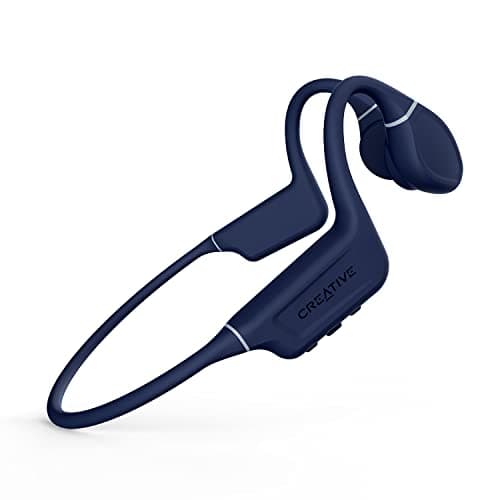
Best bone conduction under $100
Creative Outlier Free Pro
Bone conduction (neckband)8.3 /10IPX8, 10 hours, 8 GB of onboard MP3 storage and Bluetooth 5.3 multipoint for well under $100. The budget bone conduction set that can also swim.
$59.99Amazon#ad · Price as of October 19, 2026 · Disclosure for the link to Creative Outlier Free Pro
What this review is based on
Every figure here comes from Creative's own Outlier Free Pro product page, re-read on October 19, 2026, and each one is linked to that source in the spec table below. Availability was verified the same day through the Amazon price pipeline this site runs: the listing was live, in stock and title-verified as the Outlier Free Pro. We do not print prices in prose, so use the buy button for the current figure — on the day of writing it sat comfortably inside the budget bracket, below everything else here that can be taken into water.
We have not worn this pair. What follows is a careful reading of a published specification against the rest of the bone conduction field and an argument about who it suits. Our rubric is at how we rank earbuds.
The verdict in one box
Why the rating and the storage only count together
This is the single idea worth taking away from the page, so it is worth stating plainly: for swimming, a water rating and onboard storage are not two features. They are one feature, and a product missing either half cannot do the job.
You can see how rare the combination is by looking at what fails it. The Shokz OpenRun Air 2 is IP67 — rated for immersion — and has no storage at all, so it is a rinse-safe running headphone and nothing more. The Shokz OpenMove is IP55, so it is not even that. Plenty of cheap sets print IPX8 on the box with no memory chip inside, and the buyer discovers the gap in the water. The sets that get it right are the Shokz OpenSwim Pro (IP68 plus 32 GB), the Mojawa Run Plus (IP68 plus 32 GB), the H2O Audio TRI 2 PRO (IPX8 plus 8 GB) — and this one, at a fraction of the price of the first three.
We built the swim-specific ranking on exactly that logic in best bone conduction headphones for swimming, and the general principle — that the marketing words on a box are not the test — is in waterproof vs water-resistant earbuds.
The water rating, read precisely
Creative publishes this as IPX8, and on its product page describes it in words rather than in code: “Protected against submersion in freshwater up to a depth of 1.5m for up to 40 minutes.” It adds that this “does not include submersion in salt water or liquids with similar properties.”
Three things in that sentence deserve attention, and credit to Creative for printing all of them.
- A depth and a duration. Under IEC 60529, the digit 8 means continuous immersion under conditions the manufacturer specifies — so an IPX8 claim is only as good as the numbers printed beside it. Creative prints 1.5 m and 40 minutes. Many makers print 8 and stop, which is a weaker claim dressed as a stronger one; we unpack that in IP67 vs IP68 earbuds, and the Soundcore Sport X20 review is the case study in how messy an undocumented IP68 claim can get.
- Fresh water only. The exclusion is explicit, and it is not fine print. It rules out the sea and it should make you cautious about a heavily chlorinated pool. Rinse the band in clean water after every session — the routine is in how to clean sweaty earbuds.
- The X means dust was not tested. Not that it failed; just that nobody ran the test. For a headphone bought for water, that is a reasonable omission.
8 GB, and the file formats that matter
Creative publishes “Built-in 8 GB memory” supporting “MP3, FLAC, WAV, and APE file formats”, and notes it “does not support WMA formats.”
Eight gigabytes is less than the 32 GB on the Shokz OpenSwim Pro and the Mojawa Run Plus, and it matters less than the gap suggests. At a normal MP3 bitrate, 8 GB holds well over a thousand tracks — more than any swim session, and more than most people's actual rotation. Thirty-two gigabytes is for someone loading a whole library once and never touching it again.
The format list is the quietly interesting part. FLAC and WAV are lossless, and APE is a lossless format you almost never see supported on a sports headphone. Whether that is audible through bone conduction transducers is a fair question — we would say mostly not — but it means you can load the files you already have without transcoding, which is a real convenience if your library is ripped rather than streamed.
Battery, and the charging cable problem
Creative publishes up to 10 hours per charge at moderate volume, a full charge in 2 hours, and a 10-minute quick charge for 2 hours of playback. Charging runs over a USB-A magnetic clip-on cable.
Ten hours is strong for the money and it is the number that settles the budget argument against Shokz: the OpenMove, which costs more, publishes six hours and no quick charge at all. Four extra hours plus a ten-minute top-up is a materially better product on the specification that actually ruins sessions.
The cable is the cost. A magnetic connector exists for a defensible reason on a water-rated product — a USB-C port is a hole, and a hole needs a gasket that degrades — which is why Shokz uses one on the OpenSwim Pro too. But it is proprietary, it is the thing you will lose, and it is USB-A at a point when most people's chargers are USB-C. Buy a spare with the headphones; it is a cheaper insurance policy than replacing the set.
| Evidence | Creative Outlier Free Pro | Shokz OpenSwim Pro | Mojawa Run Plus |
|---|---|---|---|
| Water & sweat rating | IPX8 (Creative: run, cycle and even swim) | IP68, swimproof to 2 m | IP68 (fully submersible) |
| Weight | 31.5 g / 1.11 oz | 27.3 g | 29.6 g |
| Battery | Up to 10 hours per charge | 9 hours Bluetooth / 6 hours MP3 | 8 hours; standby up to 10 days |
| Quick charge | — | 10 min = 3 hours | 5 min = 90 min |
| Charging | Magnetic charging cable | Magnetic induction, 1.5 hours to full | Magnetic induction, 1 hour to full |
| Bluetooth | 5.3 | 5.4 | 5.2 |
| Multipoint | Yes | — | Yes |
| Storage | 8 GB built-in memory | 32 GB MP3 storage | 32 GB built-in |
| Codecs | AAC, SBC; supports a low latency mode for movies and games | — | — |
| Extras | Silicone and titanium memory alloy frame; plug-in microphone for underwater use | — | Full titanium construction |
| Score | 8.3/10 | 8.5/10 | 8.2/10 |
The microphone plugs nobody explains
One detail on Creative's page is easy to skim past and genuinely useful: the Outlier Free Pro ships with three detachable microphone plugs that seal the mic port for waterproof protection while swimming. The microphone itself is omni-directional with a published frequency response of 100–10,000 Hz.
That tells you something about how the product is built. The mic port is the weak point in any water-rated headphone, because a microphone needs an opening to the outside air to work at all. Creative's solution is a physical bung rather than a membrane — cruder than an engineered gasket, more honest about what it is, and the reason three of them are in the box is that they are small and easy to lose.
The practical consequence: plug in for the pool, pull out for calls. It also means calls are a dry-land feature here, and a basic one. If you want a bone conduction set that handles calls properly, the boom-mic options are in best bone conduction headphones with a mic.
Sound, weight and the honest ceiling
Creative publishes a transducer frequency response of 20–20,000 Hz, AAC and SBC codecs, Bluetooth 5.3 with pairing to two devices, a low-latency mode for video and games, and a frame of lightweight silicone over titanium memory alloy at 31.5 g.
A published 20–20,000 Hz range on a bone conduction product should be read as the transducer's capability, not as what reaches you. The mechanism vibrates your skull rather than moving air into your ear canal, and the low end is where that loses most: bass through bone is thin on every product in this category, from the cheapest to the Shokz flagship. Nobody has solved it, and anyone claiming to has not published a measurement. The mechanism is explained in how bone conduction headphones work, and the expectation-setting version is do bone conduction headphones sound good?
At 31.5 g it is heavier than the Shokz OpenSwim Pro (27.3 g), the Mojawa Run Plus (29.6 g) and the OpenMove (29 g). On a neckband, weight is spread across the back of the head rather than hanging from your ears, so the penalty is smaller than the number looks — but it is the heaviest set in its price bracket here, and under a swim cap you will notice it more than on a run.
Multipoint is a genuinely good inclusion at this price: a phone and a laptop, or a phone and a bike computer, held simultaneously. Creative publishes no wind-noise figure, so for calls on a bike look at the Suunto and Shokz models that do — see wind noise on open-ear earbuds while cycling.
Who it is for, and who should skip it
Buy it if:
- You swim in a pool and want music, on a budget. The rating plus the storage, under $100, is the whole case and almost nothing else makes it.
- You want one set for the pool and the road. Bluetooth 5.3 with multipoint means it is a normal headset on dry land, not a pool-only tool.
- You keep lossless files. FLAC, WAV and APE load without transcoding.
- Six hours is not enough and you hate charging. Ten hours plus a ten-minute top-up for two.
- You want the cheapest way into bone conduction that is not a compromise on durability. The budget field is ranked in best bone conduction headphones under $100.
Skip it if:
- You swim in the sea. Salt water is explicitly excluded. The H2O Audio TRI 2 PRO is the open-water answer.
- You want the best sound available. Bass is thin, and the Shokz flagship is better regarded.
- You want USB-C. A proprietary USB-A magnetic cable is the one real design annoyance.
- You want the lightest band. 31.5 g is the heaviest in this price group.
- Calls are a priority. One omni-directional mic, no published wind figure, and a bung in the port when you swim.
Alternatives
Our picks for this
Three to weigh against it
The premium swim set with four times the storage, the IP68 budget rival with 32 GB, and the cheapest Shokz - which is the comparison that shows why this one is good value.
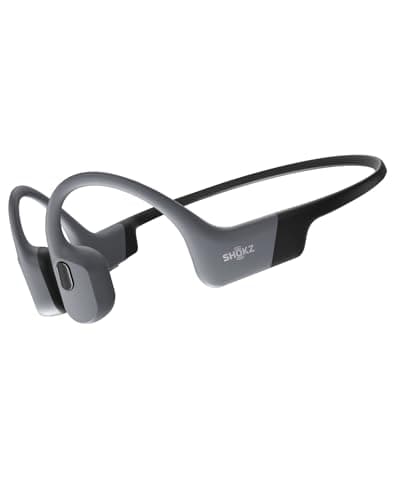
Best for swimming
Shokz OpenSwim Pro
Bone conduction (neckband)8.5/10IP68 to 2 m, 32 GB, 27.3 g and a 10-minute charge for three hours - the better product, at a much higher price.
$229.95Amazon#ad · Price as of October 19, 2026 · Disclosure for the link to Shokz OpenSwim Pro
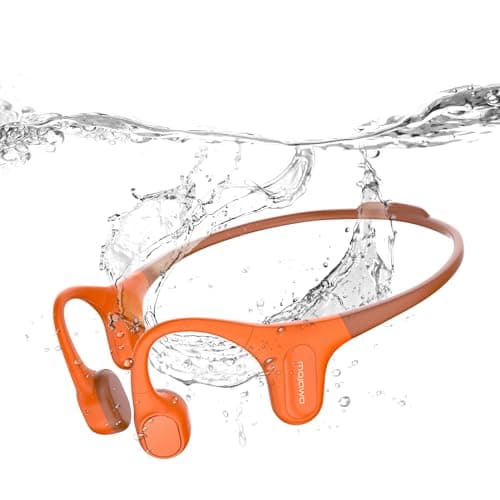
Best swim-capable budget pick
Mojawa Run Plus
Bone conduction (neckband)8.2/10IP68 and 32 GB for close to this money, two hours less battery, and a far thinner independent review record.
$89.99Amazon#ad · Price as of October 19, 2026 · Disclosure for the link to Mojawa Run Plus
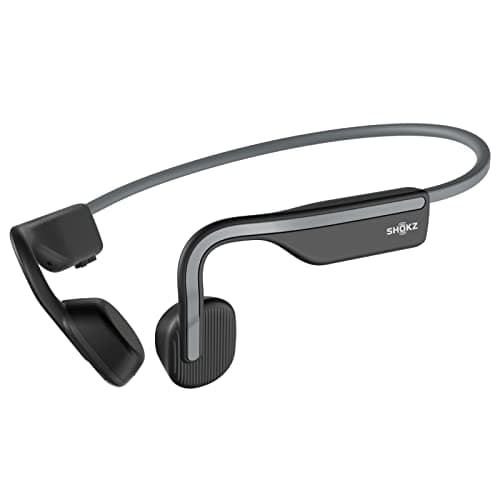
Best Shokz under $100
Shokz OpenMove
Bone conduction (neckband)7.4/10The direct budget comparison: IP55, six hours, no quick charge and no storage. It costs more and does less in water.
$79.95Amazon#ad · Price as of October 19, 2026 · Disclosure for the link to Shokz OpenMove
Where it lands
The Outlier Free Pro is the answer to a specific question: what is the least you can spend and still get in the pool with music? It is not the best-sounding bone conduction set, the lightest, or the one with the deepest rating, and it charges from a cable you will want a spare of. What it has is the pairing that actually matters — a submersion rating with a depth and duration printed next to it, and the storage to make that rating useful — at a price where the alternatives do not have both.
Where it sits against the full neckband field is in best bone conduction headphones; if your sessions are dry and you were mainly after a budget band, compare it against the Shokz lineup in best Shokz headphones before deciding.
In detail
The full spec sheet and score
Best bone conduction under $100
Creative Outlier Free Pro
IPX8, 10 hours, 8 GB of onboard MP3 storage and Bluetooth 5.3 multipoint for well under $100. The budget bone conduction set that can also swim.
Spec sheetResearched · sources linked
| Fit system | Bone conduction (neckband). Ear canal stays open: you hear the room and traffic. |
|---|---|
| Water & sweat rating | IPX8 (Creative: run, cycle and even swim) |
| Weight | 31.5 g / 1.11 oz |
| Battery | Up to 10 hours per charge |
| Charging | Magnetic charging cable |
| Bluetooth | 5.3 |
| Multipoint | Yes |
| Codecs | AAC, SBC; supports a low latency mode for movies and games |
| Storage | 8 GB built-in memory |
| Extras | Silicone and titanium memory alloy frame; plug-in microphone for underwater use |
How the 8.3 score breaks down
- Fit security (25%)
- 9
- Sweat & water resistance (20%)
- 10
- Awareness (open canal) (15%)
- 10
- Sound & leakage (15%)
- 4
- Calls & wind (10%)
- 6
- Battery & charging (10%)
- 8
- Value (5%)
- 10
What the spec sheet supports
- IPX8 at a budget price: the cheapest set here you can take in the pool
- 10 hours beats the Shokz OpenMove by four
- 8 GB MP3 player for swimming or phone-free runs
Where it falls short
- Heavier than the Shokz OpenRun models at 31.5 g
- No dust rating (the X in IPX8 means dust wasn't tested)
- Magnetic charging cable rather than USB-C
Skip this if…
…you want the best sound at this price; bone conduction bass is thin across the board and the sealed JLab Go Sport+ sounds fuller for less.
#ad · Price as of October 19, 2026 · Disclosure for the link to Creative Outlier Free Pro
How we scored this
The research behind every pick
Each pair on this page is researched and compared the same way: we classify the retention system that holds it on (hook, clip, wing, neckband), read the maker's published IP rating, weight, battery, charging, mic and control type straight off its own product page and manual, check the sweat and water rating against the IEC 60529 standard, cross-reference independent published reviews, and score every pick on a public rubric. Every figure links to the document it came from, so you can check any number in one click.
Prices come live from Amazon, so what you see is what you pay today. Commissions never set a score or decide a pick. The rubric and its weights are published.
Questions
Frequently asked
Can you swim with the Creative Outlier Free Pro?
How much music fits on the Creative Outlier Free Pro?
Can you put Spotify on the Creative Outlier Free Pro?
How long does the Creative Outlier Free Pro battery last?
Creative Outlier Free Pro or Shokz OpenSwim Pro?
What are the microphone plugs for?
Keep reading
Related on Openear Club
- Best bone conduction headphones for swimmingRanked on the rating-plus-storage pairing.
- Best bone conduction headphones under $100Where it sits in the budget field.
- Shokz OpenSwim Pro reviewThe premium version of the same idea.
- Best swimming headphones for audiobooksThe file-format workflow in full.
- Waterproof vs water-resistant earbudsWhy only the IP code is a real claim.
Receipts
Sources
- Creative — Outlier Free Pro product page, re-read: submersion to 1.5 m for up to 40 minutes, fresh water only, 8 GB supporting MP3, FLAC, WAV and APE, 10-minute quick charge for 2 hours, three detachable microphone plugs (checked 2026-10-19)
- Creative — Outlier Free Pro product page, specifications (checked 2026-09-21)
- Shokz — official product comparison table (checked 2026-09-21)
- Mojawa — Run Plus product page, specifications (checked 2026-09-21)
- H2O Audio — TRI 2 PRO product page (checked 2026-09-21)
- IEC 60529 (IP Code) — degree-of-protection definitions, Keystone Compliance summary (checked 2026-09-21)
- SoundGuys — Best bone conduction headphones, Chase Bernath, updated Jan 23, 2026 (checked 2026-09-21)
- Surendran, Prodanovic & Stenfelt, Hearing Through Bone Conduction Headsets, Trends in Hearing 27 (2023), NIH PMC (checked 2026-09-26)
Every spec here is traceable: figures come from the maker's own product pages and are linked on each product, independent findings are attributed to whoever published them, and prices come live from Amazon so the number you see is the number you pay today. Read the full method.