Workout & Gym · Review
Soundcore Sport X20 review: the hooks adjust, and the water rating needs a straight answer
Almost every sealed sport earbud ships one hook shape and hopes your ear matches. The Sport X20's hooks rotate and extend, which is the reason to buy it. The reason to read the small print is the IP rating: Soundcore has printed it three different ways, and only one of those numbers is a certified test.
By Mike M.Updated Researched · every spec sourced
#adReader-supported: we may earn a commission if you buy through our links, at no extra cost to you. It never decides a ranking. How we rank · Disclosure
Reviewed
The pair under review
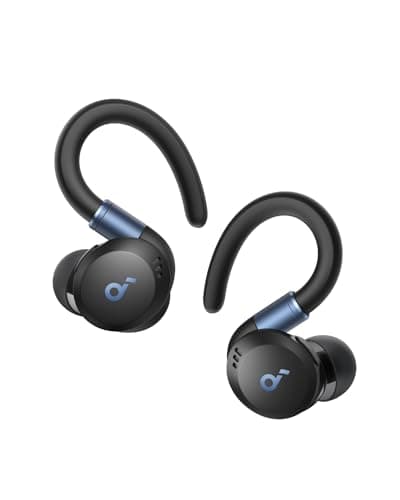
Best sweatproof in-ear
Soundcore Sport X20
In-ear + ear hook8.9 /10Hooks that rotate 30 degrees and extend 4 mm, ANC, 12 hours per charge (48 with the case) and a submersion rating for under $100. The sweatproof sealed bud that actually fits different ears.
$69.99Amazon#ad · Price as of October 19, 2026 · Disclosure for the link to Soundcore Sport X20
What this review is based on
Every figure here comes from Soundcore's own Sport X20 product page and from Anker's UK page for the same model, both re-read on October 19, 2026, and each one is linked to its source in the spec table below. Availability was verified the same day through the Amazon price pipeline this site runs: the listing was live, in stock, and title-verified as the Sport X20 rather than a lookalike. We do not print prices in prose, so use the buy button for the current figure.
We have not worn this pair. What follows is a careful reading of a published specification against the rest of the sealed-hook field, plus an argument about who its trade-offs suit. Our rubric and its weights are at how we rank earbuds.
The verdict in one box
The hooks: rotation plus extension
Soundcore publishes it as “up to 30 degrees rotation” and “4mm extension” with “4 scales of extension”. It is worth being precise about what each of those does, because they solve different problems.
Rotation changes the plane the hook sits in relative to the driver housing. Ears do not all meet the skull at the same angle, and a hook fixed at the wrong one levers the tip sideways in the canal every time you move — which is exactly the wobble that becomes a bud on the gym floor at the third set.
Extension changes the length of the hook, which changes how far down behind your ear it reaches. A hook that is too short grips the top of the helix only and pivots; a hook that is too long presses into the hollow behind the lobe for an hour. Four steps is not infinite adjustment, but it is four more than a fixed arc.
Combine the two and you get something a tip-only earbud can never offer: retention that is mechanical rather than frictional, tuned to your own ear. Friction is what sweat destroys. A hook holding a bud in place does not care that your skin is wet. The full mechanics of why that matters are in how to keep earbuds from falling out, and if it is only ever one side that goes, that has its own page.
The water rating, honestly
This is the section we would most want a buyer to read, and it is unusual enough that it deserves spelling out in order.
- Soundcore's US product page, read in September 2026, showed IP68 in its product imagery and IPX7 in its written description. Two different claims on one page.
- Re-read on October 19, 2026, that same page prints no IP code at all in its description. What it says instead is that a “unique cavity design and soundcore exclusive SweatGuard technology create a submarine-inspired seal that protects the internal components against damage from water, sweat, and dust.”
- Anker's UK page for the same model number, read the same day, is still titled “Sport Noise-Cancelling Earbuds, IP68 and Waterproof.”
- The live Amazon listing title, verified the same day, also says IP68.
So what should you believe? Start with what the numbers mean. Under IEC 60529 the second digit is the water test. 7 is a defined, fixed procedure: immersion in one meter of water for 30 minutes. 8 means continuous immersion under conditions the manufacturer specifies — so an IP68 claim with no depth and no duration printed next to it carries less usable information than a bare IP67, because nobody has told you what was tested. We work through that asymmetry in IP67 vs IP68 earbuds. For a maker doing it properly, compare Creative, which prints “submersion in freshwater up to a depth of 1.5m for up to 40 minutes” in words — see the Creative Outlier Free Pro review.
An X in the first position, as in IPX7, means dust was simply not tested — not that it failed. So IP68 and IPX7 are not a contradiction about the same axis: one adds a dust claim and a vaguer water claim, the other drops the dust claim and makes a precise water claim.
One more thing no IP rating covers, whatever the digits: the test is run on a new unit in fresh water. Sweat is salty, it leaves a crust that pulls moisture back out of the air, and gaskets harden as a product ages. The routine that actually extends the life of a sport earbud is in how to clean sweaty earbuds.
Who it is for, and who should skip it
Buy it if:
- Fixed hooks have never sat right on you. Two axes of adjustment is the headline, and very little else in the sealed category offers it.
- You sweat through earbuds. An immersion-level rating plus mechanical retention is the combination that survives; see best earbuds for sweaty ears for why grip, not waterproofing, is usually what fails first.
- You want buttons. Physical, customizable in the app, and immune to a wet fingertip.
- You want ANC on a budget sport bud. Adaptive and manually adjustable, with a Low Level setting.
Skip it if:
- You need to hear traffic or the room. This is a sealed earbud; it is the opposite of what most of this site recommends. If awareness is the point, start at best open-ear earbuds.
- You want heart-rate data or Apple integration. The Powerbeats Pro 2 has both and this has neither.
- You want LDAC or aptX. SBC and AAC only.
- You want a published per-earbud weight. Soundcore does not print one, which matters if you are comparing hook pressure across models.
- You want an unambiguous water rating on the box. Fair, and it is the honest reason this page exists.
Battery: 12 hours, or 7 with ANC on
Soundcore publishes 12 hours per charge and 48 with the case in normal mode, dropping to 7 and 28 with ANC engaged, 7 hours in transparency mode and 6 hours on calls. The earbuds take around 40 minutes to fill; the case takes around three hours from a wall charger.
The number that matters is the ANC one, because that is the mode people buy ANC earbuds to use. Seven hours still covers a week of hour-long sessions on one charge, and the 41 per cent drop is unremarkable — cancellation is active signal processing and it costs power on every product that offers it.
What is genuinely useful here is the sheer headroom. Twelve hours means you can be careless: skip a charge, leave the case in the car, train anyway. Compare the JLab Epic Sport ANC 3, which publishes a big total (and publishes two different versions of it on the same page) but no per-earbud playtime at all, so you cannot plan a session around it. Twelve and 48, stated plainly, is more useful than a headline total.
ANC in a gym, and the awareness cost
Soundcore gives the Sport X20 adaptive ANC plus manual adjustment and a separate Low Level setting, which is a more thoughtful set of options than most sport earbuds ship with. The low setting is the one we would reach for: enough to take the edge off a plate rack and a ventilation fan, not enough to delete the room.
Because that is the trade. A sealed bud with cancellation running is the least aware thing you can put in your ears, and on a site written around hearing the traffic and the gym around you we are not going to pretend otherwise. The case for sealing up is real but narrow: a treadmill next to a sound system, a lifting session where you want the bar and nothing else, a shared gym where the music is not yours to choose. The case against is everything that happens outdoors.
If you split your week between both, the honest answer is to decide which half you are optimizing for, and we worked that out session by session in best earbuds for gym and running. For indoor-only use with cancellation, the ranked list is best workout earbuds with noise canceling; the category-level argument is open-ear vs in-ear earbuds.
Buttons, not touch panels
Soundcore lists physical buttons, customizable in the app, with press timings published down to the detail that a double press registers inside 400 ms and single presses need roughly a second between them.
This is the quiet reason to prefer the Sport X20 over a long list of rivals. A capacitive touch panel detects a change in capacitance at its surface, and water changes capacitance. Sweat running down a housing reads as a tap, which produces phantom skips mid-set; a fingertip too wet to make clean contact produces the opposite failure, a tap that does nothing. Neither is catastrophic and both are maddening in precisely the conditions this earbud is built for.
A button is a mechanical switch. It does not care how wet your hand is. That is also what the app configuration buys you: once the press map is set the way you want it, you are not hunting for a gesture with sweat in your eyes. Soundcore does not publish a microphone count for this model, which is a small gap if calls matter to you.
Sound: 11 mm drivers, SBC and AAC only
Eleven millimeter dynamic drivers with Soundcore's BassUp processing, SBC and AAC codecs, and an app with EQ, HearID and a fit test.
Being sealed is the sound advantage here and it is a real one. The whole reason open-ear designs sound thin is that an unsealed driver loses most of its low-frequency output to the room before it reaches you; a tip in the canal keeps it. An 11 mm driver behind a seal will produce more convincing bass than any bone conduction neckband and more than any open-ear hook, full stop.
The limit is the codec list. No LDAC, no aptX, so on Android you are capped at AAC — which, to be fair, matters a great deal less than spec sheets imply, and SoundGuys' codec explainer is blunt about that. If you specifically want a sport earbud with LDAC, the JLab Epic Sport ANC 3 has it along with a dual-driver arrangement; the Android-focused ranking is best workout earbuds for Android.
One honest note on the sealed-bud experience that nobody advertises: with your canals plugged, your own footfalls and breathing get louder, because the sound conducted through your skull can no longer escape. That is the occlusion effect, and it is why some people hate sealed buds on a treadmill and never work out why. We covered it in best earbuds for the treadmill.
Alternatives
Our picks for this
Three to weigh against it
The premium hook with heart-rate sensors and a much weaker water rating, the IP66 sealed hook with LDAC, and the open-ear answer if you would rather hear the room than cancel it.
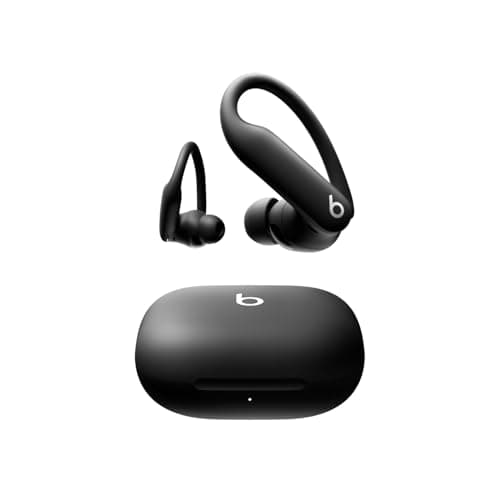
Best in-ear hook for lifting
Beats Powerbeats Pro 2
In-ear + ear hook8.1/10The locked-in premium option with heart-rate data and Apple integration - but IPX4, a splash rating, where this is immersion-level.
$249.00Amazon#ad · Price as of October 19, 2026 · Disclosure for the link to Beats Powerbeats Pro 2
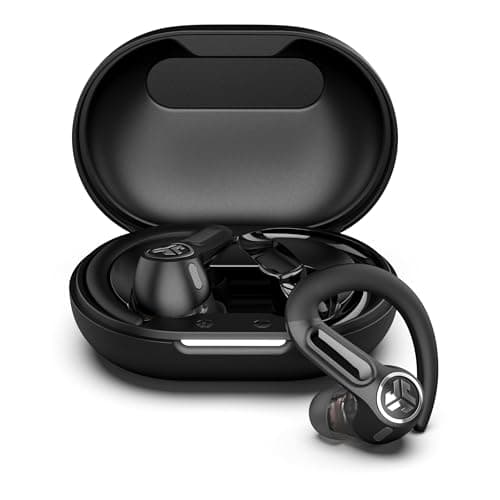
Best IP66 sealed hook
JLab Epic Sport ANC 3
In-ear + ear hook8.5/10IP66, hybrid ANC and LDAC with dual drivers, if the codec list is what the Sport X20 is missing for you.
$104.99Amazon#ad · Price as of October 19, 2026 · Disclosure for the link to JLab Epic Sport ANC 3
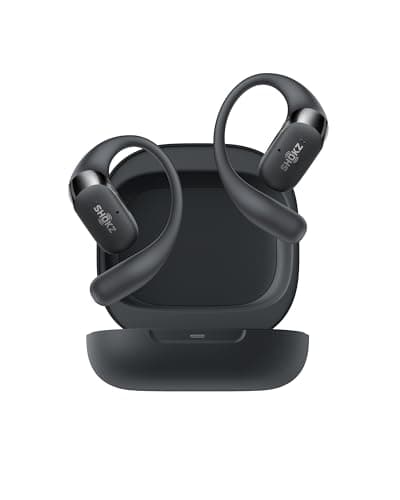
Best open-ear earbuds overall
Shokz OpenFit 2
Open-ear hook8.3/10The other direction entirely: an open-ear hook at IP55 with a physical button, for anyone who needs to hear the traffic.
$179.95Amazon#ad · Price as of October 19, 2026 · Disclosure for the link to Shokz OpenFit 2
Where it lands
The Sport X20 is the sealed sport earbud we point people to when the problem is fit rather than features. Two axes of hook adjustment, buttons instead of a touch panel, 12 hours of real headroom and a water rating at or above the immersion line is a hard combination to beat, and the price is not where you would expect that combination to live.
Mark it down for one thing only: a buyer should not have to reconcile three different water claims to know what they are getting. Plan around IPX7, treat any IP68 marketing as unverified until Soundcore prints a depth and a duration next to it, and you will not be caught out. Where it sits against the whole field is in best workout earbuds.
In detail
The full spec sheet and score
Best sweatproof in-ear
Soundcore Sport X20
Hooks that rotate 30 degrees and extend 4 mm, ANC, 12 hours per charge (48 with the case) and a submersion rating for under $100. The sweatproof sealed bud that actually fits different ears.
Spec sheetResearched · sources linked
| Fit system | In-ear + ear hook. Sealed ear canal: isolation, no awareness. |
|---|---|
| Water & sweat rating | Soundcore lists IP68 in its product imagery and IPX7 in its product description; both are immersion ratings |
| Battery | 12 hours per charge / 48 with case (normal); 7 / 28 with ANC |
| Charging | About 40 minutes to full for the earbuds |
| Multipoint | Dual connections |
| Controls | Physical buttons, customizable in the app |
| Codecs | SBC, AAC |
| Driver / tech | 11 mm dynamic drivers with BassUp |
| Noise control | Active noise canceling |
| Extras | Ear hooks rotate plus or minus 30 degrees and extend 4 mm in four steps; SweatGuard sealed cavity |
How the 8.9 score breaks down
- Fit security (25%)
- 10
- Sweat & water resistance (20%)
- 10
- Noise control & transparency (15%)
- 8
- Sound quality (15%)
- 7
- Calls & wind (10%)
- 7
- Battery & charging (10%)
- 9
- Value (5%)
- 10
What the spec sheet supports
- Adjustable hooks: rotation and extension are the difference between a bud that stays and one that doesn't
- Immersion-rated where Beats is IPX4
- 12 hours per charge with ANC off
- Buttons, not touch
Where it falls short
- Soundcore's own page disagrees with itself on IP68 vs IPX7
- SBC/AAC only
- Soundcore doesn't publish per-earbud weight on the product page
Skip this if…
…you want heart-rate data or Apple integration; the Powerbeats Pro 2 has both.
#ad · Price as of October 19, 2026 · Disclosure for the link to Soundcore Sport X20
How we scored this
The research behind every pick
Each pair on this page is researched and compared the same way: we classify the retention system that holds it on (hook, clip, wing, neckband), read the maker's published IP rating, weight, battery, charging, mic and control type straight off its own product page and manual, check the sweat and water rating against the IEC 60529 standard, cross-reference independent published reviews, and score every pick on a public rubric. Every figure links to the document it came from, so you can check any number in one click.
Prices come live from Amazon, so what you see is what you pay today. Commissions never set a score or decide a pick. The rubric and its weights are published.
Questions
Frequently asked
Is the Soundcore Sport X20 waterproof?
Do the Soundcore Sport X20 ear hooks really adjust?
How long does the Soundcore Sport X20 battery last?
Soundcore Sport X20 or Powerbeats Pro 2?
Does the Soundcore Sport X20 have noise cancelling?
Can you hear traffic with the Soundcore Sport X20?
Keep reading
Related on Openear Club
- Best workout earbudsWhere it ranks and against what.
- Best sweatproof earbudsRanked by the water digit, not the marketing.
- Best earbuds for sweaty earsWhen grip fails before the hardware does.
- IP67 vs IP68 earbudsWhy an undefined IP68 tells you less than IP67.
- Best earbuds for liftingThe hook-against-hook field in full.
Receipts
Sources
- Soundcore — Sport X20 product page, re-read: SweatGuard wording, 12 h / 48 h, 11 mm drivers, 30-degree rotation and 4 mm extension in four steps, and no IP code anywhere in the description (checked 2026-10-19)
- Anker (soundcore UK) — Sport X20 product page, titled "Sport Noise-Cancelling Earbuds, IP68 and Waterproof" (checked 2026-10-19)
- Soundcore — Sport X20 product page (checked 2026-09-21)
- Beats — Powerbeats Pro 2 product page, tech specs (checked 2026-09-21)
- JLab — Epic Sport ANC 3 product page, tech specs (checked 2026-09-21)
- IEC 60529 (IP Code) — degree-of-protection definitions, Keystone Compliance summary (checked 2026-09-21)
- IPX4 vs IPX5 test conditions (IEC 60529 nozzle, flow and duration), BONAD test-equipment summary (checked 2026-09-21)
- SoundGuys — Understanding Bluetooth codecs, Lil Katz, updated May 30, 2025 (checked 2026-09-28)
- Occlusion effect — definition and low-frequency mechanism, Wikipedia (checked 2026-09-24)
Every spec here is traceable: figures come from the maker's own product pages and are linked on each product, independent findings are attributed to whoever published them, and prices come live from Amazon so the number you see is the number you pay today. Read the full method.