Open-Ear Earbuds · Review
Shokz OpenDots 2 review: the first clip-on that is rated for sweat, not just splashes
Nearly every clip-on earbud is IPX4 — a splash rating — and nearly every clip-on case is rated for nothing at all. The OpenDots 2 is IP57 on the buds and IP54 on the case. That one line is the reason this page exists.
By Mike M.Updated Researched · every spec sourced
#adReader-supported: we may earn a commission if you buy through our links, at no extra cost to you. It never decides a ranking. How we rank · Disclosure
Reviewed
The pair under review
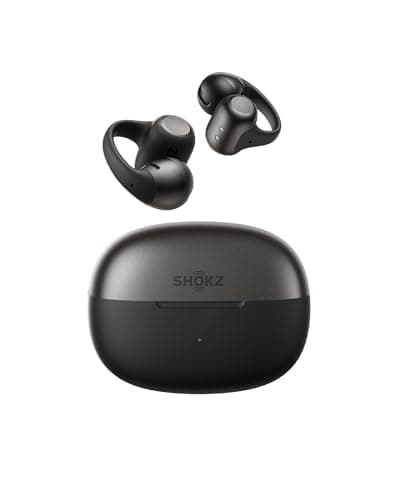
Best clip-on for sweat
Shokz OpenDots 2
Open-ear clip-on8.6 /10The clip-on with a real sweat rating: IP57 buds, 6.4 g, 10 hours plus 40 with the case, a 5-minute quick charge and a bone-conduction mic for calls. This is the clip-on for people who sweat.
$199.95Amazon#ad · Price as of November 4, 2026 · Disclosure for the link to Shokz OpenDots 2
What this review is based on
Every number below comes from Shokz's own OpenDots 2 product page, re-read on October 26, 2026, and each one is linked to its source in the spec table. The hands-on judgments come from a named independent review: Scott Plowman at EFTM, who wore them and scored them 89% overall — 97% comfort, 90% battery, 80% sound quality. Where his experience and the spec sheet disagree, this page says so.
We have not worn this pair ourselves. What follows is a careful reading of a published specification against the rest of the clip-on field, plus one named tester's findings, plus an argument about who the trade-offs suit. Our rubric and its weights are at how we rank earbuds.
The verdict in one box
IP57 and IP54: why both numbers matter
Read an IP code from the right. Under IEC 60529 the second digit is the water test and the first is the solids test. 7 is a fixed, defined procedure: immersion in one meter of water for 30 minutes. 4 is splashing water from any direction. 5 on the first digit is dust-protected; 5 on the second is a low-pressure jet.
So the OpenDots 2 earbuds at IP57 are dust-protected and immersion-tested, and the case at IP54 is dust-protected and splash-tested. Against the field that reads as follows:
- OpenDots 2 — buds IP57, case IP54. Immersion on the hardware, splash on the case.
- Soundcore AeroClip — IP55. A jet rating; Soundcore publishes no case rating.
- Bose Ultra Open Earbuds (2nd Gen) — IPX4. A splash rating, and the X means dust was not tested at all.
- Sony LinkBuds Clip — IPX4.
The case rating is the part people skip, and it is the part that quietly decides how long an earbud lives. A clip-on spends most of its life closed inside a case, and a case lives in the same bag as the wet shirt you just took off. An unrated case is a sealed humid box with your electronics in it. IP54 does not make the OpenDots 2 case washable, but it means Shokz has tested it against water landing on it, which almost nobody in this category has bothered to claim. The digit-by-digit explainer is in IPX4 vs IPX5 vs IPX7, and the ranked list that this rating wins is best sweatproof earbuds.
The JointArc clamp, and what a clip can't do
Shokz calls the hinge a nickel-titanium JointArc and says it “is designed to adapt to different ear shapes,” with contoured silicone over it. Nickel-titanium is the alloy family used for eyeglass frames that spring back after being bent; the point of using it here is that the clamp can open wide enough to go over a thick ear rim and then return to the same pressure every time rather than slowly relaxing into a loose fit.
At 6.4 g ± 0.2 g per earbud this is about a third lighter than the 10 g hooked earbuds on this site, and the weight is the quiet reason clip-ons win on comfort. Nothing goes over the top of your ear, nothing goes in the canal, and nothing fights a pair of glasses — which is the single most common reason readers land on open-ear earbuds with glasses.
EFTM's reviewer put the comfort claim about as strongly as it can be put: he “nearly dislodged the earbud… because I had totally forgotten I was wearing it.” He scored comfort 97%.
That same sentence contains the warning. The honest limit of a clip is that it holds the rim of your ear and nothing else, so there is no second point of contact to catch it if the first one lets go. The same reviewer said plainly that he “didn't find them as stable on the ear/head as the Shokz OpenRun Pro 2” — a neckband, which is the most locked-down fit system on this site. That is not a defect; it is what you choose when you choose a clip over a hook or a band. The mechanics of all three are in ear hook vs clip-on open-ear earbuds.
A pinch instead of a tap
Shokz publishes controls as “taps or the upgraded force-sensor pinch gesture”, and the pinch is the more interesting half of that sentence.
A capacitive touch panel works by detecting a change in capacitance at its surface, and water changes capacitance. That produces both failure modes people complain about on sport earbuds: sweat running down a housing reads as a phantom tap and skips your track, and a fingertip too wet to make clean contact produces a tap that does nothing. On a clip-on there is a third problem specific to the design — the earbud is only held by a springy clamp, so pressing it is also nudging it out of position.
A force sensor responds to pressure instead of capacitance, and a pinch squeezes the barrel and the counterweight toward each other, which cancels out rather than levering the clip off your ear. EFTM's reviewer made exactly this point from the other direction: he preferred the pinch-and-hold gestures because “tapping just doesn't work as well when the earbud sits loosely on the ear,” and found the gestures worked consistently without dislodging the buds.
It is still not a button. A button is a mechanical switch that does not care how wet your hand is or whether you are wearing a glove, and if that is what you want from a sport earbud, Shokz sells it on the OpenFit 2 and on every OpenRun neckband. The force sensor is the best answer available inside the clip-on form factor, which is a narrower claim and the honest one.
Battery: 10 hours, 40 with the case
Shokz publishes 10 hours per charge and 40 hours total with the case, a quick charge of “5 min = 2 hours playback”, roughly an hour to fill the buds, and a case that takes both USB-C and wireless charging.
Ten hours is two more than the AeroClip's eight and roughly three more than SoundGuys measured on the Sony LinkBuds Clip, and it is the figure that makes this a work-and-train earbud rather than a train-only one. A single charge covers a full office day with calls on top, which is the actual use case for an earbud that lets you hear someone walk up behind you.
EFTM's tester reported getting “a bit under” the advertised ten hours at higher volume levels. That is worth knowing and it is also what you should expect from any published battery figure: makers quote at a moderate volume, and an open-ear design loses more of its output to the room than a sealed one, so open-ear listeners tend to run the volume higher to compensate. He still scored battery 90%.
The five-minute quick charge is the spec that changes behavior. Two hours of playback from the time it takes to find your shoes means a forgotten charge stops being a missed session. Only the AeroClip's ten-minute, three-hour top-up is in the same class, and it needs twice as long on the cable.
The bone-conduction mic
Shokz lists triple AI noise-canceling microphones: two air-conduction mics plus one bone-conduction mic. The third one is the unusual part, and it solves a problem that has nothing to do with processing.
An air-conduction mic hears whatever reaches it, which on a windy day is mostly turbulence across the mic port rather than your voice. No amount of AI noise reduction fully recovers a signal that was buried before it was captured. A bone-conduction mic instead reads the vibration of your jaw and skull directly, so wind is simply not in its input. Shokz uses the same idea on its headsets, and it is why the OpenDots 2 is the clip-on pick in best open-ear earbuds for phone calls.
Two limits, stated plainly. Bone conduction captures your voice with less high-frequency detail than a good air mic in a quiet room, so the system is at its best when it blends the three inputs rather than when it leans on the jaw mic. And if calls are genuinely the main job — back-to-back meetings, a contact center, a noisy warehouse — a boom mic beats any of this; the OpenComm2 UC is the pick in that case and we say so on the calls page.
| Evidence | Shokz OpenDots 2 | Soundcore AeroClip | Bose Ultra Open Earbuds (2nd Gen) |
|---|---|---|---|
| Water & sweat rating | Earbuds IP57; charging case IP54 | IP55 | IPX4 |
| Weight | 6.4 g per earbud; case 38.8 g | 6.0 g per earbud | 0.013 lb per earbud (about 5.9 g) |
| Battery | 10 hours; 40 hours with case | 8 hours; 32 hours with case | 9 hours; 5 hours with Immersive Audio or Auto Volume on; 4 with both; up to 19.5 more in the case |
| Quick charge | 5 min = 2 hours | 10 min = 3 hours | 10 min = up to 2 hours |
| Charging | Case: wireless and USB-C; earbuds 1 hour | 10 min = 3 hours | 1 hour; wireless charging case |
| Bluetooth | 6.1 | 5.4 | 5.4 |
| Multipoint | Yes | Yes | Yes |
| Microphones | Triple AI noise-canceling: two air-conduction mics plus one bone-conduction mic | 4 beamforming mics with AI noise reduction | 2 microphones with SpeechClarity |
| Controls | Touch controls (upgraded) | Tap control | Button on each barrel |
| Codecs | — | LDAC (Android only) | — |
| Driver / tech | Bassphere 2.0 + Dolby Audio + DirectPitch + MirrorPitch | 12 mm titanium-coated driver | — |
| Score | 8.6/10 | 8.1/10 | 7.5/10 |
Sound, honestly
Shokz publishes Bassphere 2.0 with upgraded Dolby Audio, plus two directional-audio technologies it calls DirectPitch and MirrorPitch. The marketing names matter less than the physics behind them.
An open-ear driver has no seal, so most of its low-frequency output escapes to the room instead of being trapped in your canal. That is the whole reason open-ear earbuds sound thinner than sealed ones, and no processing repeals it. What a maker can do is aim the driver more precisely at the canal entrance and use phase tricks to cancel some of what radiates outward — which reduces leakage, so the person next to you hears less, and incidentally lets you listen at a lower volume for the same perceived level.
The independent read is consistent with that. EFTM scored sound quality 80%, found the bass “certainly fuller” than the first-generation OpenDots with “a much more powerful punch,” and still wrote that these “do not have the sound quality of a premium closed-ear earbud but they excel at what they are designed to do.” That is the correct expectation to carry into the purchase. If a single number is what you want: 80% is a good score for an open-ear clip and a mediocre one for a $200 sealed earbud, and you are not buying this instead of a sealed earbud — you are buying it instead of not hearing the room.
One practical consequence: leakage is lower than older open-ear designs but it is not zero, so a silent office at high volume is still the worst environment for any of these. That trade-off has its own page in open-ear earbuds and sound leakage.
Who it is for, and who should skip it
Buy it if:
- Sweat is what kills your earbuds. IP57 buds plus an IP54 case is the best combination in the clip-on category, and the case rating is the part the competition does not have.
- You wear glasses. A clip touches the rim of your ear and nothing else, so there is no collision with the arm of a frame.
- You take calls outdoors. The bone-conduction mic reads your jaw, so wind is not in its input.
- You want one pair for a work day and a workout. Ten hours and multipoint cover both without a mid-day charge.
- Hooked earbuds have ever hurt after an hour. At 6.4 g with nothing over the ear, this is the lightest-feeling design on the site.
Skip it if:
- You want a physical button. The force-sensor pinch is good; it is not a switch. The OpenFit 2 has one.
- Your sport involves impact or contact. A clip has one point of contact. For boxing, CrossFit or anything with a floor in it, go to best earbuds that don't fall out.
- You want the most sound per dollar. At this price a sealed earbud will out-bass it comfortably, and the AeroClip gets you most of the way for noticeably less.
- You need LDAC on Android. Shokz does not publish an LDAC claim for this model; the AeroClip does carry it.
- You want to swim. IP57 is an immersion rating, not a swimming one, and Bluetooth does not travel through water regardless — see best bone conduction headphones for swimming.
Alternatives
Our picks for this
Three to weigh against it
The value clip that keeps a jet rating and adds LDAC, the premium cuff with buttons and a leakage-control mode, and the hooked answer if a clip will not hold on you.
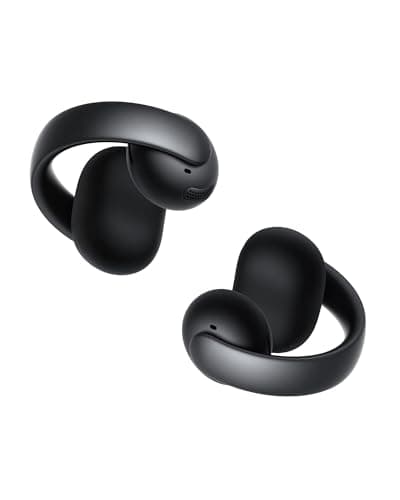
Best mid-price clip-on
Soundcore AeroClip
Open-ear clip-on8.1/10IP55 rather than IP57 and eight hours rather than ten, but it adds LDAC and a 12 mm driver for a good deal less money.
$129.99Amazon#ad · Price as of November 4, 2026 · Disclosure for the link to Soundcore AeroClip
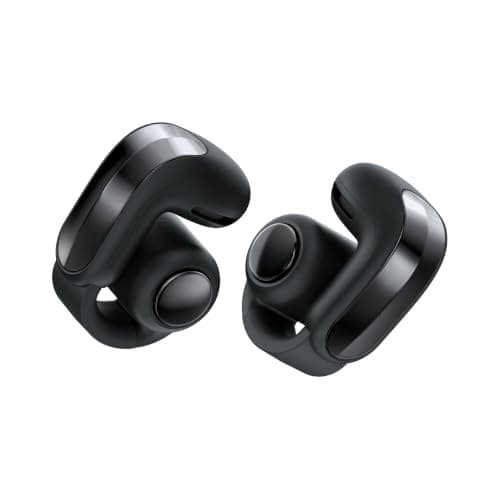
Best clip-on for calls
Bose Ultra Open Earbuds (2nd Gen)
Open-ear clip-on7.5/10The most refined cuff and the most expensive, with physical buttons - but IPX4, which is a splash rating, and no case rating.
$299.00Amazon#ad · Price as of November 4, 2026 · Disclosure for the link to Bose Ultra Open Earbuds (2nd Gen)
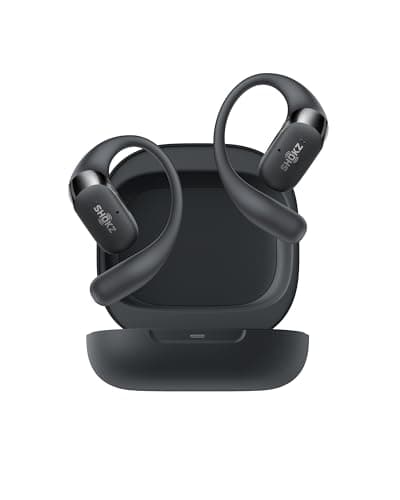
Best open-ear earbuds overall
Shokz OpenFit 2
Open-ear hook8.3/10The hook instead of the clip: a physical button, 11 hours and two drivers per side, at IP55 with an unrated case.
$179.95Amazon#ad · Price as of November 4, 2026 · Disclosure for the link to Shokz OpenFit 2
Where it lands
The OpenDots 2 is the clip-on we point people to when the problem is sweat. Every rival in the category is a splash or jet rating with an unrated case; this is an immersion rating with a rated case, and it comes with ten hours, a five-minute quick charge and a call mic that reads your jaw instead of the wind. For the reader this site is written for — someone whose earbuds keep dying of moisture rather than falling out — that is the whole argument.
Mark it down for two things: there is no button, and a clip is the least locked-down of the three open-ear fit systems, which a named tester confirmed against a neckband. Try it on a sprint inside the return window. If it holds, nothing else in the category protects itself this well. Where it sits against the full field is in best clip-on earbuds, and the brand-level choice is in OpenDots 2 vs AeroClip.
In detail
The full spec sheet and score
Best clip-on for sweat
Shokz OpenDots 2
The clip-on with a real sweat rating: IP57 buds, 6.4 g, 10 hours plus 40 with the case, a 5-minute quick charge and a bone-conduction mic for calls. This is the clip-on for people who sweat.
Spec sheetResearched · sources linked
| Fit system | Open-ear clip-on. Ear canal stays open: you hear the room and traffic. |
|---|---|
| Water & sweat rating | Earbuds IP57; charging case IP54 |
| Weight | 6.4 g per earbud; case 38.8 g |
| Battery | 10 hours; 40 hours with case |
| Quick charge | 5 min = 2 hours |
| Charging | Case: wireless and USB-C; earbuds 1 hour |
| Bluetooth | 6.1 |
| Multipoint | Yes |
| Microphones | Triple AI noise-canceling: two air-conduction mics plus one bone-conduction mic |
| Controls | Touch controls (upgraded) |
| Driver / tech | Bassphere 2.0 + Dolby Audio + DirectPitch + MirrorPitch |
| Launched | June 2026 |
How the 8.6 score breaks down
- Fit security (25%)
- 8
- Sweat & water resistance (20%)
- 10
- Awareness (open canal) (15%)
- 9
- Sound & leakage (15%)
- 8
- Calls & wind (10%)
- 9
- Battery & charging (10%)
- 9
- Value (5%)
- 5
What the spec sheet supports
- IP57 on the buds: immersion-rated, which no Bose clip-on is
- 10 hours per charge and a 5-minute charge worth 2
- Bone-conduction mic picks up your voice through the jaw on windy days
- Even the case is IP54
Where it falls short
- Touch controls rather than buttons
- Clip-ons sit lighter than hooks but can shift on heavy impact; check the fit on the first sprint
Skip this if…
…you want buttons; the Bose cuffs have them, or go to an ear-hook.
#ad · Price as of November 4, 2026 · Disclosure for the link to Shokz OpenDots 2
How we scored this
The research behind every pick
Each pair on this page is researched and compared the same way: we classify the retention system that holds it on (hook, clip, wing, neckband), read the maker's published IP rating, weight, battery, charging, mic and control type straight off its own product page and manual, check the sweat and water rating against the IEC 60529 standard, cross-reference independent published reviews, and score every pick on a public rubric. Every figure links to the document it came from, so you can check any number in one click.
Prices come live from Amazon, so what you see is what you pay today. Commissions never set a score or decide a pick. The rubric and its weights are published.
Questions
Frequently asked
Is the Shokz OpenDots 2 waterproof?
How long does the Shokz OpenDots 2 battery last?
Do the OpenDots 2 stay on while running?
OpenDots 2 or Soundcore AeroClip?
Does the Shokz OpenDots 2 have noise canceling?
Are the OpenDots 2 comfortable with glasses?
Why is the OpenDots 2 sold out on shokz.com?
Keep reading
Related on Openear Club
- Best clip-on earbudsWhere it ranks and against what.
- OpenDots 2 vs Soundcore AeroClipThe clip-on head-to-head, rating by rating.
- OpenFit 2 vs OpenDots 2Shokz's hook against Shokz's clip.
- Best sweatproof earbudsRanked by the water digit, not the marketing.
- Ear hook vs clip-onWhich fit system holds, and why.
Receipts
Sources
- Shokz — OpenDots 2 product page, re-read: IP57 earbuds, 6.4 g ± 0.2 g per earbud, 10 h / 40 h with case, "5 min = 2 hours playback", Bluetooth 6.1, triple AI noise-canceling mics (two air-conduction plus one bone conduction), "taps or the upgraded force-sensor pinch gesture", Bassphere 2.0 with upgraded Dolby Audio, DirectPitch and MirrorPitch, nickel-titanium JointArc, and all four colorways marked "Sold out" at $199.95 (checked 2026-10-26)
- EFTM — Shokz OpenDots 2 review, Scott Plowman, August 2026, scored 89% overall (comfort 97%, sound quality 80%, battery 90%): "nearly dislodged the earbud... because I had totally forgotten I was wearing it", "do not have the sound quality of a premium closed-ear earbud", "a bit under" 10 hours at higher volume, and not as stable on the head as the OpenRun Pro 2 (checked 2026-10-26)
- Shokz — official product comparison table (checked 2026-09-21)
- Anker (soundcore) — AeroClip product page, re-read: IP55, 8 h / 32 h with case, "10M = 3H" quick charge, Bluetooth 5.4, multipoint, "4 Mics with AI", "12mm Customized Driver, Titanium-Coated", Tap Control, and an "adaptive open-ring design that endures 20,000 bends"; in stock (checked 2026-10-26)
- Bose — Ultra Open Earbuds (2nd Gen) product page (checked 2026-09-21)
- SoundGuys — Sony LinkBuds Clip review (checked 2026-09-21)
- IEC 60529 (IP Code) — degree-of-protection definitions, Keystone Compliance summary (checked 2026-09-21)
- IPX4 vs IPX5 test conditions (IEC 60529 nozzle, flow and duration), BONAD test-equipment summary (checked 2026-09-21)
Every spec here is traceable: figures come from the maker's own product pages and are linked on each product, independent findings are attributed to whoever published them, and prices come live from Amazon so the number you see is the number you pay today. Read the full method.