Open-Ear Earbuds · Head to head
Shokz OpenFit Pro vs Bose Ultra Open Earbuds: the two premium open-ears, and they are not the same product
Both of these cost flagship money and both leave your ear canal open. One is a 12.3 g hook that tries to reduce the noise around you. The other is a 6 g cuff that does not try at all, and two independent labs called it the most comfortable thing they have worn.
By Mike M.Updated Researched · every spec sourced
#adReader-supported: we may earn a commission if you buy through our links, at no extra cost to you. It never decides a ranking. How we rank · Disclosure
The contenders
Side by side
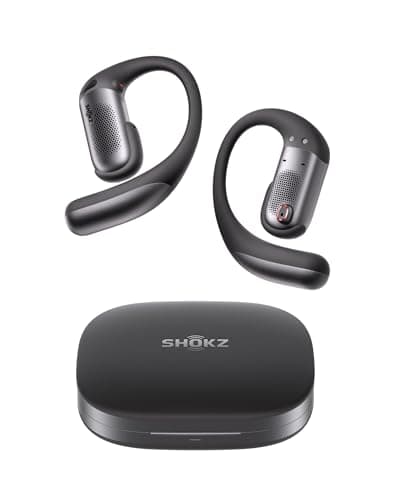
Buy this if you sweat, or want noise reduction
Shokz OpenFit Pro
Open-ear hook8.6 /10Shokz's flagship hook: triple wind-resistant mics, an open-ear noise-reduction mode, 12 hours with it off, and titanium hooks. The heaviest OpenFit at 12.3 g, and the most expensive.
$249.95Amazon#ad · Price as of November 4, 2026 · Disclosure for the link to Shokz OpenFit Pro
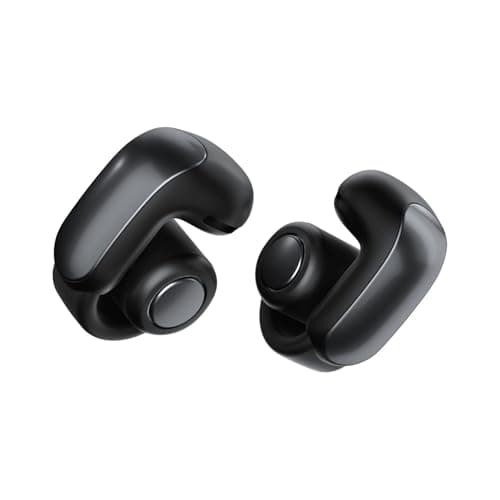
Buy this if comfort is the whole point
Bose Ultra Open Earbuds
Open-ear clip-on7.3 /10The clip-on that made the category: a cuff on the outer ear, IPX4, 7 hours (4 with Immersive Audio) plus 19.5 in the case, and buttons instead of touch. Bose sound, Bose price.
$245.58Amazon#ad · Price as of November 4, 2026 · Disclosure for the link to Bose Ultra Open Earbuds
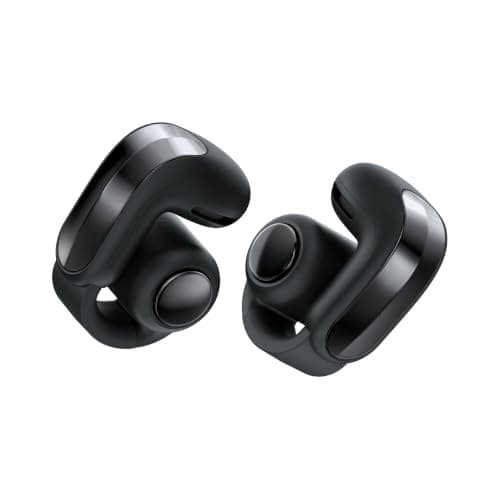
Buy this if you want the newest Bose cuff
Bose Ultra Open Earbuds (2nd Gen)
Open-ear clip-on7.5 /10Same cuff, 9 hours instead of 7, Bluetooth 5.4, two mics with SpeechClarity and a wireless-charging case. Still IPX4, so the sweat story hasn't changed.
$299.00Amazon#ad · Price as of November 4, 2026 · Disclosure for the link to Bose Ultra Open Earbuds (2nd Gen)
The verdict
Every published number
All three spec sheets below come from the maker's own pages — Shokz's official lineup comparison and its OpenFit Pro page, and Bose's product pages for both generations of the cuff. Every listing was verified live and in stock on Amazon on November 2, 2026 through the price pipeline this site runs. Each row links to the document the figure came from.
1. Twelve grams against six
Shokz publishes 12.3 g per earbud for the OpenFit Pro. That is the heaviest open-ear earbud in our registry, heavier than the OpenFit 2 (9.4 g) and nearly double the OpenFit Air 2 (7.2 g). Bose publishes 0.014 lb per earbud for the first-generation Ultra Open, about 6.4 g, and 0.013 lb for the second generation, about 5.9 g.
Weight alone would be a thin argument. What makes it the first section on this page is that two independent labs tested both products and landed on the same split.
GearLab's reviewer, Graham Faulknor, scored the Bose cuff 8.6 out of 10 for comfort and fit and wrote that they are “the most comfortable buds we have ever worn, to the point where we forgot they were even in our ears,” adding that there was no “moist in-ear feeling” after several hours. SoundGuys was cooler on the same product — Dave Carr scored comfort 7.5 and said they are “not uncomfortable” but that having something attached to the outer ear feels strange.
On the Shokz side, SoundGuys' Adam Birney scored the OpenFit Pro 8.5 for comfort — close to GearLab's Bose number — and found the fit more stable than the OpenFit 2+ with no bounce under light jumping and head shaking. But his caveat is the one that matters here: the drivers sit inside the ear, which creates a contact point over long wear, and while they “never became uncomfortable” they lack “the forget-you're-wearing-them experience” of earlier OpenFit models.
2. IP55 against IPX4
The OpenFit Pro earbuds are IP55. Both generations of the Bose cuff are IPX4. Neither charging case carries a rating.
Read an IP code from the right: under IEC 60529 the second digit is the water test. 4 is splashing water from any direction. 5 is a low-pressure jet from a 6.3 mm nozzle. The jet test is a real step up from splashing, and the first digit is the other half of the story — the X in IPX4 means Bose has not published a dust test at all, while the 5 in IP55 is dust-protected.
For this site's reader, that gap is the single most consequential line in the table. IPX4 is a rain rating. Sweat is not rain: it is salt water that arrives continuously for an hour, dries into a crust on the contacts and the mesh, and then gets sealed into a humid plastic box in a gym bag. The mechanism, in detail, is in can sweat damage earbuds?, and the digit-by-digit explainer is IPX4 vs IPX5 vs IPX7.
We are not going to tell you a Bose cuff dies the first time you run in it — plenty of people use them for exactly that. What we will say is that if your previous pair died of moisture, IPX4 at this price is the wrong purchase, and the cheapest honest fix is not the OpenFit Pro either: the Shokz OpenDots 2 is a cuff of almost identical weight with IP57 buds and an IP54 case, for less than either product on this page.
3. The noise reduction, and what it measured
This is the OpenFit Pro's headline feature and the only one on this page with no Bose equivalent. Shokz publishes an open-ear noise reduction mode, built on three microphones per earbud and an ear adaptive algorithm, and says it halves the battery when switched on (12 hours off, 6 hours on).
Because this is the kind of claim marketing departments love, the measurement matters. SoundGuys measured it. Birney found peak attenuation near 13 dB between 300 Hz and 1.5 kHz, dropping to near zero below 200 Hz, with inconsistent behavior at high frequencies. His read: it suits office chatter and HVAC hum, not traffic, planes or sharp sounds. SoundGuys scored the feature 1.6 out of 10 on its noise-cancelling metric and passive isolation 0.6 out of 10, which is what you would expect from a design with no seal.
There is also a cost nobody advertises. Birney reported “persistent pressure sensations similar to early ANC implementations,” which lowering the level in the app reduced but did not eliminate, and noted some owners will simply turn the feature off.
On the Bose side there is nothing to measure, and Bose does not pretend otherwise. GearLab's lab numbers for the Ultra Open's noise cancellation read 0.0 low, 0.0 mid, 1.0 high — for context, GearLab measured the sealed Bose QuietComfort Ultra at 26.0, 31.2 and 30.6 on the same scale. That is not a flaw in the Ultra Open. It is the product.
4. Battery: the claims and the measurements
Shokz claims 12 hours per charge with noise reduction off, 6 hours with it on, 50 hours with the case, and a 10-minute charge worth 4 hours. Bose claims 7 hours for the first generation (4 with Immersive Audio or Auto Volume on) and 9 hours for the second (5 with one spatial feature, 4 with both), plus up to 19.5 more in the case.
Both independent labs found Bose's claim pessimistic and Shokz's optimistic, which is unusual and worth knowing. SoundGuys measured the first-generation Bose at 8 hours 53 minutes against a 7.5-hour claim. GearLab measured 8.3 hours — 8 hours 20 minutes at 75% volume. Shokz's OpenFit Pro, by contrast, measured 9 to 10 hours at 65–75% volume against its 12-hour claim, with Birney estimating about 5 hours at higher volume with noise reduction on.
So the real-world gap is narrower than the box implies: call it roughly nine or ten hours for the Shokz and eight and a half for the Bose. The Shokz still wins, and its quick charge wins by more — ten minutes for four hours against ten minutes for two.
5. Calls, and the wind
Shokz publishes three AI noise-canceling mics, wind-resistant to 25 km/h, the best published call spec of any ear-hook on this site. Bose publishes a button on each barrel and, on the second generation, two microphones with SpeechClarity.
The independent read tracks the specs. SoundGuys rated the OpenFit Pro's calls excellent in most settings, including streets and reverberant spaces, with a reader poll of 289 votes putting the mic at good or perfect for 56%. Its one exception was wind, where strong gusts “completely drown out speech.” On the Bose, SoundGuys was blunt: the mic is “subpar,” sounding in ideal conditions like “talking through a High School PA system from 1976,” and it “struggled to reject any wind noise” outdoors. In a 645-vote reader poll, 58% rated it awful or bad.
Note what both labs agree on: wind beats both. That is not a coincidence or a quality failure. Wind noise is turbulence across the microphone port itself, so there is no direction for an array to reject and no processing that recovers a signal buried before capture. The two hardware answers that actually help are a bone-conduction mic reading your jaw, or a boom arm that puts the capsule out of the airflow — see wind noise and open-ear earbuds and best open-ear earbuds for phone calls.
6. Sound, honestly
Neither of these is going to sound like a sealed earbud, and the reason is physics rather than engineering: without a seal, most low-frequency output escapes to the room before it reaches your eardrum. The question is only which one loses less.
SoundGuys called the OpenFit Pro Shokz's best-sounding open-ear earbuds yet, with stronger bass and less harshness than the OpenFit line before it, and gave it an MDAQS audio-quality score of 3.2 out of 5. On the Bose, the same publication scored MDAQS 2.3 out of 5 and listed sound quality as a con; GearLab measured a frequency response that follows its house curve for most of its range but with bass dropping off sharply, scoring bass 5.0 out of 10 and noting that pushing the app's bass slider to +8 helped only slightly.
So the Shokz wins sound by both labs' reckoning, and it wins it with the heavier housing and the bigger driver assembly that cost it the comfort round. That is the trade in one sentence. The physics, including what the person next to you hears, is in open-ear earbuds and sound leakage.
7. Glasses, hats and helmets
This is the quiet reason a lot of people end up with the Bose, and it has nothing to do with the spec sheet.
A hook occupies the groove behind your ear. So does the temple arm of a pair of glasses, so does the strap of a cycling helmet, and so does the edge of a beanie. Two objects, one groove. A 12.3 g hook is the thickest in the category, so the OpenFit Pro is the most likely of any open-ear we track to fight your frames.
A cuff clips the outer rim of the ear and touches nothing behind it, which clears glasses completely. The exception is a snow helmet, where a padded ear pad presses directly on the rim and the cuff becomes the worst design in the room — we worked through that inversion in best earbuds for skiing and snowboarding. For glasses specifically, the full breakdown is open-ear earbuds with glasses, and the mechanics of all three fit systems are in ear hook vs clip-on open-ear earbuds.
What the money buys on each side
We do not print prices in prose, because they move and a page that quotes one is stale by next week. Use the buy buttons for today's figures. What is stable is the shape: both of these sit in the premium bracket, the Bose second generation at the very top of it, the first generation and the OpenFit Pro below that and close to each other.
Spend it on the Shokz if any of these is true:
- Sweat is what kills your earbuds. IP55 against IPX4, and a dust digit against an X.
- You want noise reduction without a seal. It is the only open-ear here that has any, and 13 dB of mid-band is real even if it is not quiet.
- You take calls on the move. Three wind-resistant mics against two, and both labs agree on the direction.
- You care about sound more than about forgetting they are on. Both labs scored the Shokz higher.
Spend it on the Bose if any of these is true:
- Comfort is the actual problem you are solving. Half the weight, no contact behind the ear, and the highest comfort score of anything we have found independently tested in this category.
- You wear glasses all day. The cuff leaves the groove behind your ear empty.
- You want buttons. Both Bose generations have a physical button per barrel; so does the OpenFit Pro, which is why this is a tie rather than a reason.
- Your wearing is desk-and-street, not gym-and-rain. IPX4 is enough for a commute.
Which one to buy
OpenFit Pro for anyone whose earbuds have to survive training. It is the better-protected, the longer-lasting, the better-sounding and the better-calling product, and the noise-reduction mode is a genuine first in the category even though the measurements say “takes the edge off” rather than “quiet.” Full write-up: Shokz OpenFit Pro review.
Bose Ultra Open Earbuds for anyone whose last three pairs of earbuds all ended up on the desk after an hour. Take the first generation unless you specifically want the second generation's wireless charging and two extra hours — the cuff, the fit and the IPX4 rating are identical, and the first generation is the one both labs measured. Full write-up: Bose Ultra Open Earbuds review.
Neither, if you want the middle. There is an uncomfortable fact for both brands here: the Shokz OpenDots 2 is a 6.4 g cuff with IP57 buds and an IP54 case — Bose's comfort geometry with better protection than either product on this page — and it costs less than both. The head-to-heads are Bose Ultra Open vs Shokz OpenDots and OpenFit 2 vs OpenFit Pro, if the question is whether the Pro is worth it inside the Shokz line at all.
In detail
The contenders, in full
Buy this if you sweat, or want noise reduction
Shokz OpenFit Pro
Shokz's flagship hook: triple wind-resistant mics, an open-ear noise-reduction mode, 12 hours with it off, and titanium hooks. The heaviest OpenFit at 12.3 g, and the most expensive.
Spec sheetResearched · sources linked
| Fit system | Open-ear hook. Ear canal stays open: you hear the room and traffic. |
|---|---|
| Water & sweat rating | Earbuds IP55; charging case not waterproof |
| Weight | 12.3 g per earbud; case 99.3 g |
| Battery | Noise reduction off: 12 h / 50 h with case; on: 6 h / 24 h |
| Quick charge | 10 min = 4 hours |
| Charging | Case: wireless and USB-C; earbuds 70 min |
| Bluetooth | 6.1 |
| Multipoint | Yes |
| Microphones | Triple AI noise-canceling, wind-resistant to 25 km/h |
| Controls | Physical buttons |
| Driver / tech | SuperBoost + open-ear noise reduction + Dolby Atmos optimization |
| Noise control | Open-ear noise reduction mode (halves battery when on) |
| Launched | January 2026 |
How the 8.6 score breaks down
- Fit security (25%)
- 9
- Sweat & water resistance (20%)
- 8
- Awareness (open canal) (15%)
- 9
- Sound & leakage (15%)
- 9
- Calls & wind (10%)
- 9
- Battery & charging (10%)
- 9
- Value (5%)
- 4
What the spec sheet supports
- Three wind-resistant mics, the best call spec of any ear-hook here
- Noise-reduction mode for the treadmill row without sealing the ear
- 12 hours with reduction off and a 10-minute charge worth 4 hours
Where it falls short
- 12.3 g per side; you feel the hook more than on the Air 2
- Noise reduction halves the battery to 6 hours
- The priciest ear-hook on this site
Skip this if…
…your gym is quiet and your calls are rare; the OpenFit 2 delivers the same fit and IP55 for a lot less.
#ad · Price as of November 4, 2026 · Disclosure for the link to Shokz OpenFit Pro
Buy this if comfort is the whole point
Bose Ultra Open Earbuds
The clip-on that made the category: a cuff on the outer ear, IPX4, 7 hours (4 with Immersive Audio) plus 19.5 in the case, and buttons instead of touch. Bose sound, Bose price.
Spec sheetResearched · sources linked
| Fit system | Open-ear clip-on. Ear canal stays open: you hear the room and traffic. |
|---|---|
| Water & sweat rating | IPX4 |
| Weight | 0.014 lb per earbud (about 6.4 g) |
| Battery | Up to 7 hours; 4 hours with Immersive Audio or Auto Volume; up to 19.5 more in the case |
| Quick charge | 10 min = up to 2 hours |
| Charging | 1 hour to full |
| Multipoint | Connects to two devices at once |
| Controls | Button on each barrel |
| Codecs | AAC, SBC |
How the 7.3 score breaks down
- Fit security (25%)
- 8
- Sweat & water resistance (20%)
- 5
- Awareness (open canal) (15%)
- 9
- Sound & leakage (15%)
- 9
- Calls & wind (10%)
- 7
- Battery & charging (10%)
- 7
- Value (5%)
- 4
What the spec sheet supports
- Nothing in the ear canal and nothing over the ear: works with glasses, hats and helmets
- Physical buttons
- Immersive Audio spatial mode when you want it
Where it falls short
- IPX4 is splash-rated only, the weakest sweat rating in this group
- Immersive Audio cuts battery to 4 hours
- No wireless charging (the 2nd Gen adds it)
Skip this if…
…you're a heavy sweater; IPX4 is a rain rating, not a sweat-through-the-shirt rating. The Shokz OpenDots 2 is IP57.
#ad · Price as of November 4, 2026 · Disclosure for the link to Bose Ultra Open Earbuds
Buy this if you want the newest Bose cuff
Bose Ultra Open Earbuds (2nd Gen)
Same cuff, 9 hours instead of 7, Bluetooth 5.4, two mics with SpeechClarity and a wireless-charging case. Still IPX4, so the sweat story hasn't changed.
Spec sheetResearched · sources linked
| Fit system | Open-ear clip-on. Ear canal stays open: you hear the room and traffic. |
|---|---|
| Water & sweat rating | IPX4 |
| Weight | 0.013 lb per earbud (about 5.9 g) |
| Battery | 9 hours; 5 hours with Immersive Audio or Auto Volume on; 4 with both; up to 19.5 more in the case |
| Quick charge | 10 min = up to 2 hours |
| Charging | 1 hour; wireless charging case |
| Bluetooth | 5.4 |
| Multipoint | Yes |
| Microphones | 2 microphones with SpeechClarity |
| Controls | Button on each barrel |
How the 7.5 score breaks down
- Fit security (25%)
- 8
- Sweat & water resistance (20%)
- 5
- Awareness (open canal) (15%)
- 9
- Sound & leakage (15%)
- 9
- Calls & wind (10%)
- 8
- Battery & charging (10%)
- 8
- Value (5%)
- 3
What the spec sheet supports
- 9 hours per charge, up from 7
- SpeechClarity mics and Bluetooth 5.4
- Wireless charging and a metallic finish
Where it falls short
- IPX4 again
- Both spatial features on together drops battery to 4 hours
- The most expensive clip-on here
Skip this if…
…the first-gen is on sale; the fit and the IPX4 rating are identical, and 2 more hours is the main gain.
#ad · Price as of November 4, 2026 · Disclosure for the link to Bose Ultra Open Earbuds (2nd Gen)
How we scored this
The research behind every pick
Each pair on this page is researched and compared the same way: we classify the retention system that holds it on (hook, clip, wing, neckband), read the maker's published IP rating, weight, battery, charging, mic and control type straight off its own product page and manual, check the sweat and water rating against the IEC 60529 standard, cross-reference independent published reviews, and score every pick on a public rubric. Every figure links to the document it came from, so you can check any number in one click.
Prices come live from Amazon, so what you see is what you pay today. Commissions never set a score or decide a pick. The rubric and its weights are published.
Questions
Frequently asked
Is the Shokz OpenFit Pro better than the Bose Ultra Open Earbuds?
Does the Shokz OpenFit Pro have real noise cancelling?
Can you run in Bose Ultra Open Earbuds?
Which has better battery life?
Which is more comfortable for glasses wearers?
Is the Bose Ultra Open Earbuds 2nd Gen worth the extra over the 1st Gen?
Do either of these block out gym music or traffic?
Keep reading
Related on Openear Club
- Shokz OpenFit Pro reviewThe full write-up, noise-reduction measurements included.
- Bose Ultra Open Earbuds reviewBoth generations of the cuff in full.
- Most comfortable open-ear headphonesThe whole category ranked on weight and pressure points.
- OpenFit 2 vs OpenFit ProWhether the Pro is worth it inside the Shokz line.
- Ear hook vs clip-onWhy these two fit systems suit different ears.
Receipts
Sources
- Shokz — OpenFit Pro product page (checked 2026-09-21)
- Shokz — official product comparison table (checked 2026-09-21)
- Bose — Ultra Open Earbuds product page (checked 2026-09-21)
- Bose — Ultra Open Earbuds (2nd Gen) product page (checked 2026-09-21)
- SoundGuys — Shokz OpenFit Pro review, Adam Birney, January 22, 2026, scored 6.3/10 overall (comfort 8.5, battery 8.0, noise cancelling 1.6, isolation 0.6, value 6.5): measured 9–10 hours at 65–75% volume against the 12-hour claim, peak attenuation near 13 dB between 300 Hz and 1.5 kHz and near zero below 200 Hz, "persistent pressure sensations similar to early ANC implementations", and calls excellent except in wind, where gusts "completely drown out speech" (checked 2026-11-02)
- SoundGuys — Bose Ultra Open Earbuds review, Dave Carr, May 15, 2025, scored 5.5/10 (comfort 7.5): measured 8 hours 53 minutes against Bose's 7.5-hour claim, bass "take[s] a massive hit with this earbud style", the microphone called "subpar" and said to have "struggled to reject any wind noise", and the buds "not uncomfortable" but strange to have attached to the outer ear (checked 2026-11-02)
- GearLab — Bose Ultra Open review, Graham Faulknor with Genaveve Bradshaw, scored 65 overall and 8.6/10 for comfort and fit: "The Bose Ultra Open are the most comfortable buds we have ever worn, to the point where we forgot they were even in our ears", no "moist in-ear feeling" after several hours of wear, 8.3 hours measured (8 h 20 min at 75% volume), bass 5.0/10, and noise cancellation measured 0.0 low / 0.0 mid / 1.0 high (checked 2026-11-02)
- IEC 60529 (IP Code) — degree-of-protection definitions, Keystone Compliance summary (checked 2026-09-21)
- IPX4 vs IPX5 test conditions (IEC 60529 nozzle, flow and duration), BONAD test-equipment summary (checked 2026-09-21)
- Shokz — OpenDots 2 product page, re-read: IP57 earbuds, 6.4 g ± 0.2 g per earbud, 10 h / 40 h with case, "5 min = 2 hours playback", Bluetooth 6.1, triple AI noise-canceling mics (two air-conduction plus one bone conduction), "taps or the upgraded force-sensor pinch gesture", Bassphere 2.0 with upgraded Dolby Audio, DirectPitch and MirrorPitch, nickel-titanium JointArc, and all four colorways marked "Sold out" at $199.95 (checked 2026-10-26)
Every spec here is traceable: figures come from the maker's own product pages and are linked on each product, independent findings are attributed to whoever published them, and prices come live from Amazon so the number you see is the number you pay today. Read the full method.