Open-Ear Earbuds · The rankings
The most comfortable open-ear headphones: ranked by grams, pressure points and hour three
Comfort is the reason most people shop open-ear in the first place, and it is the one thing no spec sheet scores. So we ranked nine pairs on the three things that actually decide it: how much mass sits on your ear, where that mass rests, and what independent testers found after hours of wear.
By Mike M.Updated Researched · every spec sourced
#adReader-supported: we may earn a commission if you buy through our links, at no extra cost to you. It never decides a ranking. How we rank · Disclosure
Quick picks
The rankings at a glance
| # | Product | Best for | Score | Price |
|---|---|---|---|---|
| 1 | 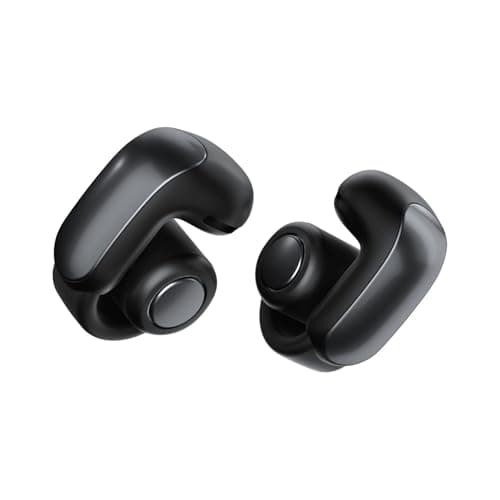 Bose Ultra Open Earbuds The only pair here that an independent lab called the most comfortable buds it has ever worn, with a measured comfort score of 8.6 out of 10. About 6.4 g, nothing behind the ear, no seal and no damp feeling after hours. IPX4 is the price you pay. | Most comfortable overallOpen-ear clip-on | 7.3 /10 | $245.58Amazon |
| 2 | 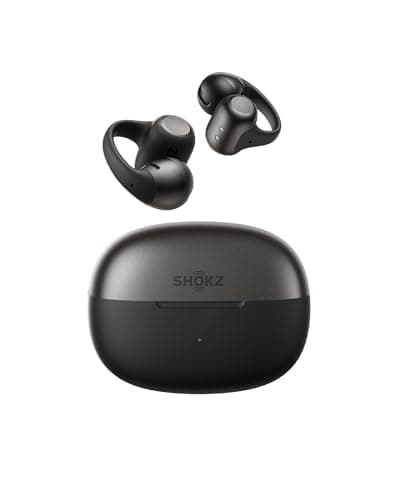 Shokz OpenDots 2 The same cuff geometry as the Bose at 6.4 g, on a nickel-titanium hinge, with IP57 buds and an IP54 case. One named reviewer nearly knocked a bud off because he had forgotten he was wearing it. | Most comfortable you can sweat intoOpen-ear clip-on | 8.6 /10 | $199.95Amazon |
| 3 | 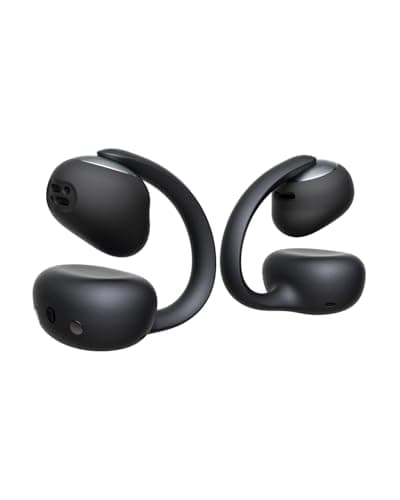 Baseus Bowie MC2 About 5.1 g a side, the least mass of anything on this page, and the only pick that ships three detachable cushion sizes so you can tune the clamp to your own ear rim. | Lightest open-ear hereOpen-ear clip-on | 8.6 /10 | $49.99Amazon |
| 4 | 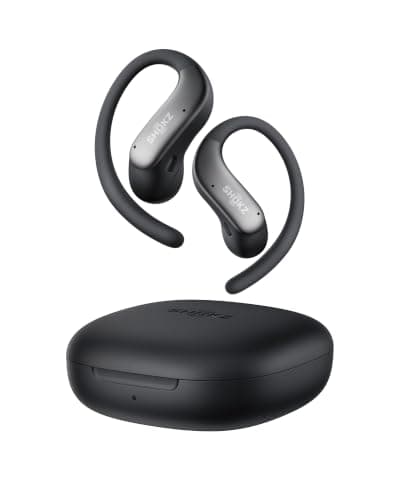 Shokz OpenFit Air 2 7.2 g, the lightest hook Shokz makes and nearly half the weight of its own flagship. The arm is thin enough to share the groove behind your ear with a pair of glasses, and the buttons are pressure-sensitive rather than touch. | Most comfortable ear-hookOpen-ear hook | 8.4 /10 | $129.95Amazon |
| 5 | 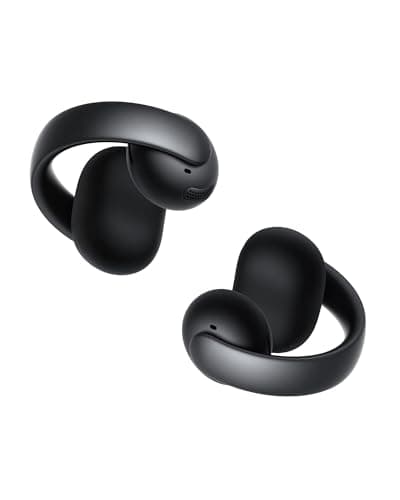 Soundcore AeroClip About 6 g on an open ring Anker rates for 20,000 bends, so the clamp pressure should still be the same pressure in two years. Noticeably less money than the Bose or the OpenDots 2. | Best mid-price comfortOpen-ear clip-on | 8.1 /10 | $129.99Amazon |
| 6 | 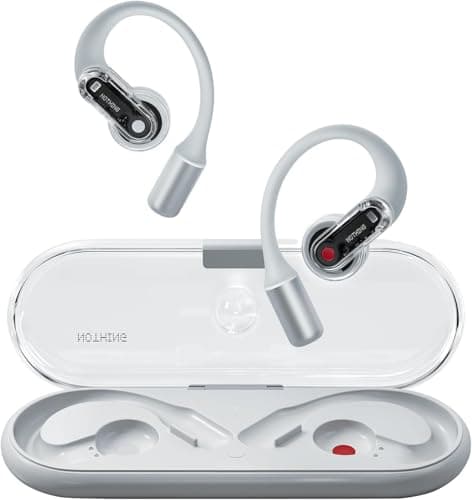 Nothing Ear (open) 8.1 g with a hook SoundGuys found stable through gym and cycling sessions, and a stem you pinch rather than a panel you tap, so adjusting volume never presses the earbud into your ear. | Best for pinch controlsOpen-ear hook | 7.7 /10 | $99.00Amazon |
| 7 | 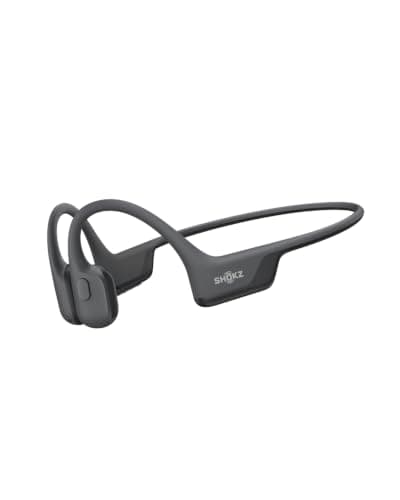 Shokz OpenRun Air 2 A neckband weighs four times what a cuff does and most people notice it less, because the load spreads across two cheekbones and the back of the skull. Nothing on, over or in the ear at all, and IP67. | Most comfortable if nothing should touch your earBone conduction (neckband) | 8.7 /10 | $129.95Amazon |
| 8 | 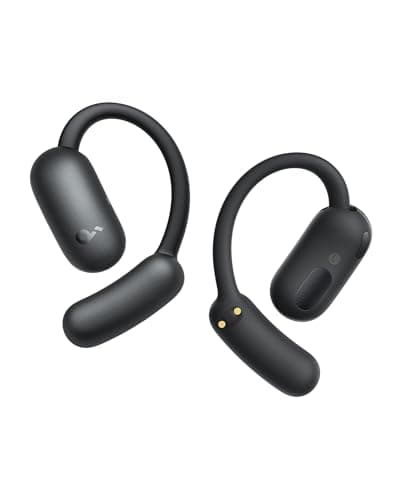 Soundcore AeroFit 2 10 g, but the only hook here with a four-position hinge: you set how far the arm stands off your ear rather than hoping the factory guessed your anatomy. The pick for ears that reject fixed hooks. | Best adjustable fitOpen-ear hook | 8.4 /10 | $79.99Amazon |
| 9 | 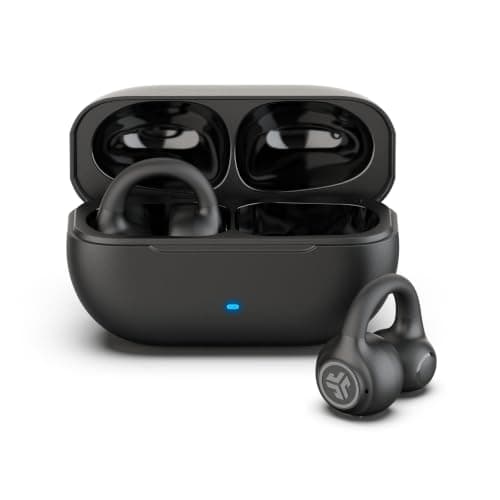 JLab Flex Open Earbuds About 6 g a side with IP55 and multipoint, for roughly a tenth of what the Bose costs. The compromise is total battery, not the fit. | Cheapest comfortable cuffOpen-ear clip-on | 7.2 /10 | $39.99Amazon |
#ad · Prices come live from Amazon, last checked November 4, 2026. Scores are ours, built from published specs and cited independent reviews, with every figure linked to its source. Photos are illustrative stock. Tap a row for the full write-up.
What actually decides open-ear comfort
Comfort is the reason most people arrive at this category. The silicone tip of a sealed earbud presses on the canal wall, which is lined with skin that has almost no fat under it, and after an hour that pressure becomes a dull ache — the mechanism is in why do my earbuds hurt my ears?. Take the tip out of the canal and that specific pain disappears.
But it does not disappear for free. An open-ear earbud has to hold itself on the outside of your ear, and the only way to do that is to clamp a rim, hook a groove or press on a cheekbone. Each of those moves the pressure somewhere new. So “most comfortable open-ear” is not a softer version of “best open-ear” — it is a different ranking, and the pairs that win it are not the ones that win our best open-ear earbuds list.
Comfort is also the hardest thing on a site like this to be honest about, because we do not run a listening panel and we are not going to pretend we have worn nine pairs for three hours each. What we can do is use the numbers makers publish, the independent labs that do measure comfort, and the geometry — which is not a matter of opinion. That is the whole method below.
The table: grams, ratings and where the load sits
Every figure here is read from the maker's own published page, or from a named independent review where the maker does not publish it. All nine listings were verified live and in stock on Amazon on November 2, 2026 through the price pipeline this site runs. Each row links to its source.
The five things we ranked on
- Mass per side. Published grams for one earbud, or the pair weight divided by two where that is all a maker gives. Lower is better, but only within the same fit system — see the next section.
- Where the load rests. The rim of the outer ear (a cuff), the groove behind it (a hook) or the cheekbones and nape (a neckband). These are three different kinds of ache.
- Glasses and hat clearance. Whether the design competes for the space a temple arm, a beanie edge or a helmet strap already occupies.
- Controls that do not push. A tap on a loosely clamped earbud is also a shove. Buttons, pressure sensors and pinches score above capacitive panels.
- Hour three. What independent testers reported after long wear, and whether the design traps heat or moisture against skin.
Battery, sound and price are not comfort, so they are not in the ranking. They are in every pick's card below, because you still have to live with them.
1. Grams per side, and why the number lies
The spread on this page is wide. The Baseus Bowie MC2 is about 5.1 g a side. The Bose Ultra Open is 0.014 lb, roughly 6.4 g, and the second-generation version is 0.013 lb, about 5.9 g. The Shokz OpenDots 2 is 6.4 g ± 0.2 g. The Soundcore AeroClip is 6.0 g, the JLab Flex Open is 12 g for the pair, about 6 g each. Then the hooks: Shokz OpenFit Air 2 at 7.2 g, Nothing Ear (open) at 8.1 g, Soundcore AeroFit 2 at 10 g. For contrast, the heaviest open-ear in our registry is the Shokz OpenFit Pro at 12.3 g.
And then there is the Shokz OpenRun Air 2, which weighs 26.4 g — four times a Bose cuff — and which a lot of people find less noticeable than any of them. That is the single most useful fact on this page, and it is why mass alone cannot do the ranking.
2. Pressure points: rim, groove or cheekbone
There are exactly three places an open-ear design can hold on, and each one has a characteristic failure.
The rim (a cuff). A clip-on pinches the helix — the curved outer fold of your ear — between a speaker barrel in front and a battery counterweight behind. Nothing enters the canal and nothing goes behind the ear, which is why this fit system wins the comfort ranking outright. Its failure mode is a hot spot at the single clamp point if the spring pressure is too high for your cartilage, and it is the one fit system where ear anatomy varies enough that a pair comfortable for your friend can be wrong for you. The Baseus is the only pick here that ships three cushion sizes to address that.
The groove (a hook). An ear-hook runs a silicone-covered arm over the top of the ear and down into the groove behind it, holding a pod in front of the canal. The load is spread over a longer contact line than a cuff, which is genuinely comfortable — SoundGuys scored the heaviest hook we track 8.5 out of 10 for comfort even while noting it lacks “the forget-you're-wearing-them experience.” Its failure is competition: that groove already has a job if you wear glasses.
The cheekbones and nape (a neckband). Bone conduction puts two transducers on the zygomatic arch in front of each ear and routes a titanium band behind your head. Nothing touches the ear itself. Its failure modes are band length — the wrong size aches at the temples within an hour, which is why Shokz sells a mini and we wrote Shokz Standard vs Mini sizing — and vibration you can feel on the skin at high volume with bass-heavy tracks, which Lifehacker Japan's reviewer reported on the OpenRun Air 2 and fixed by dropping one volume step.
3. The groove behind your ear is already occupied
If you wear glasses every day, this section may decide the whole purchase for you.
The groove behind your ear is where the temple arm of a pair of glasses sits. It is also where the arm of an ear-hook sits, where the edge of a beanie folds, and where the webbing of a cycling helmet strap runs. Put two of those in the same place and the thinner one wins; put a thick hook there and you get a pressure line that is very noticeable by the end of a working day.
That is the structural reason three of the top five picks here are cuffs and the highest-ranked hook is the thinnest and lightest one Shokz makes, the OpenFit Air 2 at 7.2 g. If you want a hook and you wear glasses, buy light. If you want zero competition, buy a cuff: it clips the rim and leaves the groove completely empty. The full treatment is open-ear earbuds with glasses, and the two fit systems are compared directly in ear hook vs clip-on open-ear earbuds.
One inversion worth knowing before you generalize: under a snow helmet, the padded ear pad presses directly on the rim, and the cuff goes from the easiest design to the worst one. We worked that through in best earbuds for skiing and snowboarding.
4. Controls are a comfort feature
This is the criterion people leave off comfort lists, and on a cuff it matters more than on anything else.
A capacitive touch panel requires you to press a fingertip against the earbud. On a clip-on, the earbud is held only by a springy clamp, so every tap is also a small shove against the one contact point holding it on. Over a day that is a series of tiny repositionings, each of which you then have to correct.
The designs that avoid it: physical buttons (both Bose generations, and every Shokz neckband), pressure-sensitive buttons (the OpenFit Air 2), a force-sensor pinch that squeezes the barrel and counterweight toward each other so the forces cancel instead of levering the clip sideways (the OpenDots 2), and a stem pinch (Nothing Ear (open)). The AeroClip, the JLab Flex Open and the AeroFit 2 use tap panels, which is a real mark against them here even though they are comfortable to wear.
Wet fingers make this worse, because water changes capacitance: sweat running down a housing can register as a tap, and a fingertip too wet for clean contact can register as nothing. That failure is covered in best earbuds for sweaty ears.
5. Hour three, and the damp problem
Short-wear comfort is easy; almost everything here is fine for twenty minutes. The thing to buy for is hour three.
The strongest independent evidence we have found on this is GearLab's test of the Bose cuff, where Graham Faulknor wrote that they are “the most comfortable buds we have ever worn, to the point where we forgot they were even in our ears,” and specifically noted no “moist in-ear feeling” after several hours. That second half is the part people underrate. A sealed tip turns your ear canal into a closed, humid chamber at body temperature; an open design does not, which is also why it is the better answer for anyone whose ears get itchy or waxy with normal earbuds.
It is worth saying that SoundGuys, testing the same Bose product, was cooler: Dave Carr scored comfort 7.5 and said that while they are “not uncomfortable,” having something attached to the outer ear feels strange, and that you may feel like you are still wearing them after you take them off. Two labs, two readings, and both are useful — the cuff is the most comfortable fit system here and it is also the one that feels most unfamiliar on day one.
On the clip-on side, EFTM's Scott Plowman gave the OpenDots 2 a comfort rating of 97% and described nearly dislodging an earbud because he had “totally forgotten” he was wearing it. On the hook side, SoundGuys found the Nothing Ear (open) stable and trouble-free through gym and cycling sessions.
Comfort is not stability
In detail
The picks, in full
Rank 1
Most comfortable overall
Bose Ultra Open Earbuds
The only pair here that an independent lab called the most comfortable buds it has ever worn, with a measured comfort score of 8.6 out of 10. About 6.4 g, nothing behind the ear, no seal and no damp feeling after hours. IPX4 is the price you pay.
Spec sheetResearched · sources linked
| Fit system | Open-ear clip-on. Ear canal stays open: you hear the room and traffic. |
|---|---|
| Water & sweat rating | IPX4 |
| Weight | 0.014 lb per earbud (about 6.4 g) |
| Battery | Up to 7 hours; 4 hours with Immersive Audio or Auto Volume; up to 19.5 more in the case |
| Quick charge | 10 min = up to 2 hours |
| Charging | 1 hour to full |
| Multipoint | Connects to two devices at once |
| Controls | Button on each barrel |
| Codecs | AAC, SBC |
How the 7.3 score breaks down
- Fit security (25%)
- 8
- Sweat & water resistance (20%)
- 5
- Awareness (open canal) (15%)
- 9
- Sound & leakage (15%)
- 9
- Calls & wind (10%)
- 7
- Battery & charging (10%)
- 7
- Value (5%)
- 4
What the spec sheet supports
- Nothing in the ear canal and nothing over the ear: works with glasses, hats and helmets
- Physical buttons
- Immersive Audio spatial mode when you want it
Where it falls short
- IPX4 is splash-rated only, the weakest sweat rating in this group
- Immersive Audio cuts battery to 4 hours
- No wireless charging (the 2nd Gen adds it)
Skip this if…
…you're a heavy sweater; IPX4 is a rain rating, not a sweat-through-the-shirt rating. The Shokz OpenDots 2 is IP57.
#ad · Price as of November 4, 2026 · Disclosure for the link to Bose Ultra Open Earbuds
Rank 2
Most comfortable you can sweat into
Shokz OpenDots 2
The same cuff geometry as the Bose at 6.4 g, on a nickel-titanium hinge, with IP57 buds and an IP54 case. One named reviewer nearly knocked a bud off because he had forgotten he was wearing it.
Spec sheetResearched · sources linked
| Fit system | Open-ear clip-on. Ear canal stays open: you hear the room and traffic. |
|---|---|
| Water & sweat rating | Earbuds IP57; charging case IP54 |
| Weight | 6.4 g per earbud; case 38.8 g |
| Battery | 10 hours; 40 hours with case |
| Quick charge | 5 min = 2 hours |
| Charging | Case: wireless and USB-C; earbuds 1 hour |
| Bluetooth | 6.1 |
| Multipoint | Yes |
| Microphones | Triple AI noise-canceling: two air-conduction mics plus one bone-conduction mic |
| Controls | Touch controls (upgraded) |
| Driver / tech | Bassphere 2.0 + Dolby Audio + DirectPitch + MirrorPitch |
| Launched | June 2026 |
How the 8.6 score breaks down
- Fit security (25%)
- 8
- Sweat & water resistance (20%)
- 10
- Awareness (open canal) (15%)
- 9
- Sound & leakage (15%)
- 8
- Calls & wind (10%)
- 9
- Battery & charging (10%)
- 9
- Value (5%)
- 5
What the spec sheet supports
- IP57 on the buds: immersion-rated, which no Bose clip-on is
- 10 hours per charge and a 5-minute charge worth 2
- Bone-conduction mic picks up your voice through the jaw on windy days
- Even the case is IP54
Where it falls short
- Touch controls rather than buttons
- Clip-ons sit lighter than hooks but can shift on heavy impact; check the fit on the first sprint
Skip this if…
…you want buttons; the Bose cuffs have them, or go to an ear-hook.
#ad · Price as of November 4, 2026 · Disclosure for the link to Shokz OpenDots 2
Rank 3
Lightest open-ear here
Baseus Bowie MC2
About 5.1 g a side, the least mass of anything on this page, and the only pick that ships three detachable cushion sizes so you can tune the clamp to your own ear rim.
Spec sheetResearched · sources linked
| Fit system | Open-ear clip-on. Ear canal stays open: you hear the room and traffic. |
|---|---|
| Water & sweat rating | IP67 |
| Weight | About 5.1 g per earbud; about 52 g with case |
| Battery | About 11.5 h (bass boost on) or 13 h (off) per charge; 55 to 60 h with case |
| Bluetooth | 6.0; 38 ms low-latency mode |
| Multipoint | Yes |
| Microphones | 4-mic AI call clarity |
| Codecs | SBC, AAC, LDAC |
| Driver / tech | 11 mm dynamic, 20 Hz to 40 kHz |
| Extras | Detachable air cushions in M/L/XL |
How the 8.6 score breaks down
- Fit security (25%)
- 8
- Sweat & water resistance (20%)
- 10
- Awareness (open canal) (15%)
- 9
- Sound & leakage (15%)
- 7
- Calls & wind (10%)
- 7
- Battery & charging (10%)
- 10
- Value (5%)
- 10
What the spec sheet supports
- IP67 at a budget price: the best water rating of any clip-on here
- Lightest clip-on at 5.1 g
- Battery figures nobody else in the category matches
- Three cushion sizes for fit
Where it falls short
- Less brand track record and fewer independent reviews than Bose, Shokz or Soundcore
- Baseus's battery figures are at 50% volume
Skip this if…
…you want a known name with a long warranty history; Shokz and Bose cost more for that reason.
#ad · Price as of November 4, 2026 · Disclosure for the link to Baseus Bowie MC2
Rank 4
Most comfortable ear-hook
Shokz OpenFit Air 2
7.2 g, the lightest hook Shokz makes and nearly half the weight of its own flagship. The arm is thin enough to share the groove behind your ear with a pair of glasses, and the buttons are pressure-sensitive rather than touch.
Spec sheetResearched · sources linked
| Fit system | Open-ear hook. Ear canal stays open: you hear the room and traffic. |
|---|---|
| Water & sweat rating | Earbuds IP55; charging case IP54 |
| Weight | 7.2 g per earbud; case 46.4 g |
| Battery | 8 hours; 36 hours with case |
| Quick charge | 10 min = 3 hours |
| Charging | USB-C; earbuds 60 min, case 100 min |
| Bluetooth | 6.1 |
| Multipoint | Yes |
| Microphones | Dual AI noise-canceling |
| Controls | Pressure-sensitive buttons |
| Driver / tech | Bassphere + OpenBass 2.0 + DirectPitch |
| Launched | August 2026 |
How the 8.4 score breaks down
- Fit security (25%)
- 9
- Sweat & water resistance (20%)
- 9
- Awareness (open canal) (15%)
- 9
- Sound & leakage (15%)
- 7
- Calls & wind (10%)
- 7
- Battery & charging (10%)
- 8
- Value (5%)
- 8
What the spec sheet supports
- Lightest Shokz ear-hook at 7.2 g
- The only OpenFit whose case carries a rating (IP54)
- Pressure buttons, not touch, so sweat doesn't trigger them
Where it falls short
- 8 hours versus 11 on the OpenFit 2
- Single-driver sound with less bass than DualBoost
Skip this if…
…battery is your bottleneck; the OpenFit 2 lasts three hours longer per charge.
#ad · Price as of November 4, 2026 · Disclosure for the link to Shokz OpenFit Air 2
Rank 5
Best mid-price comfort
Soundcore AeroClip
About 6 g on an open ring Anker rates for 20,000 bends, so the clamp pressure should still be the same pressure in two years. Noticeably less money than the Bose or the OpenDots 2.
Spec sheetResearched · sources linked
| Fit system | Open-ear clip-on. Ear canal stays open: you hear the room and traffic. |
|---|---|
| Water & sweat rating | IP55 |
| Weight | 6.0 g per earbud |
| Battery | 8 hours; 32 hours with case |
| Quick charge | 10 min = 3 hours |
| Bluetooth | 5.4 |
| Multipoint | Yes |
| Microphones | 4 beamforming mics with AI noise reduction |
| Controls | Tap control |
| Codecs | LDAC (Android only) |
| Driver / tech | 12 mm titanium-coated driver |
How the 8.1 score breaks down
- Fit security (25%)
- 8
- Sweat & water resistance (20%)
- 8
- Awareness (open canal) (15%)
- 9
- Sound & leakage (15%)
- 8
- Calls & wind (10%)
- 8
- Battery & charging (10%)
- 8
- Value (5%)
- 7
What the spec sheet supports
- IP55 where Bose is IPX4
- LDAC and a 12 mm driver
- 10-minute charge worth 3 hours
Where it falls short
- 8 hours is two short of the OpenDots
- Tap controls
- No wireless charging
Skip this if…
…you want the best sweat rating in a clip-on; the OpenDots 2's IP57 is a step up.
#ad · Price as of November 4, 2026 · Disclosure for the link to Soundcore AeroClip
Rank 6
Best for pinch controls
Nothing Ear (open)
8.1 g with a hook SoundGuys found stable through gym and cycling sessions, and a stem you pinch rather than a panel you tap, so adjusting volume never presses the earbud into your ear.
Spec sheetResearched · sources linked
| Fit system | Open-ear hook. Ear canal stays open: you hear the room and traffic. |
|---|---|
| Water & sweat rating | IP54 |
| Weight | 8.1 g per earbud |
| Battery | 8 hours; 30 hours with case (Nothing's claim) |
| Bluetooth | 5.3 |
| Multipoint | Yes |
| Microphones | Two per earbud |
| Controls | Pinch controls on the stem |
| Codecs | SBC, AAC |
| Extras | Nothing's own page lists a 30-hour battery; specs above are from the SoundGuys review because the product page is script-rendered |
How the 7.7 score breaks down
- Fit security (25%)
- 9
- Sweat & water resistance (20%)
- 6
- Awareness (open canal) (15%)
- 9
- Sound & leakage (15%)
- 7
- Calls & wind (10%)
- 7
- Battery & charging (10%)
- 8
- Value (5%)
- 7
What the spec sheet supports
- Pinch controls work with wet fingers where touch panels fail
- 8.1 g and an ergonomic hook that SoundGuys found stable through gym and cycling sessions
- Multipoint on Bluetooth 5.3
Where it falls short
- IP54: splash-rated, the lowest sweat rating in this group
- SBC and AAC only
- SoundGuys noted the buds rattle in the case when it's in a pocket
Skip this if…
…you sweat through IP54 gear; the Shokz OpenFit 2 and Soundcore AeroFit 2 are IP55 for similar money.
#ad · Price as of November 4, 2026 · Disclosure for the link to Nothing Ear (open)
Rank 7
Most comfortable if nothing should touch your ear
Shokz OpenRun Air 2
A neckband weighs four times what a cuff does and most people notice it less, because the load spreads across two cheekbones and the back of the skull. Nothing on, over or in the ear at all, and IP67.
Spec sheetResearched · sources linked
| Fit system | Bone conduction (neckband). Ear canal stays open: you hear the room and traffic. |
|---|---|
| Water & sweat rating | IP67 (dust-tight, temporary immersion); Shokz: not for swimming |
| Weight | 26.4 g standard / 25.9 g mini |
| Battery | 10 hours listening |
| Quick charge | 5 min = 2 hours |
| Charging | USB-C, 1 hour to full |
| Bluetooth | 6.0 |
| Multipoint | Yes |
| Microphones | Dual AI noise-canceling, wind-resistant |
| Controls | Physical buttons |
| Driver / tech | 8.5-gen bone conduction (PremiumPitch 3.0) |
| Launched | August 2026 |
How the 8.7 score breaks down
- Fit security (25%)
- 10
- Sweat & water resistance (20%)
- 10
- Awareness (open canal) (15%)
- 10
- Sound & leakage (15%)
- 5
- Calls & wind (10%)
- 8
- Battery & charging (10%)
- 8
- Value (5%)
- 7
What the spec sheet supports
- IP67 means sweat, rain and a rinse under the tap are all inside the rating
- Lightest current Shokz neckband; Shokz says the frame is 9% smaller than the OpenRun's
- USB-C charging and a 5-minute quick charge
- Bluetooth 6.0 with multipoint
Where it falls short
- No DualPitch air-conduction unit, so bass is thinner than the Pro 2
- Two hours less battery than the Pro 2
- Bone conduction leakage and cheekbone buzz at high volume, like every neckband here
Skip this if…
…sound quality is the reason you'd spend more (the Pro 2's DualPitch is audibly fuller) or you need the Pro 2's 12-hour battery for ultra-distance days.
#ad · Price as of November 4, 2026 · Disclosure for the link to Shokz OpenRun Air 2
Rank 8
Best adjustable fit
Soundcore AeroFit 2
10 g, but the only hook here with a four-position hinge: you set how far the arm stands off your ear rather than hoping the factory guessed your anatomy. The pick for ears that reject fixed hooks.
Spec sheetResearched · sources linked
| Fit system | Open-ear hook. Ear canal stays open: you hear the room and traffic. |
|---|---|
| Water & sweat rating | IP55 |
| Weight | 10 g per earbud |
| Battery | 10 hours; 42 hours with case |
| Quick charge | 10 min = 4 hours |
| Charging | USB-C; case supports wireless charging |
| Bluetooth | 5.4 |
| Multipoint | Yes |
| Microphones | 4 mics with AI noise reduction |
| Controls | Touch control |
| Codecs | LDAC Hi-Res (Android only) |
| Driver / tech | 20 x 11.5 mm drivers |
| Extras | Four-level adjustable ear hook |
How the 8.4 score breaks down
- Fit security (25%)
- 9
- Sweat & water resistance (20%)
- 8
- Awareness (open canal) (15%)
- 9
- Sound & leakage (15%)
- 8
- Calls & wind (10%)
- 7
- Battery & charging (10%)
- 9
- Value (5%)
- 8
What the spec sheet supports
- Four hook positions: the fix for ears a fixed hook never quite fits
- 10 hours and a 10-minute charge worth 4 hours
- LDAC and large drivers for open-ear sound with some bass
- Wireless-charging case
Where it falls short
- 10 g per side; heavier than the Shokz OpenFit Air 2
- Touch controls, not buttons
- IP55 earbuds; Soundcore doesn't rate the case
Skip this if…
…you want a button you can hit mid-set; the Shokz OpenFit 2's physical button is more reliable when wet.
#ad · Price as of November 4, 2026 · Disclosure for the link to Soundcore AeroFit 2
Rank 9
Cheapest comfortable cuff
JLab Flex Open Earbuds
About 6 g a side with IP55 and multipoint, for roughly a tenth of what the Bose costs. The compromise is total battery, not the fit.
Spec sheetResearched · sources linked
| Fit system | Open-ear clip-on. Ear canal stays open: you hear the room and traffic. |
|---|---|
| Water & sweat rating | IP55 |
| Weight | 12 g for the pair (about 6 g per earbud); case 36.8 g |
| Battery | 21+ hours total with case |
| Bluetooth | 5.4 |
| Multipoint | Yes |
| Microphones | 2-mic ENC |
| Controls | Touch |
| Codecs | SBC, AAC |
| Driver / tech | 12 mm dynamic driver |
How the 7.2 score breaks down
- Fit security (25%)
- 7
- Sweat & water resistance (20%)
- 8
- Awareness (open canal) (15%)
- 9
- Sound & leakage (15%)
- 6
- Calls & wind (10%)
- 6
- Battery & charging (10%)
- 5
- Value (5%)
- 10
What the spec sheet supports
- IP55 on a budget cuff
- Multipoint and Google Fast Pair
- About 6 g per side
Where it falls short
- 21 hours total is the lowest here
- JLab doesn't publish per-earbud playtime for this model
- SBC/AAC only
Skip this if…
…you need all-day battery; the Baseus Bowie MC2 more than doubles it for a little more.
#ad · Price as of November 4, 2026 · Disclosure for the link to JLab Flex Open Earbuds
Buyer's guide
Start with your anatomy, not the brand
Open-ear comfort is the most individual thing on this site. Ear rims differ in thickness by several millimeters between adults, and the groove behind the ear differs in depth just as much. A clamp calibrated for an average helix will be loose on a thin one and painful on a thick one, and no review — ours or anyone else's — can tell you which you have.
Which leads to the only buying advice that always works: buy from somewhere with a real return window and test in your actual day, not in the first ten minutes. If your ears run small, start at best open-ear earbuds for small ears; if you have never worn an open-ear design before, what are open-ear headphones? is the plain introduction.
The three-hour test, and what to look for
Wear the pair for a normal three-hour block and check four things at the end:
- A hot spot. Run a finger over the contact area. A warm, slightly tender patch at one point means the clamp pressure is too high for your cartilage; it will not break in.
- A pressure line. On a hook, look behind the ear for an indentation. If your glasses and the hook are both in the groove, you will see two.
- Temple ache. On a neckband, an ache at the temples within the hour means the band is the wrong length, not that bone conduction is wrong for you. Shokz publishes a 9.25-inch cutoff between the midpoints behind the ears for standard versus mini.
- Whether you keep touching them. If you repeatedly reseat the earbud, that is a fit problem wearing a comfort disguise, and the next size or the next fit system is the fix.
Do not buy comfort at the cost of the rating
The single most common regret in this category is buying the most comfortable pair and discovering it was splash-rated. The Bose cuffs are IPX4, and the Nothing Ear (open) is IP54. Both are fine for a commute and a dry gym; neither is built for sweat soaking the housing for an hour, three times a week, for two years.
You do not have to choose. The Shokz OpenDots 2 is the same weight and geometry as the Bose with IP57 buds and an IP54 case, and the Baseus Bowie MC2 is lighter still at IP67. Both are on this list for exactly that reason. What each digit was actually tested for is in earbud IP ratings explained, and the whole category ranked by the water digit is best sweatproof earbuds.
What you give up for comfort
Every pair on this page loses bass compared with a sealed earbud, because without a seal most low-frequency output escapes to the room before it reaches your eardrum. GearLab measured the Bose cuff following its house curve through most of the range with bass dropping off sharply, scoring bass 5.0 out of 10, and found the app's bass slider at +8 helped only slightly. SoundGuys scored the same product 2.3 out of 5 on its MDAQS audio measure.
You also lose isolation entirely, which is the point rather than a defect — it is what lets you hear a car. And on calls, wind beats every open-ear design we have tested evidence for, because wind noise is turbulence across the microphone port itself rather than a sound coming from a direction an array can reject. The two hardware answers that help are a bone-conduction mic reading your jaw or a boom arm out of the airflow: see best open-ear earbuds for phone calls.
If none of these is comfortable, change fit system
If you have tried two cuffs and both pinched, a third cuff will pinch too. Move to a hook; if hooks fight your glasses, move to a neckband, where nothing touches the ear at all. The whole point of the OpenRun Air 2 sitting on a comfort list is that it is the escape hatch: 26.4 g that most wearers notice less than 6 g on the rim, plus the best water rating here at IP67. The full write-up is the Shokz OpenRun Air 2 review; the category explainer is how bone conduction headphones work, and the full ranked list is best bone conduction headphones.
How we scored this
The research behind every pick
Each pair on this page is researched and compared the same way: we classify the retention system that holds it on (hook, clip, wing, neckband), read the maker's published IP rating, weight, battery, charging, mic and control type straight off its own product page and manual, check the sweat and water rating against the IEC 60529 standard, cross-reference independent published reviews, and score every pick on a public rubric. Every figure links to the document it came from, so you can check any number in one click.
Prices come live from Amazon, so what you see is what you pay today. Commissions never set a score or decide a pick. The rubric and its weights are published.
Corrections & updates
- First published. All nine picks verified live and in stock on Amazon the same day. Ranking built on published per-side weights plus the comfort scores two independent labs have measured: GearLab 8.6/10 and SoundGuys 7.5/10 on the Bose cuff, SoundGuys 8.5/10 on the heaviest hook we track, and EFTM 97% on the Shokz OpenDots 2.
Questions
Frequently asked
What are the most comfortable open-ear headphones?
Are clip-on or ear-hook open-ear earbuds more comfortable?
Is a 26 g bone conduction headphone really more comfortable than a 6 g clip-on?
Which open-ear earbuds are the lightest?
Do open-ear earbuds hurt your ears over time?
Are the most comfortable open-ear earbuds also the most secure?
Which open-ear earbuds are best with glasses?
Can I wear comfortable open-ear earbuds all day at work?
Keep reading
Related on Openear Club
- Best open-ear earbudsThe same category ranked on everything, not just comfort.
- Ear hook vs clip-onThe two fit systems that decide most of this page.
- Open-ear earbuds with glassesWhy the groove behind your ear is already taken.
- Why do my earbuds hurt my ears?The two different kinds of earbud pain, and which one open-ear fixes.
- OpenFit Pro vs Bose Ultra OpenThe comfort-versus-specs trade at the top of the price list.
Receipts
Sources
- GearLab — Bose Ultra Open review, Graham Faulknor with Genaveve Bradshaw, scored 65 overall and 8.6/10 for comfort and fit: "The Bose Ultra Open are the most comfortable buds we have ever worn, to the point where we forgot they were even in our ears", no "moist in-ear feeling" after several hours of wear, 8.3 hours measured (8 h 20 min at 75% volume), bass 5.0/10, and noise cancellation measured 0.0 low / 0.0 mid / 1.0 high (checked 2026-11-02)
- SoundGuys — Bose Ultra Open Earbuds review, Dave Carr, May 15, 2025, scored 5.5/10 (comfort 7.5): measured 8 hours 53 minutes against Bose's 7.5-hour claim, bass "take[s] a massive hit with this earbud style", the microphone called "subpar" and said to have "struggled to reject any wind noise", and the buds "not uncomfortable" but strange to have attached to the outer ear (checked 2026-11-02)
- SoundGuys — Shokz OpenFit Pro review, Adam Birney, January 22, 2026, scored 6.3/10 overall (comfort 8.5, battery 8.0, noise cancelling 1.6, isolation 0.6, value 6.5): measured 9–10 hours at 65–75% volume against the 12-hour claim, peak attenuation near 13 dB between 300 Hz and 1.5 kHz and near zero below 200 Hz, "persistent pressure sensations similar to early ANC implementations", and calls excellent except in wind, where gusts "completely drown out speech" (checked 2026-11-02)
- EFTM — Shokz OpenDots 2 review, Scott Plowman, August 2026, scored 89% overall (comfort 97%, sound quality 80%, battery 90%): "nearly dislodged the earbud... because I had totally forgotten I was wearing it", "do not have the sound quality of a premium closed-ear earbud", "a bit under" 10 hours at higher volume, and not as stable on the head as the OpenRun Pro 2 (checked 2026-10-26)
- Lifehacker Japan — Shokz OpenRun Air 2 review, scored 4.5/5, last updated September 1, 2026: no slipping or ear pain across repeated long runs including a three-hour training run, the "more than 9% smaller" claim read as volume rather than weight, fine vibration against the skin on bass-heavy tracks at high volume from the 8.5-generation transducer (fixed by one volume step down or the app's bass setting), and wind noise that made a call on an e-bike very hard to follow (checked 2026-11-02)
- SoundGuys — Nothing Ear (open) review (checked 2026-09-21)
- SoundGuys — Sony LinkBuds Clip review (checked 2026-09-21)
- Bose — Ultra Open Earbuds product page (checked 2026-09-21)
- Bose — Ultra Open Earbuds (2nd Gen) product page (checked 2026-09-21)
- Shokz — official product comparison table (checked 2026-09-21)
- Shokz — OpenDots 2 product page, re-read: IP57 earbuds, 6.4 g ± 0.2 g per earbud, 10 h / 40 h with case, "5 min = 2 hours playback", Bluetooth 6.1, triple AI noise-canceling mics (two air-conduction plus one bone conduction), "taps or the upgraded force-sensor pinch gesture", Bassphere 2.0 with upgraded Dolby Audio, DirectPitch and MirrorPitch, nickel-titanium JointArc, and all four colorways marked "Sold out" at $199.95 (checked 2026-10-26)
- Baseus — Bowie MC2 product page, specifications (checked 2026-09-21)
- Anker (soundcore) — AeroClip product page, re-read: IP55, 8 h / 32 h with case, "10M = 3H" quick charge, Bluetooth 5.4, multipoint, "4 Mics with AI", "12mm Customized Driver, Titanium-Coated", Tap Control, and an "adaptive open-ring design that endures 20,000 bends"; in stock (checked 2026-10-26)
- Soundcore — AeroFit 2 product page (checked 2026-09-21)
- JLab — Flex Open Earbuds product page, tech specs (checked 2026-09-21)
- Shokz — OpenRun vs. OpenRun Mini: find your perfect fit (checked 2026-09-26)
- IEC 60529 (IP Code) — degree-of-protection definitions, Keystone Compliance summary (checked 2026-09-21)
Every spec here is traceable: figures come from the maker's own product pages and are linked on each product, independent findings are attributed to whoever published them, and prices come live from Amazon so the number you see is the number you pay today. Read the full method.