Bone Conduction · Review
Shokz OpenRun Air 2 review: the one you can rinse under the tap
Shokz's mid-priced neckband is the cheapest current model with an IP67 rating, which is the only spec on the sheet that changes what you can physically do with it. Every number here is read from Shokz's own published comparison and linked to it.
By Mike M.Updated Researched · every spec sourced
#adReader-supported: we may earn a commission if you buy through our links, at no extra cost to you. It never decides a ranking. How we rank · Disclosure
Reviewed
The pair under review
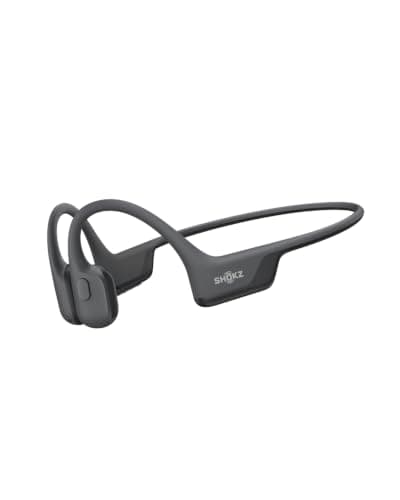
Best for heavy sweaters
Shokz OpenRun Air 2
Bone conduction (neckband)8.7 /10Lighter and better sealed than the Pro 2 (26.4 g, IP67) with 10 hours of battery and Bluetooth 6.0; you trade the Pro 2's bass driver for a frame you can rinse off.
$129.95Amazon#ad · Price as of November 4, 2026 · Disclosure for the link to Shokz OpenRun Air 2
What this review is based on
We do not claim lab time with this headphone, and we will not pretend otherwise. Every specification below is read from Shokz's own published lineup comparison, which covers the whole range in one table, and linked from the value so you can check any figure in a click. Where a subjective judgment is needed — what the vibration feels like, how it behaves on a long run — we quote a named independent review rather than inventing an impression. The Amazon listing was verified live and in stock on November 2, 2026 through the price pipeline this site runs.
The independent review we lean on is Lifehacker Japan's, which scored the OpenRun Air 2 4.5 out of 5 and was last updated September 1, 2026, written by a reviewer who put it through repeated long runs including a three-hour training session. It is the only full hands-on review of this specific model we were able to find and read, and we say so rather than implying a consensus that does not exist yet.
Who it's for, and who should skip it
IP67: the one spec that changes what you can do
Read an IP code from the right. Under IEC 60529 the second digit is the water test and the first is the solids test. 7 is a defined procedure: immersion in one meter of water for 30 minutes. 5, which is what the Pro 2 and all the OpenFit earbuds carry, is a low-pressure jet from a 6.3 mm nozzle. The first digit of IP67 is 6, meaning dust-tight — no ingress of dust at all. IP55 is dust-protected, which is a weaker claim.
So the gap between IP55 and IP67 is not a marketing half-step. It is a jet test against an immersion test, and a dust-protected rating against a dust-tight one. In practice that is the difference between wiping your headphones down and holding them under a running tap. Shokz's own comparison describes the sibling OpenRun as fully washable under the tap, and the Air 2 carries the same IP67 rating.
Two things it does not mean, and both matter:
- Not for swimming. Shokz says so explicitly, and the physics agrees for a different reason: Bluetooth is 2.4 GHz and water absorbs it, so no Bluetooth headphone plays underwater regardless of its rating. Swim headphones use onboard storage instead — see Shokz OpenSwim Pro review and best bone conduction headphones for swimming.
- Not a permanent guarantee. IP ratings are tested on new units. Seals age, and salt is more aggressive than fresh water. Rinsing after a hard session is exactly what preserves the rating — the mechanism and the routine are in how to clean sweaty earbuds and can sweat damage earbuds?
If you want the digit-by-digit version, it is in IP67 vs IP68 earbuds and earbud IP ratings explained.
The 9% claim, and what it actually refers to
This is the part of the marketing most worth slowing down over, and the independent reviewer caught it too.
Shokz says the OpenRun Air 2's frame is more than 9% smaller than the OpenRun's. Read quickly, that sounds like “lighter.” It is not. Shokz's own comparison table lists the OpenRun Air 2 at 26.4 g standard / 25.9 g mini and the 2019 OpenRun at 26.4 g standard / 26 g mini. The standard sizes are identical; the mini is one tenth of a gram apart. Lifehacker Japan's reviewer reached the same conclusion independently and spelled it out: the 9% figure refers to the product's volume, not its weight.
We are flagging this because the OpenRun Air 2 is routinely described as the lightest current Shokz band, and on the mini size that is technically true by 0.1 g. It is not a reason to buy it. The reasons to buy it are the rating, the battery and the price.
Sound, and the vibration nobody warns you about
The OpenRun Air 2 runs Shokz's 8.5-generation bone conduction transducer under the PremiumPitch 3.0 label. The OpenRun Pro 2 runs a newer design that adds a separate air-conduction driver for the low end, which Shokz calls DualPitch. That is the real difference between these two products, and it is bigger than the price gap suggests.
Pure bone conduction has a structural bass problem. Low frequencies need air displacement to be felt, and a transducer pressed against your cheekbone is vibrating bone rather than moving much air. The honest consequence is that no bone-conduction headphone on this site scores above 6 out of 10 on our sound metric, and we have kept that scoring deliberately strict. The mechanism is in how bone conduction headphones work, and the direct answer to the obvious question is do bone conduction headphones sound good?
The part worth knowing before you buy is the vibration. Lifehacker Japan's reviewer reported a fine vibration against the skin on bass-heavy tracks at high volume, and attributed it to the older 8.5-generation transducer, noting the Pro 2 suppresses it better. The fix they found was simple: drop the volume one step, or pull the bass down in the Shokz app. That is not a defect — it is how the technology works at the limit of its excursion — but it is a reason to try the app's EQ before deciding the headphone is wrong. Shokz provides preset modes plus custom profiles.
The other side of an open design is what the people near you hear, which on a neckband at high volume is more than you would like in a quiet room. See open-ear earbuds and sound leakage.
Battery, USB-C and the five-minute charge
Shokz publishes 10 hours of listening, a five-minute charge worth two hours, and USB-C with a full charge in one hour. Set against the rest of the line, that is the quietly best-value spec on the page: the Pro 2 gives 12 hours, the 2019 OpenRun gives 8, and the OpenMove gives 6 with no quick charge at all.
USB-C deserves a sentence of its own. Most colorways of the original OpenRun charge on a proprietary magnetic cable — lose it on a trip and you are done until a replacement arrives. The Air 2 takes the same cable as your phone. For a product people take to races and hotels, that is a practical upgrade that never appears in a comparison headline.
Ten hours is enough for a working week of hour-long sessions, or a marathon with a very wide margin. The five-minute quick charge is the figure that actually gets used: it is the difference between leaving on time and leaving without music. Lifehacker Japan's reviewer reported no battery complaints in the first month of use.
Calls, and the wind
Shokz publishes dual AI noise-canceling, wind-resistant microphones and Bluetooth 6.0 with multipoint. On the move, the independent read is mixed in a predictable way: Lifehacker Japan found the mic picked up the reviewer's voice clearly while running and filtered surrounding noise well, but that wind noise on an e-bike mixed in far more than expected and made the other person's voice very hard to follow.
That is not a Shokz failure, it is the category. Wind noise is turbulence across the microphone port itself, so there is no direction for an array to reject and no processing that recovers a signal buried before it was captured. The two hardware answers that genuinely help are a bone-conduction microphone reading your jaw — which the OpenDots 2 and the OpenRun Pro 2 class of product have and this one does not — or a boom arm that puts the capsule out of the airflow, which is what the OpenComm2 UC is for. The detail is in wind noise and open-ear earbuds, and the ranked list is best bone conduction headphones with a mic.
Multipoint on Bluetooth 6.0 is worth having and is standard across the Shokz line: phone and laptop connected at once, no re-pairing to take a meeting.
Fit, sizing and the buttons
The neckband fit is the most secure design on this site and the reason the OpenRun family is what you see on most runners you pass. Two transducers rest on your cheekbones, a titanium band runs behind your head, and nothing is in or over your ear at all. There is no clamp pressure on cartilage and nothing to be unseated by footstrike. Lifehacker Japan's reviewer reported no slipping and no ear pain across repeated long runs, including a three-hour session.
Two practical notes. First, the controls are physical buttons, not a touch panel: one click to play or pause, two to skip forward, three to go back. On a soaked head that is worth more than any sound spec, because water changes capacitance and a touch panel in sweat either misfires or ignores you.
Second, size matters more than people expect. Shokz offers standard and mini, and the wrong one aches at the temples within an hour — too long and the band bounces, too short and it squeezes. Shokz draws the line at 9.25 inches measured between the midpoints behind your ears. The method and the symptoms are in Shokz Standard vs Mini sizing. If you wear a cycling helmet with the band, read headphones under a cycling helmet for the strap routing.
What it costs, and the awkward overlap
We do not print prices in prose, because they move and a page that quotes one is wrong by next week. Use the buy button for today's figure. What is stable is the shape: the OpenRun Air 2 sits in Shokz's mid bracket, below the OpenRun Pro 2 and well below the OpenFit Pro.
There are two awkward overlaps you should know about before you buy, and both of them are reasons to check today's numbers rather than take ours.
- The 2019 OpenRun lists at the same price. It is also IP67 and the same 26.4 g, but it has 8 hours instead of 10, Bluetooth 5.1 instead of 6.0, a 10-minute-for-1.5-hour quick charge instead of five-for-two, and the proprietary magnetic cable on most colors. At the same money, the Air 2 is the buy. On a deep discount, the OpenRun is still a good headphone.
- The OpenRun Pro 2 discounts into range. Lifehacker Japan's reviewer noted exactly this — the Pro 2 often drops close enough to narrow the decision. If the gap is small, the Pro 2 buys you twelve hours and the DualPitch bass driver; what you give up is the water rating, because the Pro 2 is IP55. That trade is the whole of OpenRun Air 2 vs OpenRun Pro 2.
Alternatives
Our picks for this
Three to weigh against it
The premium band with the bass driver, the 2019 original at the same list price, and Shokz's entry model.
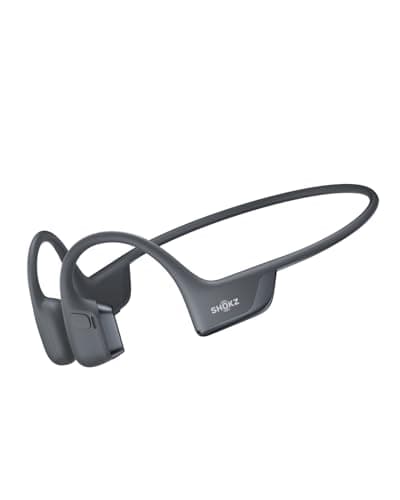
Best bone conduction overall
Shokz OpenRun Pro 2
Bone conduction (neckband)8.5/10Twelve hours and a DualPitch air-conduction driver for real low end, but IP55 rather than IP67 - so you wipe it rather than rinse it.
$179.95Amazon#ad · Price as of November 4, 2026 · Disclosure for the link to Shokz OpenRun Pro 2
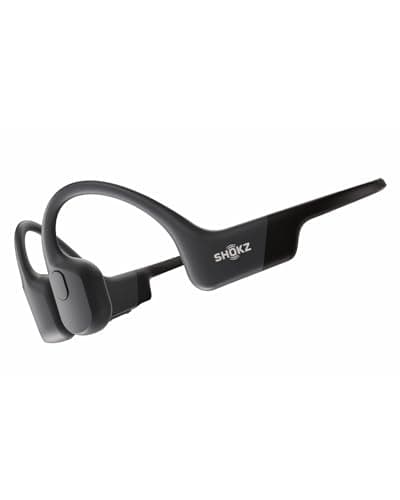
Best-known running pick
Shokz OpenRun
Bone conduction (neckband)8.1/10Same IP67 and same 26.4 g, two hours less battery, Bluetooth 5.1 and a proprietary magnetic cable on most colors. A deal-only buy now.
$129.95Amazon#ad · Price as of November 4, 2026 · Disclosure for the link to Shokz OpenRun
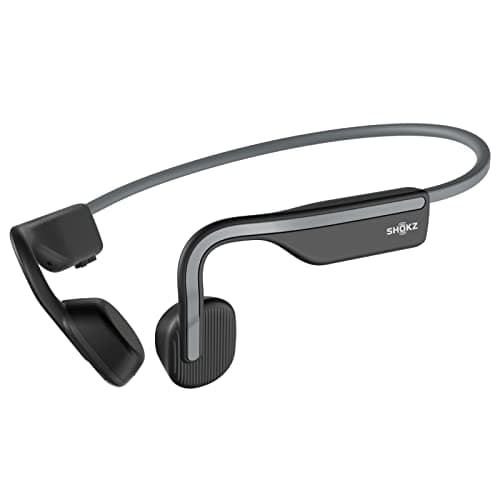
Best Shokz under $100
Shokz OpenMove
Bone conduction (neckband)7.4/10The cheapest way into the brand and the same band geometry, but IP55, 29 g, six hours and no quick charge.
$79.95Amazon#ad · Price as of November 4, 2026 · Disclosure for the link to Shokz OpenMove
The verdict
The OpenRun Air 2 is the Shokz we point people to when the thing that kills their headphones is moisture. It is the cheapest current model in the line with an immersion rating and a dust-tight first digit, it has the second best battery of the four neckbands, it charges over USB-C, and its five-minute quick charge is the most practical figure on the sheet. For the reader this site is built for — someone whose last pair died of sweat — it is the sensible default rather than the compromise.
What you give up is bass and two hours. The 8.5-generation transducer is a step behind the Pro 2's, and if you push the volume on bass-heavy tracks you will feel it on your skin before you hear it in the mix. Neither of those is hidden and neither is fixable with firmware; they are what the price difference is.
And be clear-eyed about the one claim we would not repeat: it is not a lighter headphone than the OpenRun it replaces. It is a smaller-volume one. If weight is your objection to neckbands, the answer is a different fit system, not a different band.
Where it sits against everything else: it is the heavy-sweat pick in best bone conduction headphones, and it appears in best bone conduction headphones for running and best sweatproof earbuds for the same reason.
In detail
The full spec sheet and score
Best for heavy sweaters
Shokz OpenRun Air 2
Lighter and better sealed than the Pro 2 (26.4 g, IP67) with 10 hours of battery and Bluetooth 6.0; you trade the Pro 2's bass driver for a frame you can rinse off.
Spec sheetResearched · sources linked
| Fit system | Bone conduction (neckband). Ear canal stays open: you hear the room and traffic. |
|---|---|
| Water & sweat rating | IP67 (dust-tight, temporary immersion); Shokz: not for swimming |
| Weight | 26.4 g standard / 25.9 g mini |
| Battery | 10 hours listening |
| Quick charge | 5 min = 2 hours |
| Charging | USB-C, 1 hour to full |
| Bluetooth | 6.0 |
| Multipoint | Yes |
| Microphones | Dual AI noise-canceling, wind-resistant |
| Controls | Physical buttons |
| Driver / tech | 8.5-gen bone conduction (PremiumPitch 3.0) |
| Launched | August 2026 |
How the 8.7 score breaks down
- Fit security (25%)
- 10
- Sweat & water resistance (20%)
- 10
- Awareness (open canal) (15%)
- 10
- Sound & leakage (15%)
- 5
- Calls & wind (10%)
- 8
- Battery & charging (10%)
- 8
- Value (5%)
- 7
What the spec sheet supports
- IP67 means sweat, rain and a rinse under the tap are all inside the rating
- Lightest current Shokz neckband; Shokz says the frame is 9% smaller than the OpenRun's
- USB-C charging and a 5-minute quick charge
- Bluetooth 6.0 with multipoint
Where it falls short
- No DualPitch air-conduction unit, so bass is thinner than the Pro 2
- Two hours less battery than the Pro 2
- Bone conduction leakage and cheekbone buzz at high volume, like every neckband here
Skip this if…
…sound quality is the reason you'd spend more (the Pro 2's DualPitch is audibly fuller) or you need the Pro 2's 12-hour battery for ultra-distance days.
#ad · Price as of November 4, 2026 · Disclosure for the link to Shokz OpenRun Air 2
How we scored this
The research behind every pick
Each pair on this page is researched and compared the same way: we classify the retention system that holds it on (hook, clip, wing, neckband), read the maker's published IP rating, weight, battery, charging, mic and control type straight off its own product page and manual, check the sweat and water rating against the IEC 60529 standard, cross-reference independent published reviews, and score every pick on a public rubric. Every figure links to the document it came from, so you can check any number in one click.
Prices come live from Amazon, so what you see is what you pay today. Commissions never set a score or decide a pick. The rubric and its weights are published.
Questions
Frequently asked
Is the Shokz OpenRun Air 2 waterproof?
Is the OpenRun Air 2 lighter than the original OpenRun?
Should I buy the OpenRun Air 2 or the OpenRun Pro 2?
How long does the OpenRun Air 2 battery last?
Does the OpenRun Air 2 vibrate on your face?
Is the OpenRun Air 2 good for calls?
Which size OpenRun Air 2 should I buy?
Can you wear the OpenRun Air 2 with sunglasses or a helmet?
Keep reading
Related on Openear Club
- OpenRun Air 2 vs OpenRun Pro 2The water rating against the bass driver, in full.
- Best bone conduction headphonesWhere this one ranks against every neckband we track.
- Best Shokz headphonesThe whole lineup, decided by what you actually do.
- Shokz Standard vs Mini sizingMeasure before you order; the wrong band aches in an hour.
- IP67 vs IP68 earbudsWhat the digit that sells this headphone was actually tested for.
Receipts
Sources
- Shokz — official product comparison table (checked 2026-09-21)
- Lifehacker Japan — Shokz OpenRun Air 2 review, scored 4.5/5, last updated September 1, 2026: no slipping or ear pain across repeated long runs including a three-hour training run, the "more than 9% smaller" claim read as volume rather than weight, fine vibration against the skin on bass-heavy tracks at high volume from the 8.5-generation transducer (fixed by one volume step down or the app's bass setting), and wind noise that made a call on an e-bike very hard to follow (checked 2026-11-02)
- Shokz — OpenRun Air 2 vs OpenRun Pro 2 vs OpenRun (checked 2026-09-21)
- Shokz — OpenRun overview page, OpenRun Mini band size (checked 2026-10-12)
- Shokz — OpenRun vs. OpenRun Mini: find your perfect fit (checked 2026-09-26)
- IEC 60529 (IP Code) — degree-of-protection definitions, Keystone Compliance summary (checked 2026-09-21)
- IPX4 vs IPX5 test conditions (IEC 60529 nozzle, flow and duration), BONAD test-equipment summary (checked 2026-09-21)
- SoundGuys — Best bone conduction headphones, Chase Bernath, updated Jan 23, 2026 (checked 2026-09-21)
Every spec here is traceable: figures come from the maker's own product pages and are linked on each product, independent findings are attributed to whoever published them, and prices come live from Amazon so the number you see is the number you pay today. Read the full method.